




![Pen and Ink Sketch - Female Nudes by William Edward Frost [1810-1877]](https://www.sellingantiques.co.uk/photosnew/dealer_kendallhouse/dealer_kendallhouse_full_1758970795762-8493507346.jpg)


Fine Art Nude Painting
Fine art nude painting captures the human form through oil paint, canvas, and panel across centuries of changing academic and modernist styles.
Fine Art Nude Painting
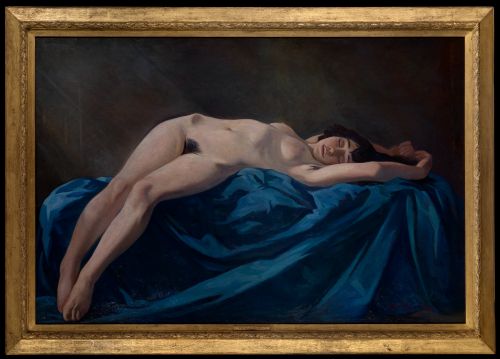
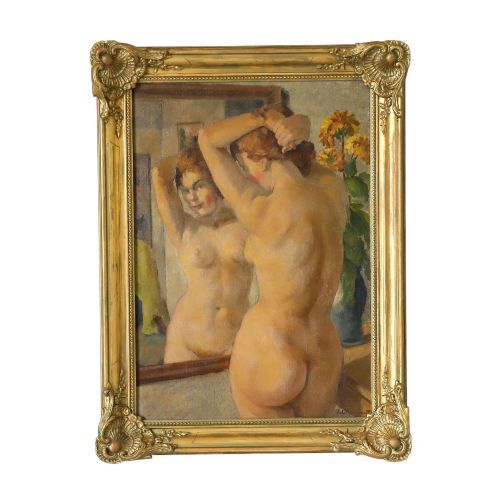
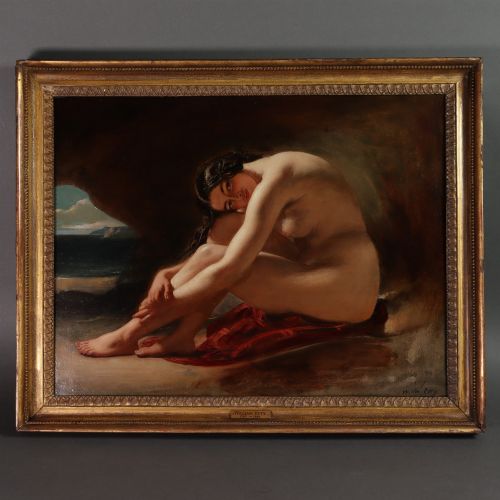
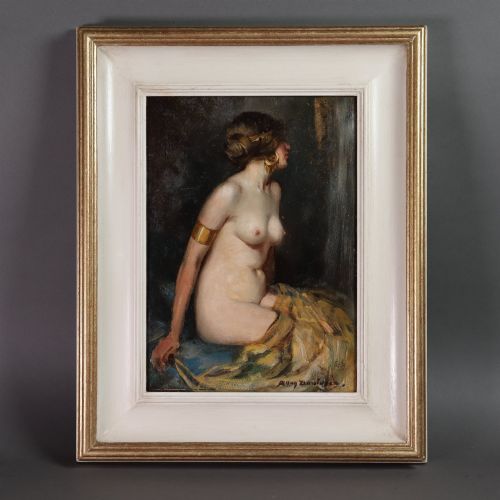
A fine art nude painting presents the human body through various historical lenses, ranging from seventeenth-century classical landscapes to twentieth-century modernist compositions. These works capture subjects reclining, bathing, or posing within distinct artistic movements such as Victorian Romanticism, Impressionism, and Art Deco. Buyers looking for a fine art nude painting will encounter oil on canvas, oil on panel, and watercolour works originating from British, French, Swedish, and Dutch hands.
The selections available lean heavily towards early twentieth-century French and British interpretations, alongside earlier academic and golden age examples. Canvases and wood panels showcase figures treated with varying degrees of abstraction, realism, and painterly brushwork. Each piece reflects the prevailing aesthetic attitude toward the human form during its specific period of creation.
What Varies in Quality
The distinction between works rests upon the confidence of the draughtsmanship and the subtlety of tonal transition across the human figure. Masterful handling of light upon flesh separates accomplished compositions from more formulaic academic exercises. Brushwork density and the harmonious integration of the figure within its surrounding landscape or interior setting dictate overall visual impact.
Provenance and attribution to documented artists elevate individual pieces above anonymous studio productions. The preservation of the original paint surface, minimal intervention from later restorations, and the presence of period framing contribute significantly to the standing of any given painting.
Several ladies are caught unawares by riversides, mirrors, and caves, proving that nineteenth-century bathers enjoyed very little actual privacy.
Eric Robertson·Philippe de Rougemont·Raymond Moritz·Henri Vincent-Anglade·William Etty·Allan Douglas Davidson·Cornelis Van Poelenburgh·James Clark·William Edward Frost·Sir William Russell Flint·Fernand Jean Barbier·Peter Paul Rubens·Jean Hippolyte Marchand·Raymond Arthur Roadnight·Auguste Renoir
The Fine Art Nude Painting Glossary
- Oil on canvas
- Pigments suspended in a drying oil applied to a woven fabric stretched across a wooden frame. This medium allowed artists to achieve rich colour saturation and subtle gradations.
- Panel painting
- Artwork executed on a flat piece of wood rather than stretched fabric. Wooden supports provide a rigid surface favoured by artists for detailed brushwork.
- Post-Impressionism
- An artistic movement following Impressionism that extended its use of vivid colours and thick application while emphasising geometric forms and expressive content.
- Giltwood
- Wood carved and coated with a thin layer of gold leaf or gold paint. This material is standard for traditional picture frames housing fine art.
- Academic realisms
- Artworks produced under the influence of European academies of art, emphasising precise anatomical accuracy and traditional mythological or historical themes.
Fine Art Nude Painting: Frequently Asked Questions
How should I hang an oil painting?
Mount the artwork securely on a wall away from direct sunlight and sudden temperature fluctuations. Stable indoor climates prevent the canvas or wood panel from warping and protect the oil pigments.
Ensure the frame hangs at eye level using appropriate hardware rated for the combined weight of the painting and its wooden or giltwood surround.
What is the difference between canvas and panel?
Canvas consists of woven fabric stretched tightly over a wooden frame, offering slight give and a textured surface for brushstrokes. Wood panels provide a completely rigid foundation favoured for finer, more detailed applications of paint.
Both supports have been utilised across centuries, with panel often appearing in earlier or smaller works.
How do I identify the period of a painting?
Examine the stylistic markers, clothing or lack thereof, framing materials, and any signatures or inscriptions on the reverse of the canvas or panel. Art historical movements such as Impressionism, Art Deco, or Victorian Romanticism offer clear chronological anchors.
Comparing brush techniques and subject matter with documented works by the same artist or school helps narrow down the decade of creation.
Are these paintings ready to hang?
Most framed works arrive fitted with appropriate hanging wire or brackets attached to the reverse of the frame. You can place them directly onto your wall upon delivery.
It remains wise to inspect the security of the wire and the stability of the frame corners before installation.