
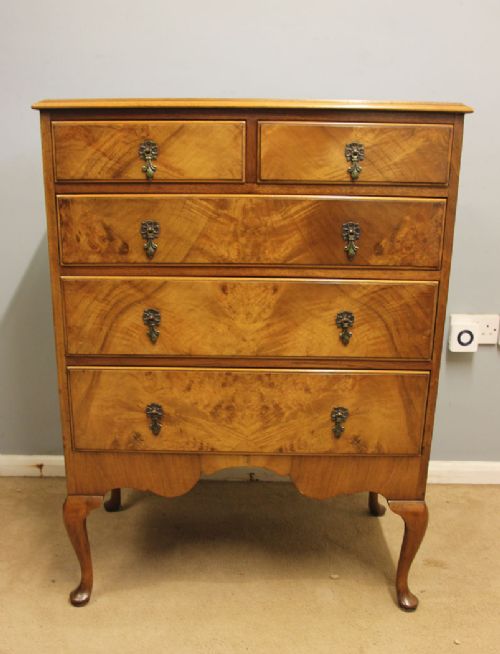
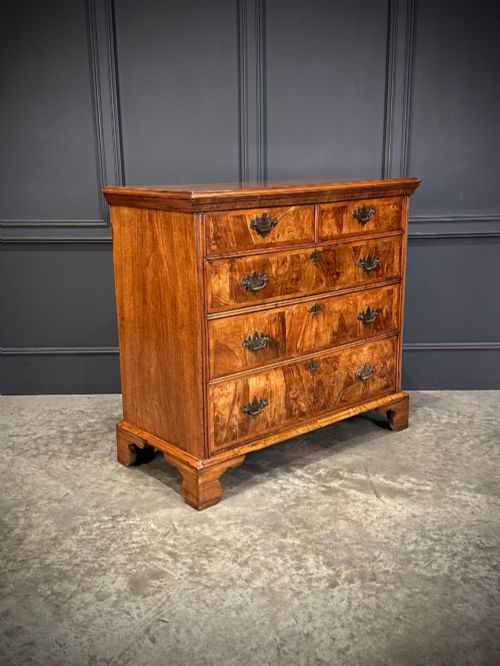
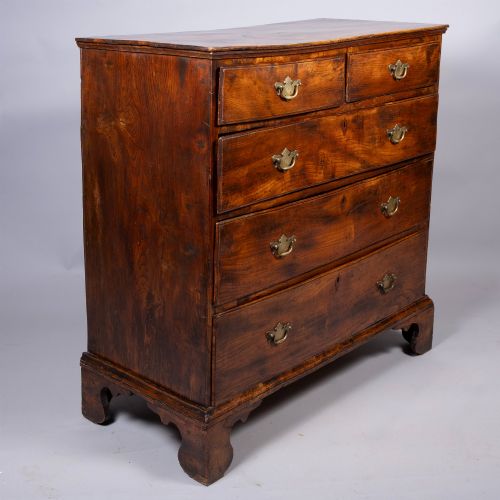


Figured Wood Dresser
A figured wood dresser brings warmth and rich grain to any room, offering practical storage through beautifully patterned timber.
Figured Wood Dresser
A figured wood dresser search covers chests of drawers and cabinets displaying prominent timber grain patterns. These items appear across multiple periods including the 17th Century, 18th Century, Regency, Victorian, and Art Deco eras.
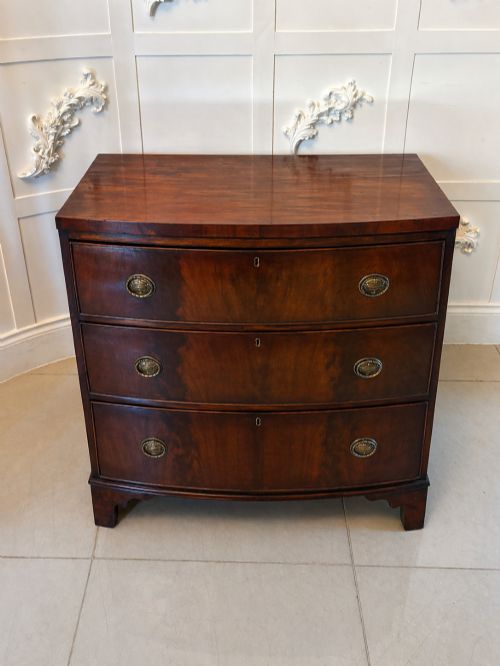
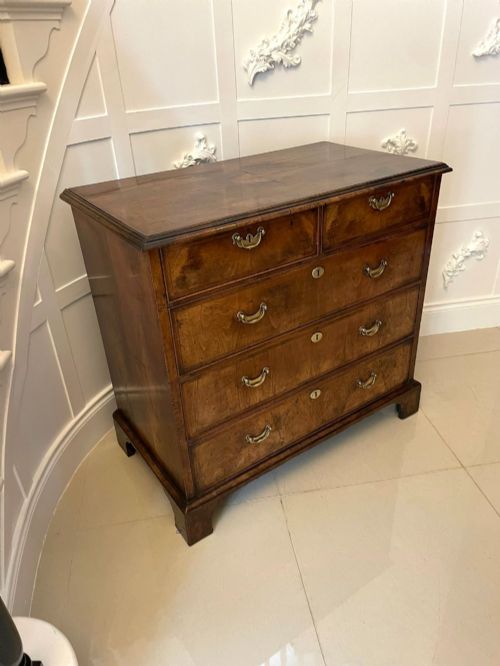
The selection on this page relies heavily on chest of drawers forms executed in walnut, mahogany, and elm. Examples range from George I and Georgian proportions to Edwardian and Biedermeier interpretations.
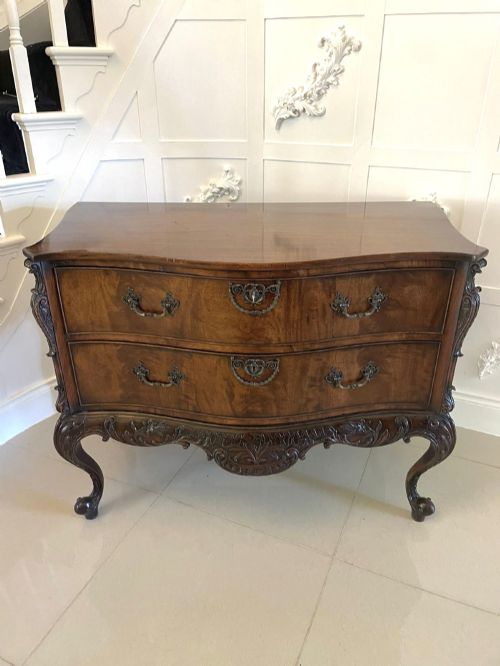
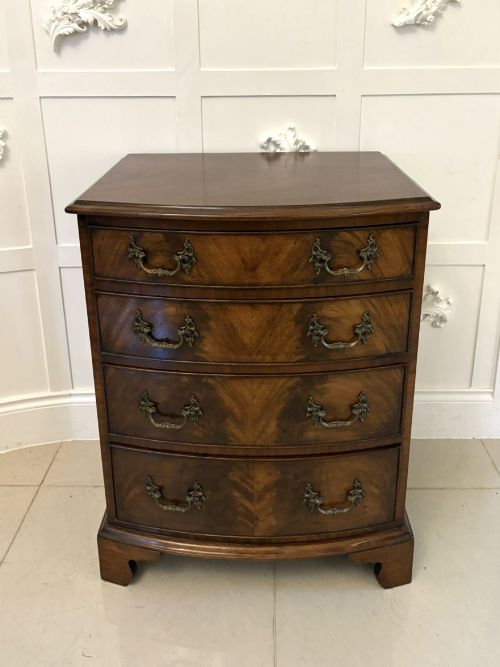
Makers and styles span several centuries, featuring regional pieces alongside documented works by makers like the Bowman Brothers. Buyers encounter serpentine shapes, bow fronts, and straight profiles within these historical categories.
How they were made
Craftsmen utilised timbers such as walnut, mahogany, and elm, often applying figured veneers to accent the natural grain patterns. Solid pine and secondary woods frequently form the internal carcases and drawer linings.
Metal hardware including brass handles and escutcheons complement the polished wood surfaces. Construction techniques vary from traditional dovetail joinery in earlier centuries to later veneering methods.
Even Italian Renaissance artisans could not resist adding a decorative flourish to their walnut commodes.
What varies in quality
The visual impact of the timber grain sets finer examples apart, particularly when figured veneers display balanced and striking patterns across the drawer fronts. Subtle shaping, such as serpentine curves or bow fronts, demands greater skill from the cabinetmaker.
Proportions and period integrity define the upper tier of these furnishings. Original brass hardware and clean execution within styles like Queen Anne or Regency enhance the overall standard of the piece.
Bowman Brothers
The Figured Wood Dresser Glossary
- Figured wood
- Timber possessing an attractive, irregular grain pattern caused by growth anomalies. This figure is prized for decorative veneering on cabinet furniture.
- Serpentine
- A front profile that curves outward in the centre and inward at the sides. This contour requires precise woodworking skills.
- Bow front
- A convex, outward-curving front facade popular on chests of drawers from the Georgian and later periods. It provides a softer silhouette than a flat front.
- Veneer
- A thin layer of superior wood glued to a base timber to give a decorative surface. Walnut veneer is common on pieces from the 18th Century onwards.
- Dovetail
- A joint formed by interlocking wedge-shaped fingers, utilised in drawer construction for strength. Traditional hand-cut dovetails indicate earlier periods of manufacture.
Figured Wood Dresser: Frequently Asked Questions
What is a figured wood dresser?
A figured wood dresser typically refers to a chest of drawers or cabinet featuring wood with prominent, decorative grain patterns. These storage pieces utilise timbers such as walnut, mahogany, and elm.
They appear across various historical periods, offering deep drawers and polished surfaces suited for bedroom or living space storage.
How do I identify the period?
Dating relies on stylistic clues, construction methods, and the specific woods used in the piece. For instance, George I and Georgian examples exhibit distinct proportions compared to Victorian or Edwardian items.
Hardware styles and veneer thickness also provide reliable indicators of whether a piece originates from the 18th Century or the 19th Century.
Where were these pieces used?
These chests and cabinets served primarily as bedroom storage for clothing and linens in domestic homes. Their decorative fronts allowed them to sit prominently in reception rooms or hallways.
Today, they function similarly in modern interiors, providing practical surface area and drawer space while adding historical character.
What woods are most common?
Walnut and mahogany appear frequently across the listings, often featuring figured grain variations that highlight the natural patterns of the timber. Elm and pine also feature in specific regional or internal applications.
Biedermeier and 18th Century pieces often showcase blonde walnut or figured mahogany veneers applied to secondary structural timbers.