




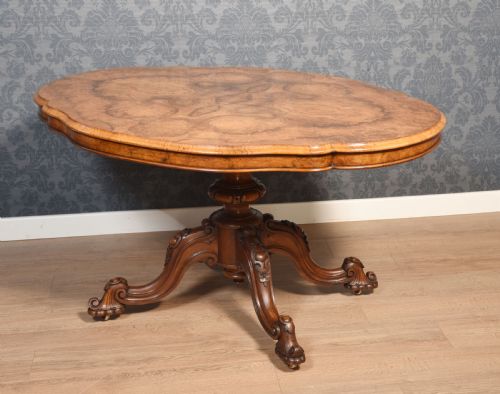


Figured Walnut Top Table
A figured walnut top table brings a striking, natural grain pattern and rich colour to any room through Victorian and Art Deco forms.
Figured Walnut Top Table
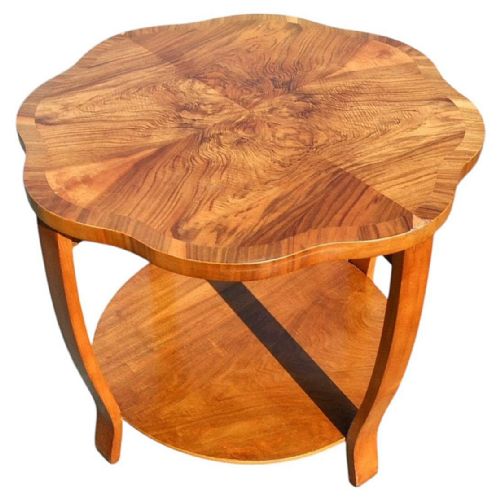
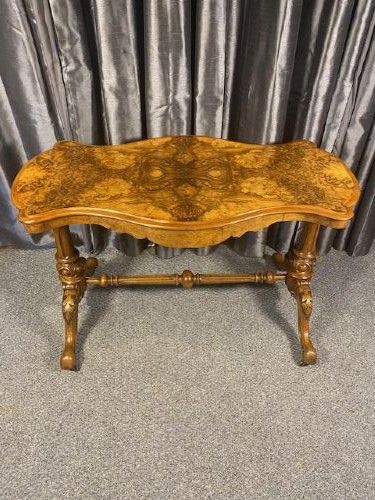
A figured walnut top table spans a wide range of domestic and reception forms, from Victorian loo tables and centre tables to Art Deco coffee tables and writing desks. You will encounter occasional tables, lamp tables, and silver tables most frequently on this page, alongside specific writing furniture.
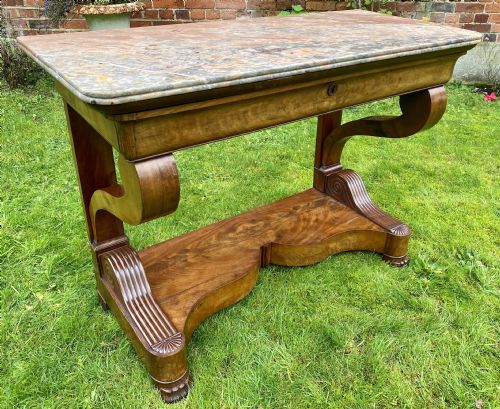
The materials used across these pieces rely heavily on walnut, burr walnut, and figured walnut veneers, often paired with brass, leather, glass, or marble inserts. Cabinetmakers shaped these into oval, round, kidney-shaped, and rectangular formats, drawing upon Early Georgian, French Chateau, and Queen Anne styles.
Dating ranges primarily from the nineteenth century into the 1920s and 1930s, capturing both Victorian craftsmanship and later Art Deco interpretations. The defining characteristic across every piece remains the decorative figuring of the timber top, selected for its visual movement and depth.
How they were made
Cabinetmakers utilised carefully sliced veneers of figured and burr walnut applied to solid secondary timbers, accentuating the wild grain patterns across large surfaces like table and desk tops. Crossbanding and marquetry inlay frequently border these prominent panels to frame the natural figuring.
Ormolu mounts, brass handles, and leather writing inserts complement the timber construction, particularly on mid-nineteenth century and French-influenced writing tables. Joinery techniques varied to suit the form, from the pedestal bases of loo tables to the clean lines of Art Deco coffee and sofa tables.
Figured Walnut Top Table Retail Price Guide 2026
Typical asking prices for figured walnut top table among the pieces listed under this phrase on Sellingantiques today, from the lower quarter to the upper quarter. They describe what is for sale here now, not the wider market.
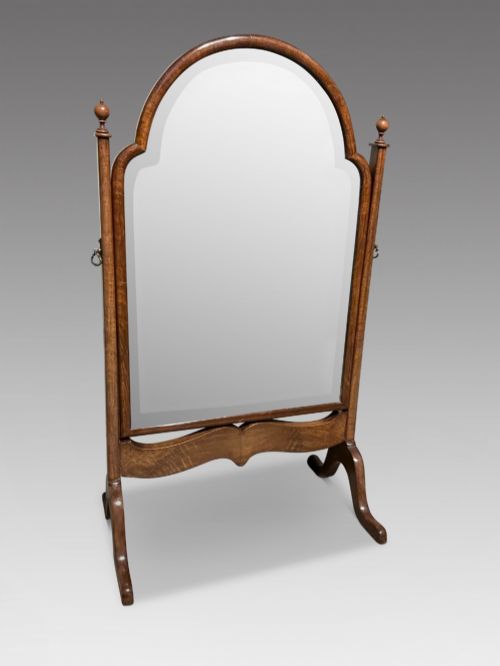
Listings feature walnut, burr walnut, and figured walnut across forms including occasional tables, coffee tables, centre tables, desks, and table mirrors spanning the nineteenth and early twentieth centuries.
What varies in quality
The selection of the walnut veneer dictates the initial visual impact, with tighter, more symmetrical burr patterns generally commanding greater presence than plainer grain. The crispness of marquetry inlay and the integration of crossbanding further separate standard production from more ambitious cabinet work.
Subsidiary materials such as cast ormolu mounts, fitted leather writing surfaces, bevelled glass, and marble inserts contribute significantly to a piece's overall finish. Structural integrity in pedestal bases, folding mechanisms on game and card tables, and drawer construction determine the durability of the piece.
The Figured Walnut Top Table Glossary
- Figured walnut
- Timber sourced from walnut trees displaying irregular, highly decorative grain patterns caused by local disturbances in growth. This wood is sliced into veneers for prominent table tops.
- Burr walnut
- A specific type of figured walnut taken from the wart or growth on a walnut tree, yielding dense clusters of swirling eyes and rich tonal variation.
- Crossbanding
- A border technique where narrow strips of veneer are laid perpendicular to the main grain of the table top, creating a framed effect.
- Ormolu
- Gilded bronze mounts applied to furniture for decorative accent, frequently seen on mid-nineteenth century French-influenced writing tables and desks.
- Marquetry
- Decorative patterns formed by fitting together thin pieces of veneer of different woods or materials into a prepared surface.
Figured Walnut Top Table: Frequently Asked Questions
What is a figured walnut top table?
A figured walnut top table is a piece of furniture featuring a decorative wood surface selected for its distinct grain patterns, curls, and knots. These tables span several centuries and styles, including Victorian pedestals and Art Deco low tables.
The defining element is the use of walnut veneer, prized for its warmth and visual complexity, applied to the primary surface of desks, side tables, and occasional furniture.
How do I date a walnut table?
Dating relies on observing the structural form, hardware, and stylistic influences combined in the piece. Victorian examples often feature heavy pedestal bases, turning, or marquetry, while Art Deco pieces from the 1920s and 1930s show cleaner geometric lines and illuminated or tiered designs.
Examining the secondary timbers beneath the veneer and the construction methods used for drawers or table mechanisms also helps narrow the period of manufacture.
Where should I place a centre table?
A centre table is traditionally designed to stand free in the middle of a room rather than pushed against a wall, allowing access from all sides. They serve well in entrance halls, large living spaces, or libraries as a focal point for displaying decorative items.
Ensure the room layout permits movement around the perimeter of the table so the figured top can be viewed properly from various angles.
How do I care for walnut veneer?
Walnut veneer requires protection from direct sunlight and excessive heat sources, which can cause the timber to fade or the underlying glue to dry out. Regular dusting with a soft, dry cloth maintains the finish without needing heavy polishes.
Keep humidity levels stable in the room to prevent the wood from expanding or contracting, which protects the thin veneer layer from lifting at the edges.