

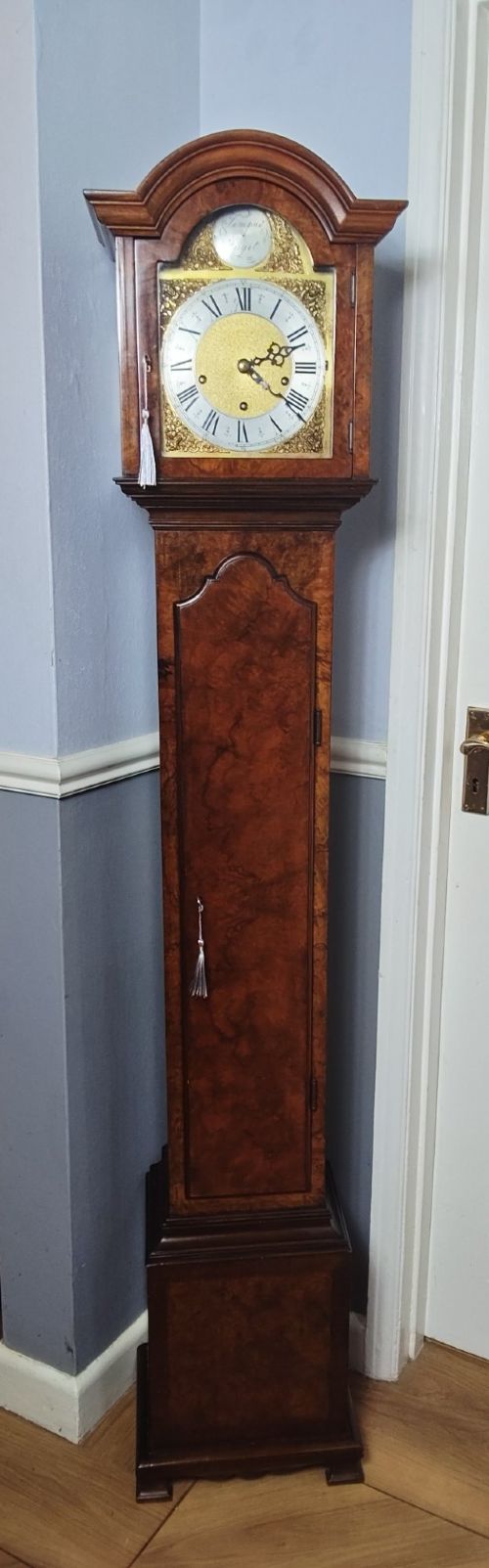
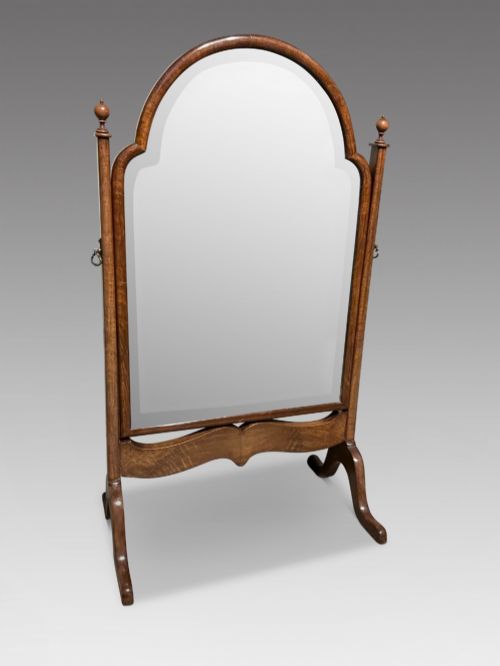

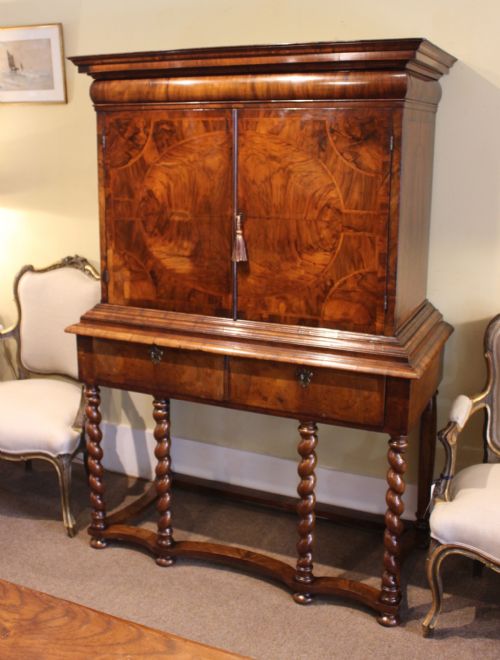


Figured Walnut Stand
A figured walnut stand brings deep, rippling grain and warm tone to a room, offering both practical surface space and a rich focal point.
Figured Walnut Stand
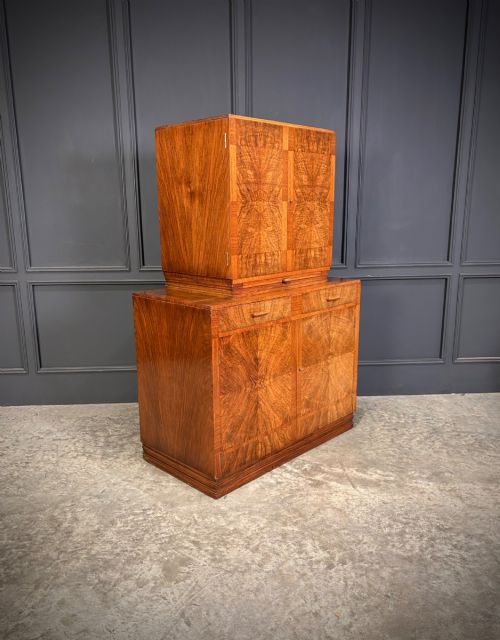
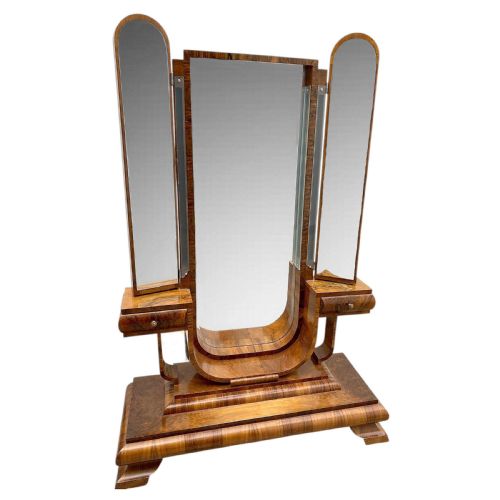
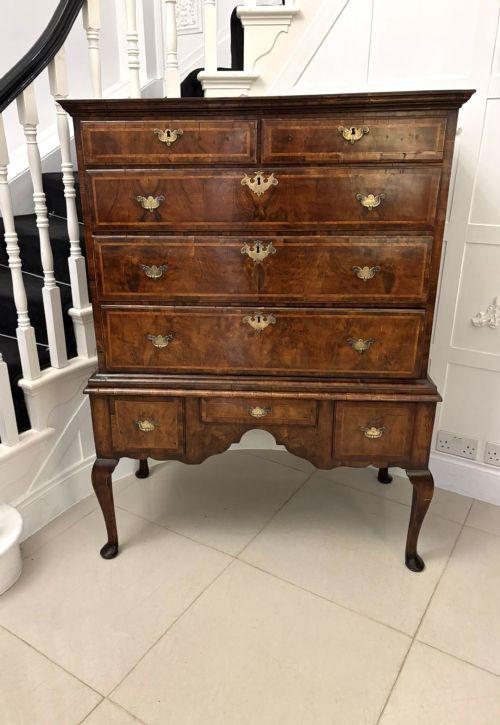
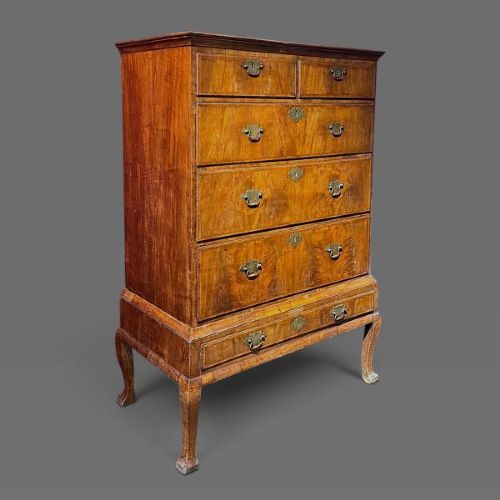
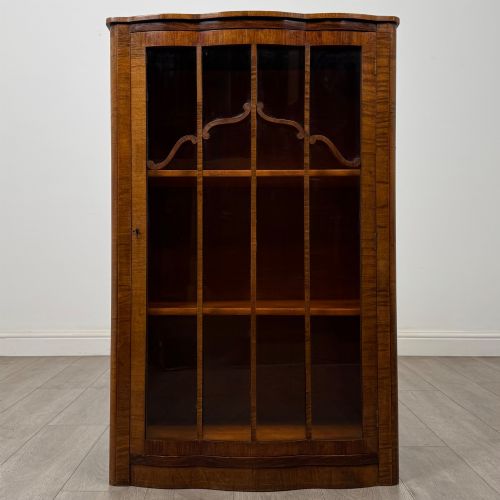
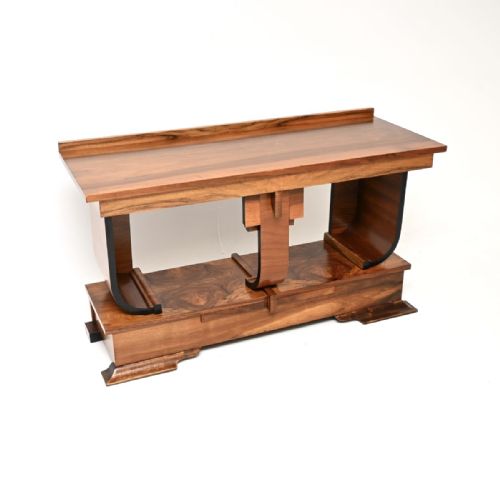
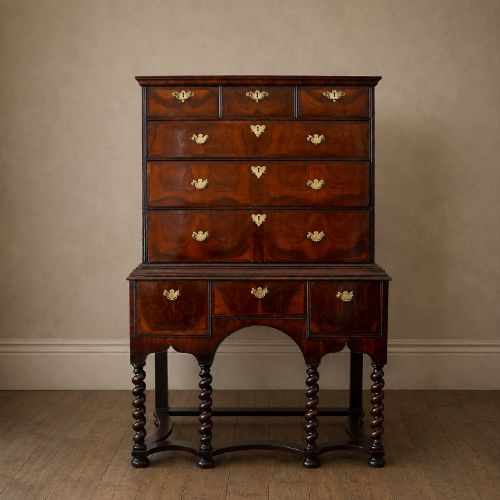
When you search for a figured walnut stand, you encounter pieces designed to elevate objects or provide compact display surfaces, most frequently seen as chests on stands, lamp tables, and small cabinets dating from the seventeenth century through to the Art Deco period.
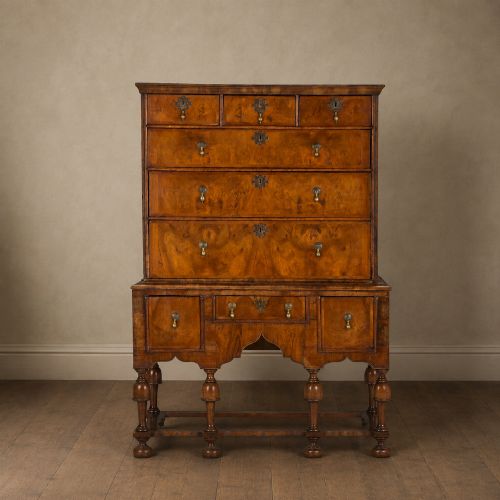
Early examples from the George I and Queen Anne eras combine elevated drawer sections with slender leg supports, whilst later Victorian and 1930s interpretations offer open tiers, console formats, and occasional display cabinets.
The core utility rests in combining elevated storage or display with the intense visual movement of burr and figured veneers, distinguishing these items from simpler utilitarian furniture.
Materials and construction methods
Cabinetmakers utilised walnut and figured walnut veneers laid over secondary timbers such as oak, securing dynamic grain patterns across primary visual surfaces.
Construction frequently incorporated brass hardware, such as drop handles and escutcheons, alongside glass panels in cabinet doors and ebonised details on specific forms.
Joinery methods ranged from traditional dovetailed drawer construction in eighteenth-century pieces to later veneering techniques applied to display cabinets and console tables.
Figured Walnut Stand Retail Price Guide 2026
Typical asking prices for figured walnut stand among the pieces listed under this phrase on Sellingantiques today, from the lower quarter to the upper quarter. They describe what is for sale here now, not the wider market.
Current listings feature figured walnut stands across periods from the seventeenth century to 1930, utilising brass, glass, and oak alongside walnut veneers.
Distinctions in craftsmanship and finish
Quality reveals itself in the symmetry and matching of the veneer panels, where superior examples display carefully mirrored grain across drawer fronts and top surfaces.
The integrity of the timber framing and the proportion between the upper body and its supporting legs dictate the structural success of pieces like chests on stands.
Finer items retain original brasses and surface patination, whilst lesser or heavily restored examples may show mismatched timber repairs or replaced mounts.
The Figured Walnut Stand Glossary
- Figured walnut
- Timber harvested from walnut trees exhibiting highly decorative, swirling grain patterns caused by branch junctions or growth variations. It is prized for its reflective and ornate surface quality.
- Chest on stand
- A two-part form comprising an upper chest of drawers mounted on an elevated open frame with legs. This configuration lifts storage off the floor to create a lighter silhouette.
- Quarter veneered
- A technique where four matching slices of figured veneer are arranged symmetrically to create a diamond or quadrant pattern. This method highlights the natural grain symmetry.
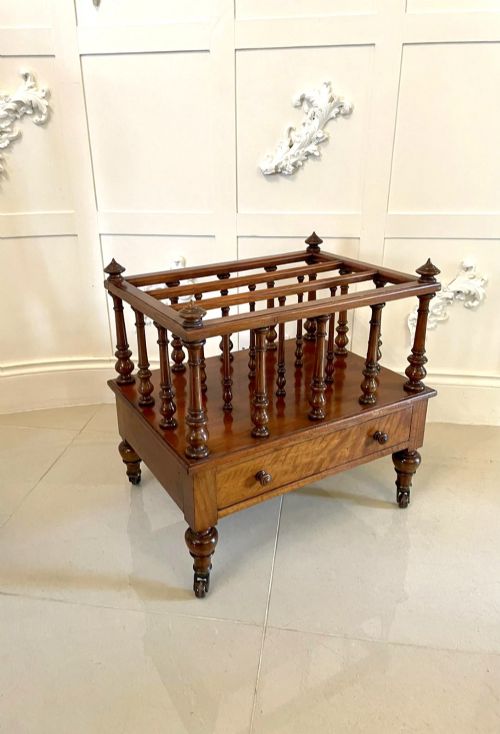
- Canterbury
- A low, freestanding rack traditionally used for holding sheet music or books, typically featuring slatted dividers and a small lower drawer. Victorian examples often utilise figured walnut veneers.
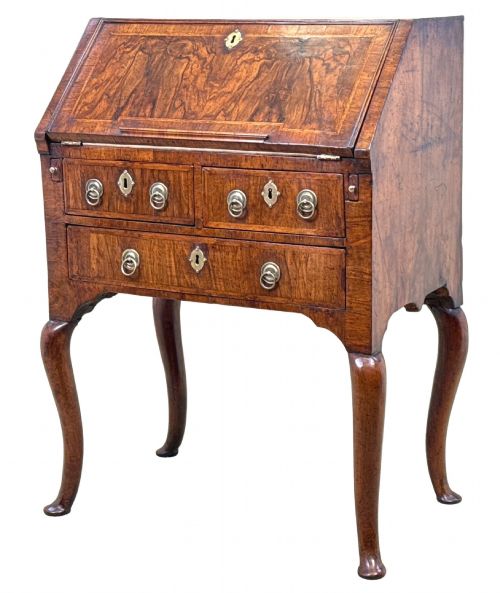
- Bureau on legs
- A writing desk with a sloping fall-front enclosing small compartments, supported on an open stand rather than a solid base. Early versions date to the Queen Anne and George I periods.
Figured Walnut Stand: Frequently Asked Questions
What is a figured walnut stand?
A figured walnut stand is an elevated piece of furniture, such as a chest on stand or display table, featuring decorative burr or striped walnut veneers.
These items range from early eighteenth-century Georgian forms to 1930s Art Deco designs, serving as both display surfaces and storage units.
How do I date an antique stand?
Dating relies on examining construction techniques, hardware styles, and the overall silhouette characteristic of periods like William and Mary, Queen Anne, or Victorian eras.
Secondary timbers like oak and the method of veneer application also provide clear indicators of a piece's age.
Where should I place a stand?
These pieces suit living rooms, hallways, or studies where their decorative grain can catch the light without overcrowding the floor space.
Smaller lamp tables and console versions fit well beside seating, whilst taller chests on stands work as focal points against plain walls.
How do I care for walnut furniture?
Walnut benefits from being kept away from direct sunlight and extreme temperature fluctuations to prevent the veneer from drying or cracking.
Regular dusting with a soft cloth and occasional application of appropriate furniture wax helps maintain the surface lustre.