
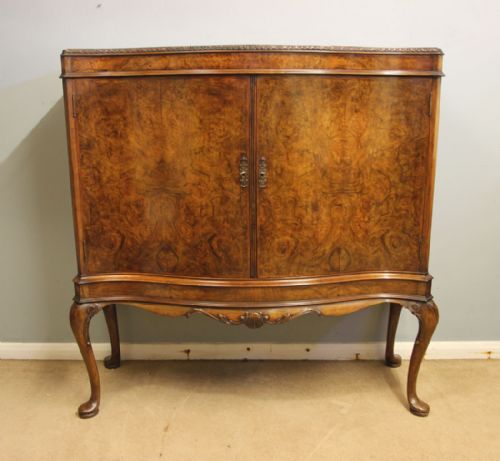


Figured Walnut Credenza
A figured walnut credenza brings together rich wood grain and mid-nineteenth-century craft to anchor a formal room.
Figured Walnut Credenza
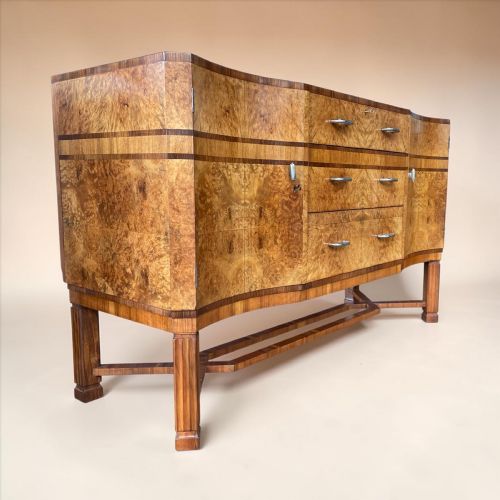
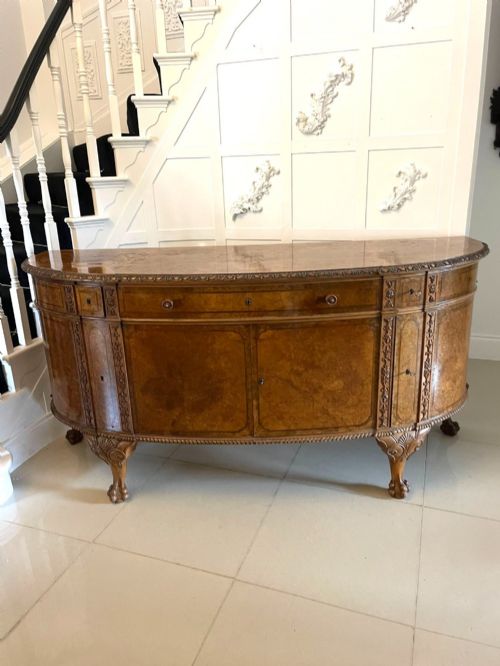
When searching for a figured walnut credenza, buyers encounter low-profile cabinets designed in the nineteenth century, alongside later sideboards and display pieces. The typical Victorian example is a serpentine or bow-fronted low cabinet, often fitted with glass doors, marquetry inlay, and gilt-bronze mounts.
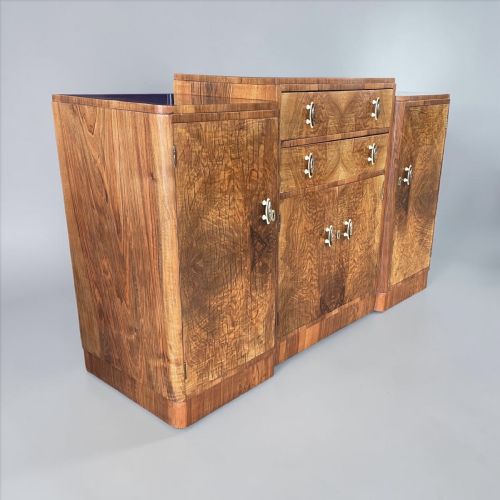
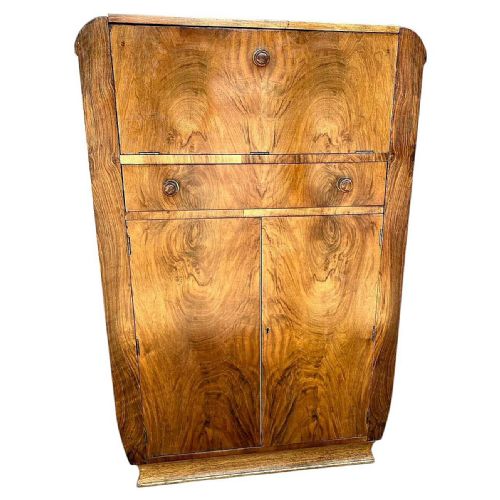
The selection ranges from mid-century Victorian credenzas with mirrored backs to early twentieth-century Art Deco sideboards and cocktail cabinets utilising similar timber grains. Pieces vary from compact pier cabinets to substantial break-fronted serving tables.
Originating primarily from English workshops, these pieces served formal reception rooms for display and storage. The form balances architectural presence with decorative surface detail through veneered panels.
How They Were Made
Cabinetmakers utilised figured walnut and burr walnut veneers laid over secondary timbers to create symmetrical grain patterns across large surfaces. Marquetry inlay in lighter woods and boxwood frequently decorated the doors and friezes.
Ormolu mounts, brass details, and cast glass panels framed the central and side compartments of Victorian examples. Marble tops and mirrored backs appeared on select exhibition-quality pieces.
Later twentieth-century makers applied streamlined construction methods while retaining the decorative focus on figured walnut veneers for sideboards and drinks cabinets.
What Varies in Quality
The distinction between standard production and top-tier pieces rests on the complexity of the timber selection and the precision of the marquetry. Highly figured burr walnut with book-matched grain patterns indicates superior cabinet work.
Hille of London·Harry and Lou Epstein·Hamptons of Pall Mall London·Bowman Brothers
The Figured Walnut Credenza Glossary
- Credenza
- A low cabinet originating as a side table, typically featuring central and flanking glazed or panelled doors.
- Figured Walnut
- Timber selected for distinctive, swirling grain patterns produced by growth irregularities in the tree.
- Ormolu
- Gilt-bronze decorative mounts applied to furniture frames and corners during the nineteenth century.
- Marquetry
- Decorative patterns formed by fitting contrasting veneers into a prepared wooden background.
- Burr Walnut
- Highly prized timber veneer taken from the growth excrescences of the walnut tree, showing dense circular knot formations.
Figured Walnut Credenza: Frequently Asked Questions
What is a credenza used for?
A credenza functioned historically as a side table for serving food or displaying precious objects in formal dining and reception rooms. In modern interiors, they serve as media consoles or statement storage pieces.
Their low profile allows surface display while keeping contents enclosed behind wooden or glass doors.
How do I date a walnut credenza?
Dating relies on stylistic markers such as serpentine shaping, ormolu mounts, and marquetry details typical of the Victorian period. Mid-nineteenth-century examples often feature mirror backs and gilt bronze, while 1930s pieces show geometric Art Deco lines.
Construction methods and secondary timbers inside the cabinet also provide clear chronological indicators.
Where were these cabinets made?
The majority of these pieces originated in English workshops and London furniture makers during the Victorian era and the early twentieth century. Firms such as Hille and the Epstein brothers produced notable walnut furniture in London.
Regional cabinetmakers also contributed to the variety of sideboards and display cabinets available.
How do I care for figured walnut furniture?
Walnut furniture requires placement away from direct sunlight and heat sources to prevent veneer lifting and timber drying. Regular dusting with a soft, dry cloth preserves the polished surface.
Application of appropriate microcrystalline wax maintains the moisture and depth of the figured grain.