
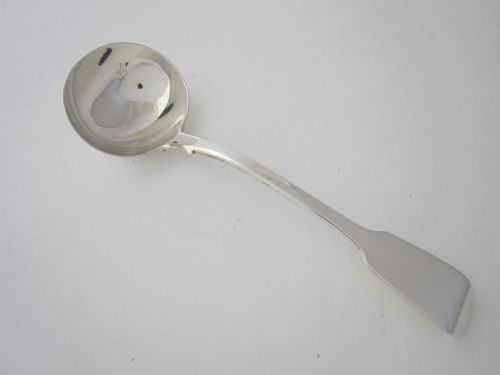
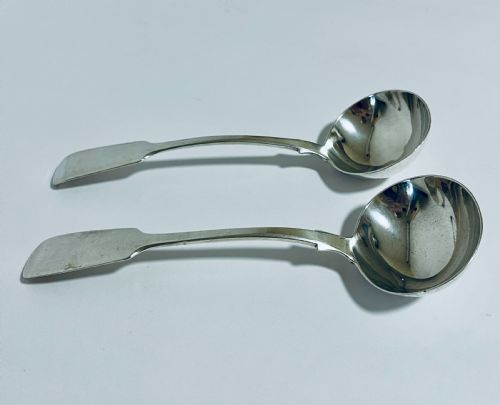
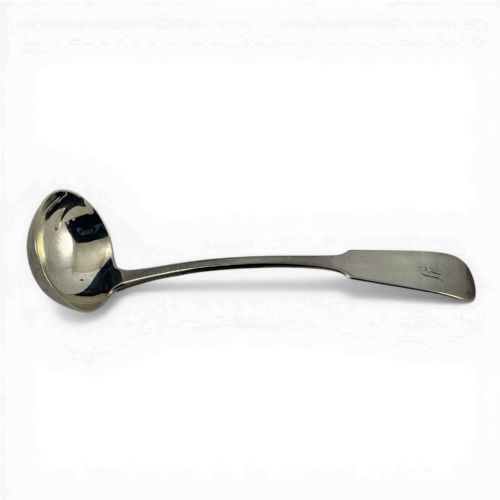


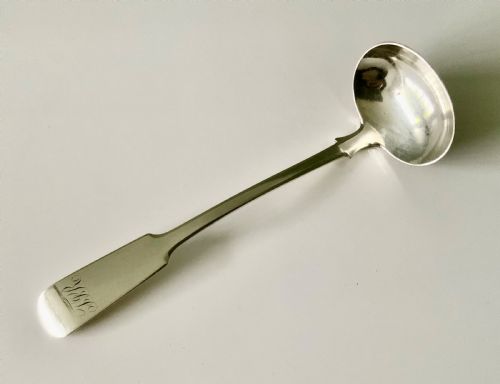

Fiddle Pattern Silver Ladle
These fiddle pattern silver ladle examples bring Georgian and Victorian craftsmanship straight to the table, offering practical service with distinct nineteenth-century style.
Fiddle Pattern Silver Ladle
A fiddle pattern silver ladle is a serving utensil defined by its distinctive stem shape, which widens and flattens near the terminal just like a violin, accompanied by shoulders above the bowl. These pieces appear across Georgian and Victorian periods, taking forms that range from small sauce and cream ladles to large soup, toddy, and gravy serving utensils.
The versions most commonly met on this page date from the nineteenth century, including provincial Scottish examples from towns such as Elgin and Inverness alongside London and regional English pieces. Makers produced them either individually or as part of larger cutlery sets and canteens for twelve persons.
Buyers encounter variations that include plain fiddle stems as well as decorated iterations incorporating thread or shell motifs along the edges. Their primary utility remains the transfer of sauces, creams, soups, and gravies at the dining table using solid sterling silver.
What varies in quality
Weight and gauge dictate the substance of the silver, separating heavier soup and gravy ladles from lighter cream or toddy variants. The crispness of the fiddle shoulders and the retention of original engraved crests or monograms reflect the precision of the silversmith.
Provincial origins and regional town marks add distinction to specific pieces, while matched pairs or sets demonstrate a higher level of original commissioning than isolated single items.
Some toddy ladles paired gleaming silver bowls with twisted whalebone handles, letting drinkers stir hot spirits without burning their fingers.
William Ferguson·Jamieson and Naughton·Chawner and Co
The Fiddle Pattern Silver Ladle Glossary
- Fiddle pattern
- A nineteenth-century flatware design featuring a stem that tapers and then broadens towards the terminal with characteristic shoulders. This shape dominated silver cutlery production during the Georgian and Victorian eras.
- Toddy ladle
- A small serving utensil designed for transferring hot spirits and water mixtures from a bowl into individual glasses. These frequently feature twisted whalebone handles or short silver stems.
- Sterling silver
- An alloy consisting of pure silver and other metals to increase durability while maintaining standard fineness. English and Irish pieces carry the lion passant mark to denote this composition.
- Hallmark
- A series of official stamps applied to silver items to guarantee metal purity, the year of manufacture, and the assay office responsible. These marks provide the primary evidence for dating antique pieces.
Fiddle Pattern Silver Ladle: Frequently Asked Questions
What is a fiddle pattern silver ladle used for?
These ladles served specific functions at the dining table depending on their scale, ranging from heavy soup and gravy service to pouring cream or individual toddy drinks. Their deep bowls and sturdy handles made them practical for liquid transfer during large nineteenth-century meals.
Today, collectors utilise them for traditional table service or display them alongside period flatware collections, appreciating their combination of utility and nineteenth-century design.
How do I tell a Georgian ladle from a Victorian one?
Dating relies primarily on the stamped hallmarks found on the reverse of the stem, which record the specific year letter and assay office. Stylistic variations in the fiddle shoulders and the presence of town marks also help distinguish early nineteenth-century pieces from later Victorian production.
Provincial items often carry distinct regional maker marks that assist in pinpointing the exact origin and decade of manufacture alongside standard assay office records.
What makes Scottish provincial ladles different?
Scottish provincial pieces were created by silversmiths working outside major assay cities like Edinburgh, operating in regional towns such as Elgin and Inverness. These items often feature unique local maker marks and town punches instead of standard national hallmarks.
Their regional rarity and distinct workshop origins make them particularly interesting to collectors who focus on provincial British silver manufacturing.
How should I clean antique silver ladles?
Maintenance requires gentle washing with warm soapy water and a soft cloth to remove everyday residue without damaging the surface. Avoid harsh chemical dips that strip away the natural patina accumulated over centuries of existence.
Regular soft polishing preserves the engraved crests and maker marks while keeping the sterling silver bright for display or careful table use.