

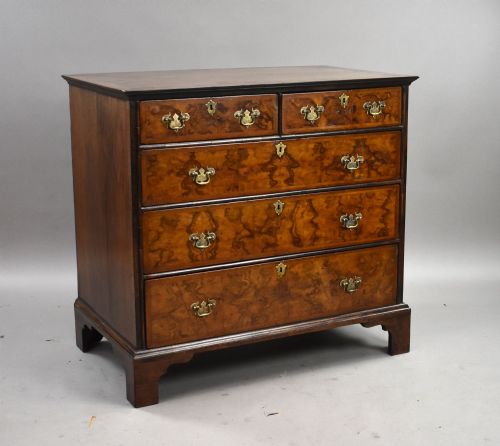


Feather Banded Walnut Tallboy
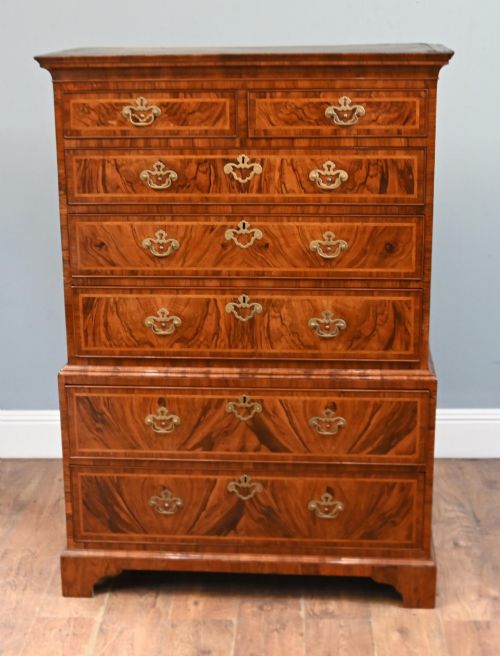
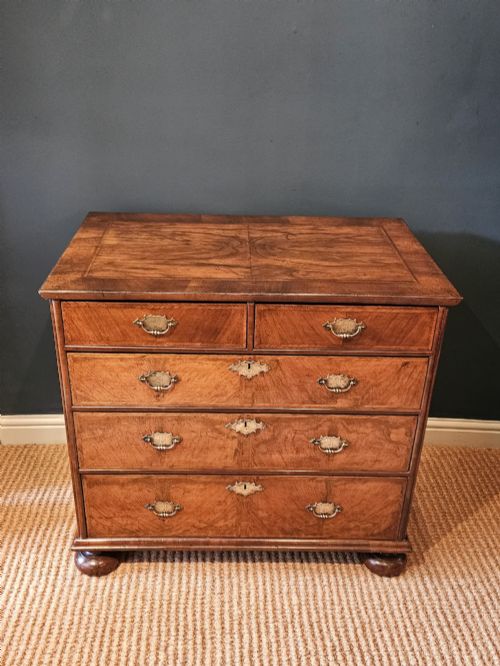
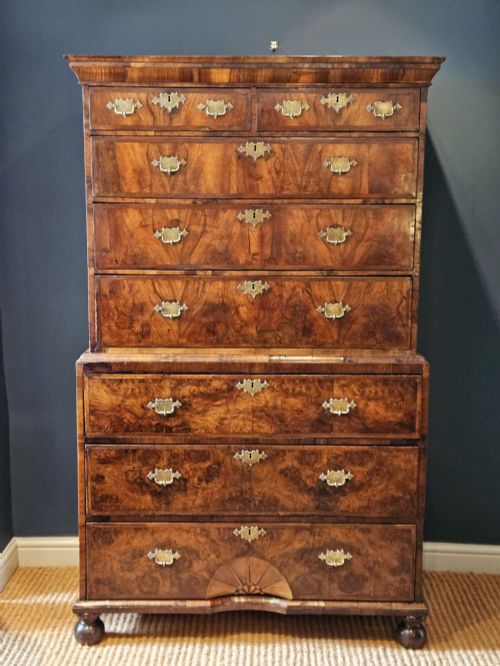
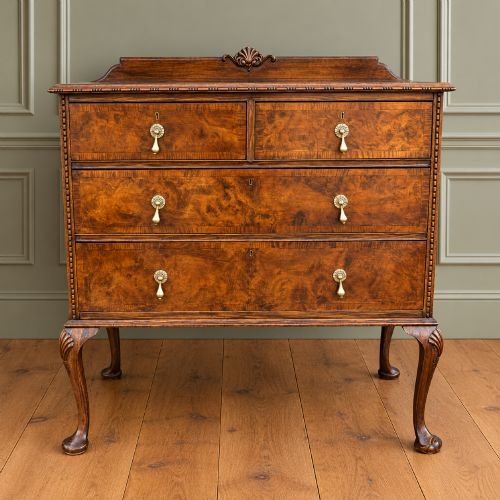
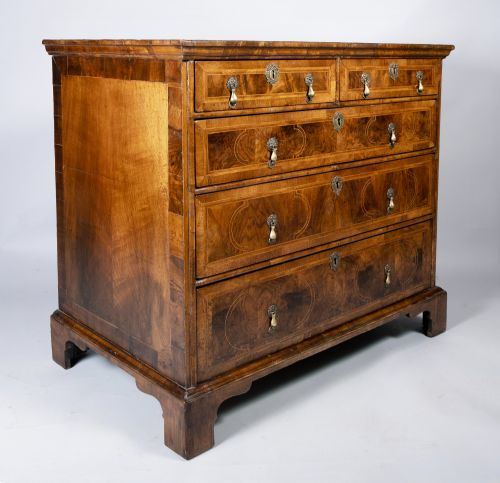
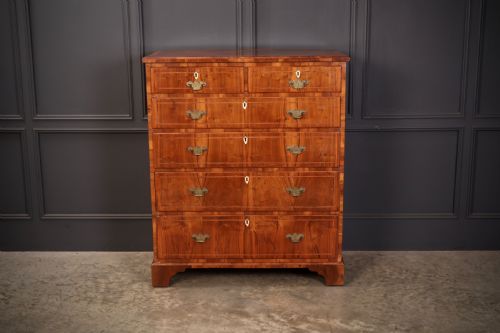
A feather banded walnut tallboy is a commanding multi-drawer chest that brings striking timber grain and refined banded edges into a room.
Feather Banded Walnut Tallboy
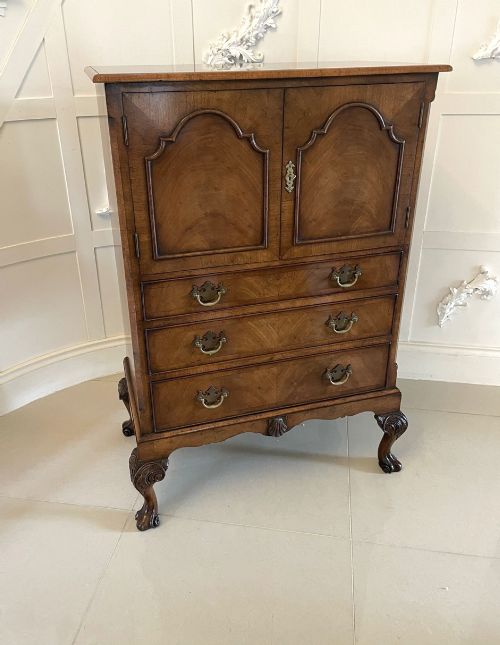
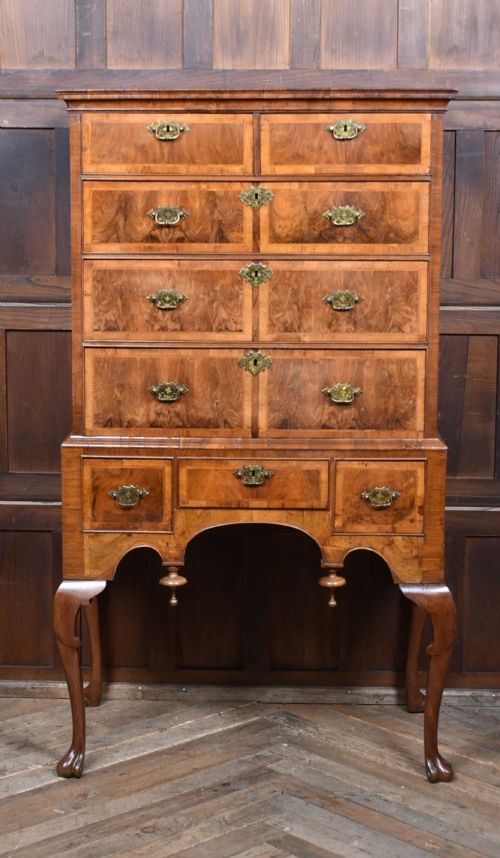
A feather banded walnut tallboy brings together stacked drawer compartments in formats such as chests on stands, chests on chests, and press cupboards. These upright forms provide substantial storage while occupying a modest footprint on the floor.
The pieces appearing on this page span the seventeenth, eighteenth, and early twentieth centuries, including Georgian and Queen Anne styles. Buyers frequently encounter George I and George II examples alongside later interpretations from the nineteen-twenties and nineteen-thirties.
Craftsmen built these tallboys to organise clothes and valuables in principal chambers. The upright construction allowed makers to divide storage into two distinct sections, typically a smaller upper carcase resting on a deeper lower base.
Materials and construction
Joiners built the primary carcases using oak and walnut, applying fine burr walnut and oyster veneers to the visible exterior surfaces. Boxwood and bone stringing often create contrasting linear borders alongside the characteristic feather banding.
Casting provided the brass drop handles, key escutcheons, and bracket feet that support the timber framework. Each drawer was constructed with hand-cut dovetails and fitted tightly into its individual opening within the carcase.
Feather Banded Walnut Tallboy Retail Price Guide 2026
Typical asking prices for feather banded walnut tallboy among the pieces listed under this phrase on Sellingantiques today, from the lower quarter to the upper quarter. They describe what is for sale here now, not the wider market.
Listings feature walnut, oak, brass, bone, and boxwood across periods spanning the seventeenth century through to nineteen-thirty.
What separates the best from the rest
The visual impact depends largely on the choice of timber figure and the precision of the veneer work. Master cabinetmakers selected burr walnut and matched the grain across drawer fronts to create harmonious symmetrical patterns.
The crispness of the feather banded borders and the retention of original brass hardware elevate an example. Proportions also dictate distinction, with smaller, slender tallboys achieving greater visual balance than bulkier counterparts.
The Feather Banded Walnut Tallboy Glossary
- Feather banding
- A decorative inlay technique where small slips of veneer are cut and arranged in a V-shape resembling a bird feather, typically framing drawer perimeters. This meticulous detail requires skilled hand-cutting and precise placement.
- Tallboy
- A tall chest of drawers made in two sections, usually a chest on chest or a chest on a stand. The elevated design maximises vertical storage capacity.
- Oyster veneering
- The practice of slicing small branches crosswise to produce circular or oval wooden discs with concentric growth rings. These discs are laid together to form decorative patterns on flat surfaces.
- Burr walnut
- Timber taken from the gnarled growths of a walnut tree, yielding intricate, swirling grain patterns. It was favoured by cabinetmakers for high-status furniture fronts.
- Escutcheon
- A protective metal plate surrounding a keyhole. On these pieces, they are cast in brass and secured to drawer fronts and cupboard doors.
Feather Banded Walnut Tallboy: Frequently Asked Questions
What is a feather banded walnut tallboy?
A tallboy is a tall chest of drawers constructed in sections, featuring decorative diagonal veneer borders known as feather banding. These upright case pieces combine practical storage with sophisticated decorative surfaces.
Makers constructed them primarily in walnut during the seventeenth and eighteenth centuries, though revival examples appeared in the twentieth century. They served as principal bedroom furniture for storing garments.
How do I date a walnut tallboy?
Dating relies on examining construction methods, timber choices, and hardware styles. Early pieces from the seventeenth and eighteenth centuries often display hand-cut dovetails, oak linings, and specific bracket or stump feet.
Twentieth-century interpretations utilise similar materials like burr walnut but show different internal secondary woods and modern finishing techniques. Comparing the carcass construction to established Georgian or Queen Anne periods clarifies the age.
Where should I place a tallboy in my home?
These upright chests suit bedrooms, dressing rooms, or hallways where vertical storage is required without occupying excessive floor space. Their varied drawer configurations accommodate linens, clothing, and smaller personal items.
Positioning them away from direct sunlight and radiators protects the walnut veneers and delicate stringing from drying out. A stable, level surface ensures the large stacked sections remain aligned and structurally sound.
What is the difference between a tallboy and a chest on chest?
While the terms are often used interchangeably, a traditional tallboy can refer to a chest on a stand or a single tall chest, whereas a chest on chest specifically denotes two stacked drawer sections. Both designs offer increased vertical storage capacity compared to standard low chests.
Both forms utilise sophisticated veneering and banding techniques to decorate their multiple drawer fronts. The choice between them depends on the preferred height and base configuration.