



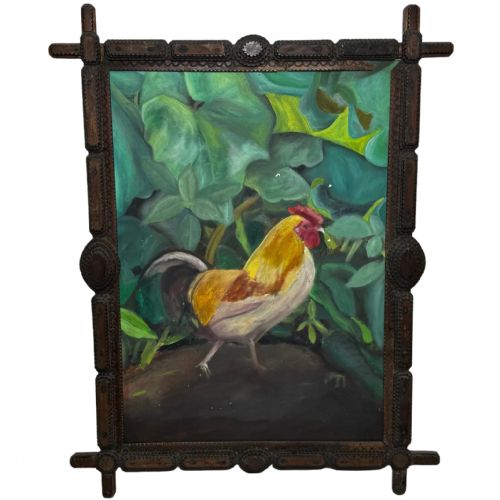

Farmyard Animal Artwork
Farmyard animal artwork brings the rustic charm of rural livestock and poultry straight into your interior.
Farmyard Animal Artwork
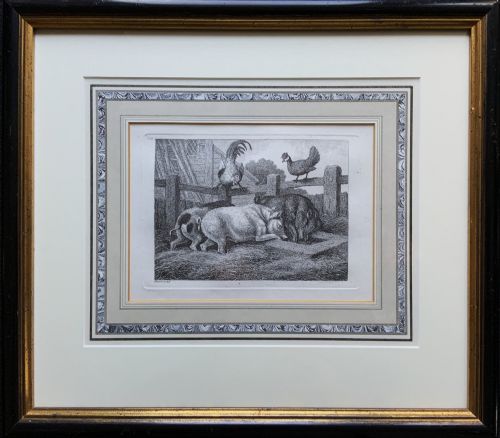
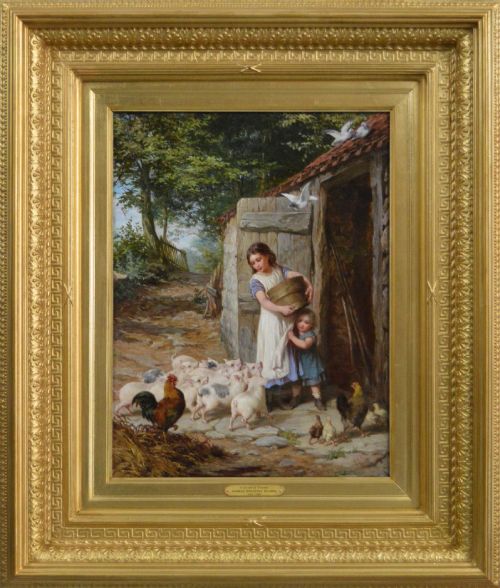
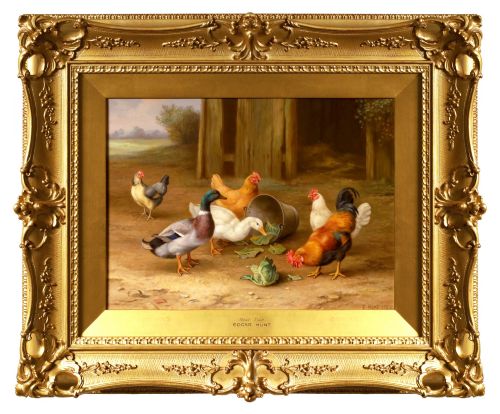
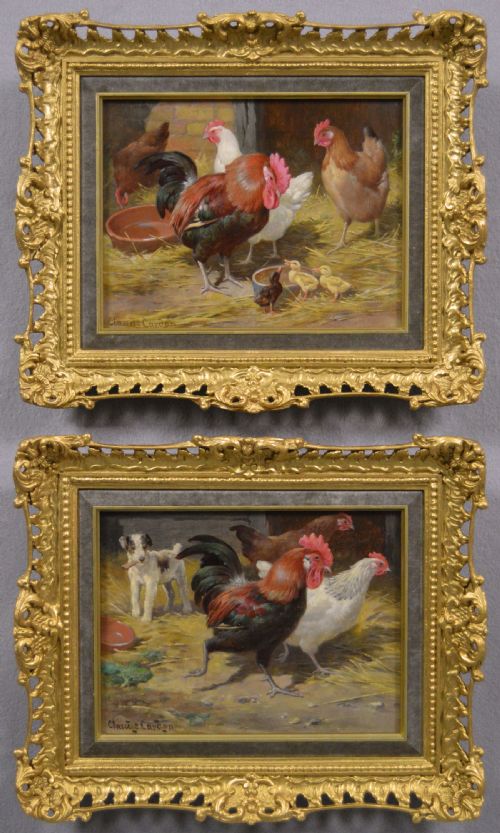
Farmyard animal artwork captures the daily life of rural livestock, horses, and poultry within pastoral settings. These pieces primarily date from the nineteenth and early twentieth centuries, spanning periods like the Victorian and Edwardian eras. You will most frequently encounter oil paintings on canvas alongside occasional watercolours, housed within traditional frames.
The subjects range from intimate portrayals of hens, cockerels, and chicks to busier scenes featuring horses, pigs, goats, and cattle alongside farmworkers. British animalier and rural realism styles dominate the selection, often placing the animals centrally in a landscape or farmyard. These works reflect a sustained fascination with agricultural life during a period of rapid industrialisation.
How they were made
Artists painted these works using oil paint applied to stretched canvas or wooden panels, whilst others utilised watercolour on paper. The application involves careful layering of pigment to render the textures of feathers, fur, and straw with distinct realism. Canvases are frequently secured within gesso and giltwood frames finished with gold leaf.
Makers built up depth through tonal contrast, setting illuminated animals against darker agrarian backdrops like barns and pastures. The physical construction relies on traditional stretched canvas techniques standard to nineteenth-century and early twentieth-century painters.
Listings feature works spanning the nineteenth and early twentieth centuries, executed in oil on canvas, wood, and watercolour.
What varies in quality
Quality rests primarily upon the artist's ability to render the anatomy and texture of the animals with convincing naturalism. The handling of light across feathers, coats, and surrounding straw distinguishes a master painter from a routine studio hand.
Compositional complexity also marks out the superior pieces, particularly those balancing multiple species like horses, pigs, and poultry within a unified landscape. The integrity of the original canvas, paint layer, and period frame contributes substantially to the overall standing of the work.
George Augustus Holmes·Edgar Hunt·Claude Cardon·John Frederick Herring Jnr·Percival Glenfern·Helena Maguire·Pierre Emmanuel Dielmans·J L VAN Leemputten·R Lauritsch
The Farmyard Animal Artwork Glossary
- Animalier
- An artist who specialises in the realistic representation of animals. This term applies particularly to nineteenth-century painters who focused on livestock and domestic creatures.
- Gesso
- A plaster-like mixture applied to wooden frames before gilding. It provides a smooth base for gold leaf application.
- Giltwood
- Timber that has been carved and coated with gold leaf or metallic paint. It forms the traditional ornate framing for nineteenth-century oil paintings.
- Rural Realism
- An artistic movement depicting everyday agricultural labour and rural life without romantic idealisation. It grounds farmyard scenes in the honest realities of nineteenth-century farming.
Farmyard Animal Artwork: Frequently Asked Questions
What periods do these paintings come from?
The available works span the nineteenth and early twentieth centuries, with a strong concentration of pieces created during the Victorian and Edwardian eras. Dates range from the 1870s through to the 1930s.
Creators working within this timeframe produced detailed studies of farm life, reflecting the prevailing interest in rural realism and animal painting during those decades.
What animals appear most often?
Chickens, cockerels, and chicks dominate many of the compositions, often painted in close-up or interacting within a farmyard setting. Horses, pigs, ducks, and cattle also feature prominently.
Many compositions combine several of these animals together, depicting scenes of feeding or resting in a traditional country landscape.
Are these works painted in oil or watercolour?
The majority of the pieces are executed in oil paint on canvas, which allowed artists to build rich textures in feathers and fur. A smaller number of works utilise watercolour on paper.
Oil paintings from this period are typically preserved within period giltwood frames, whilst watercolours are mounted under glass.
How should I hang a Victorian animal painting?
These works suit traditional living spaces, libraries, or dining rooms where their warm earth tones and rustic subjects complement period interiors. They pair effectively with wood panelling and neutral wall colours.
Avoid placing oil paintings in direct sunlight to protect the pigments, and ensure they hang away from sources of excessive heat or moisture.