



Farmhouse Table Bench
These farmhouse table bench selections offer practical rustic utility, built from honest timber to serve hardworking domestic spaces with timeless simplicity.
Farmhouse Table Bench
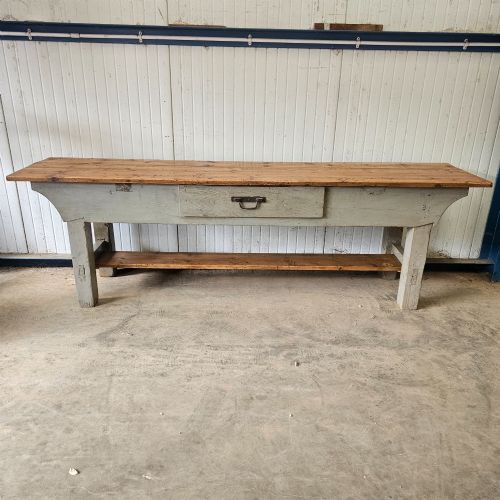
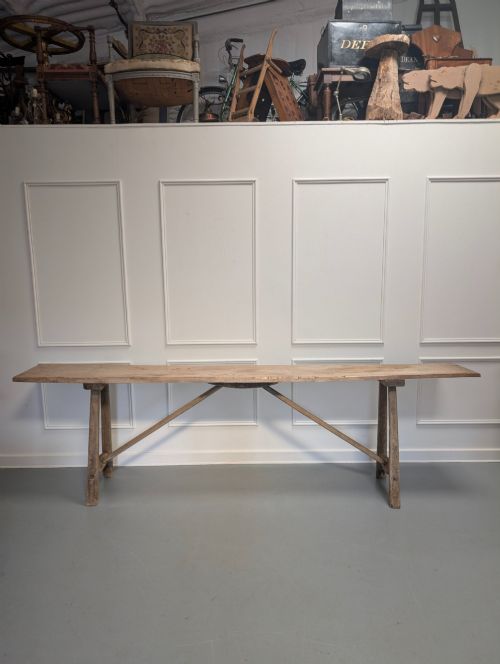
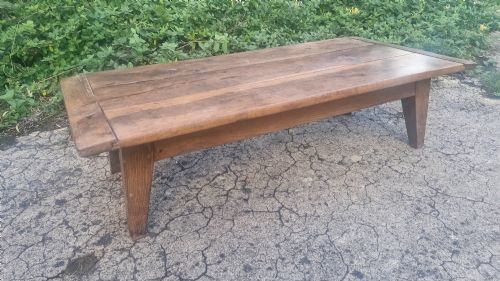
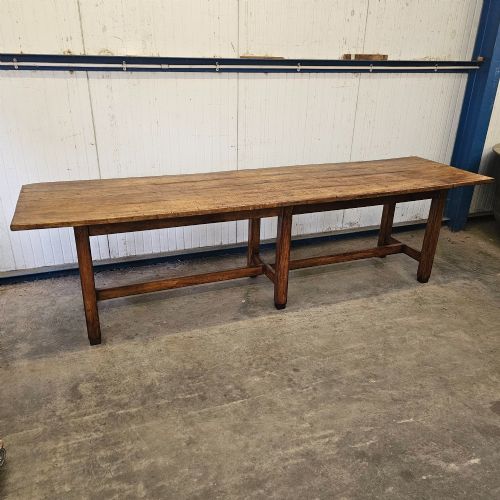
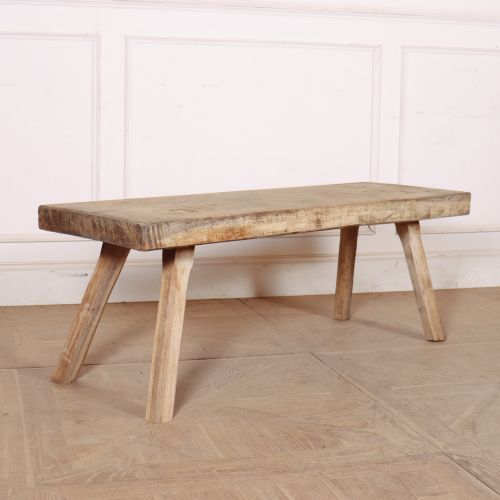
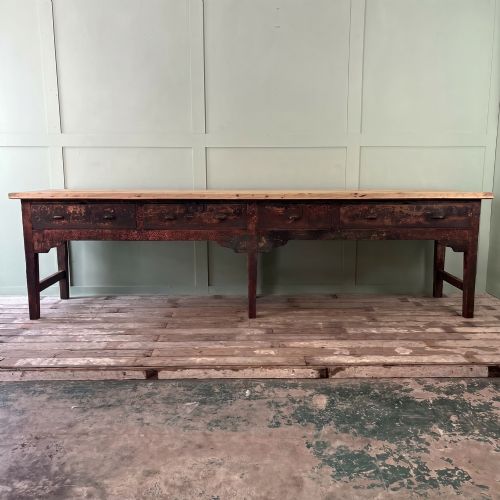
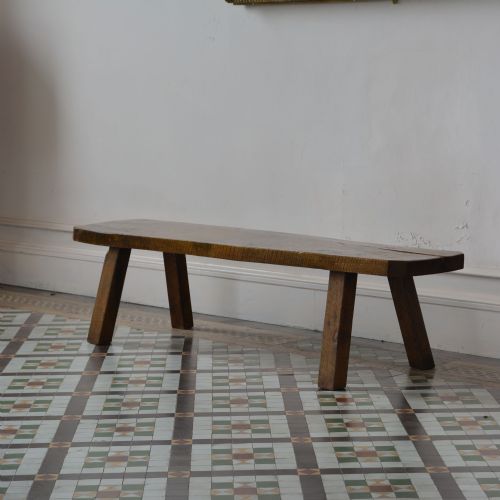
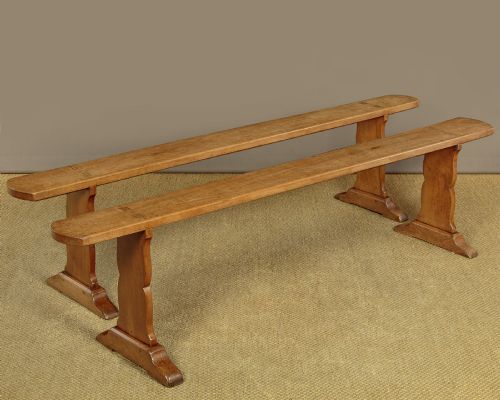
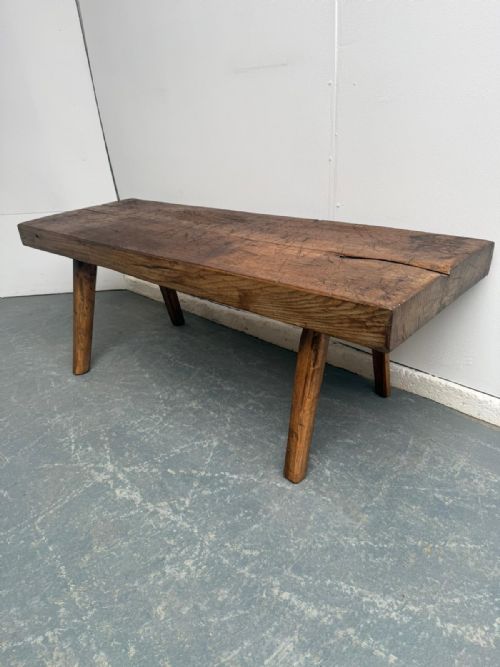
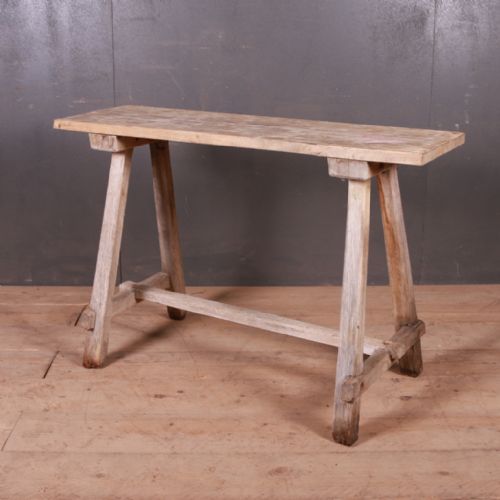
A farmhouse table bench combines utilitarian purpose with robust construction, taking forms such as long dining benches, narrow pig benches, and sturdy prep tables. Buyers seeking a farmhouse table bench encounter pieces originating from nineteenth-century workshops, Victorian periods, and early twentieth-century domestic settings.
Materials and construction methods
Construction relies heavily on durable hardwoods and softwoods such as oak, pine, elm, and sycamore, frequently utilising thick plank tops and robust trestle or four-legged supports. Iron hardware occasionally reinforces joints, while surviving traces of historical paint or scrubbed finishes show the working history of each surface.
Carpenters utilised straightforward joinery designed for heavy daily use rather than delicate decorative flourish, resulting in solid timbers that have aged with pronounced grain patterns. Two-board tops and plank construction typify the larger tables and benches found in this category.
Farmhouse Table Bench Retail Price Guide 2026
Typical asking prices for farmhouse table bench among the pieces listed under this phrase on Sellingantiques today, from the lower quarter to the upper quarter. They describe what is for sale here now, not the wider market.
Several historical workbenches still bear the satisfying chop marks and indentations left by past tradesmen hammering away centuries ago.
Factors determining quality
Quality rests upon the integrity of the original timber, the balance of proportions, and the degree of honest wear accumulated over decades of utility. Pieces retaining their original unpainted scrubbed surfaces or authentic patinated paint finishes demonstrate superior character compared to heavily altered examples.
Structural soundness in the legs and stretchers separates robust survivors from compromised items, while desirable proportions such as exceptional length or narrow widths elevate certain benches and worktables above standard utility forms.
The Farmhouse Table Bench Glossary
- Pig bench
- A narrow, low wooden bench historically used in agricultural or butchery contexts, now valued as a compact coffee or low display table.
- Prep table
- A utilitarian worktable featuring a sturdy top designed for food preparation in kitchens, bakeries, or laundries.
- Trestle table
- A table construction where the top is supported by two or more structural frames connected by a central horizontal beam.
- Scrubbed finish
- A timber surface repeatedly washed and scrubbed clean of old grime, revealing the pale, raw grain of the underlying wood.
- Refectory table
- A long dining table traditionally used in communal monastic or tavern dining halls for large groups.
Farmhouse Table Bench: Frequently Asked Questions
What is a pig bench used for today?
Modern interiors utilise these narrow, low benches primarily as coffee tables or statement display pieces in living spaces and hallways.
Their elongated proportions fit neatly in front of sofas or along narrow corridors where standard tables prove too bulky.
How do I care for a scrubbed timber top?
Maintain raw or scrubbed wood surfaces by dusting regularly and wiping spills immediately with a damp cloth to prevent staining.
Avoid harsh chemical cleaners that strip the natural oils and dry out the historic grain of the pine or oak.
Are these benches comfortable for dining?
Length and height vary significantly across these listings, so checking measurements against your dining chairs is essential for comfort.
Many historic benches were designed for quick seating in work environments rather than long, relaxed dinner parties.
How can I tell a nineteenth-century piece apart?
Nineteenth-century examples display hand-cut joinery marks, heavy plank tops, and natural patination earned through decades of domestic or workshop use.
Examining the underside and fastening methods reveals the older manufacturing techniques characteristic of the Victorian era.