
Farmhouse Side Table
A farmhouse side table brings unpretentious utility and rich timber grain to a room, offering a sturdy surface shaped by generations of practical domestic work.
Farmhouse Side Table
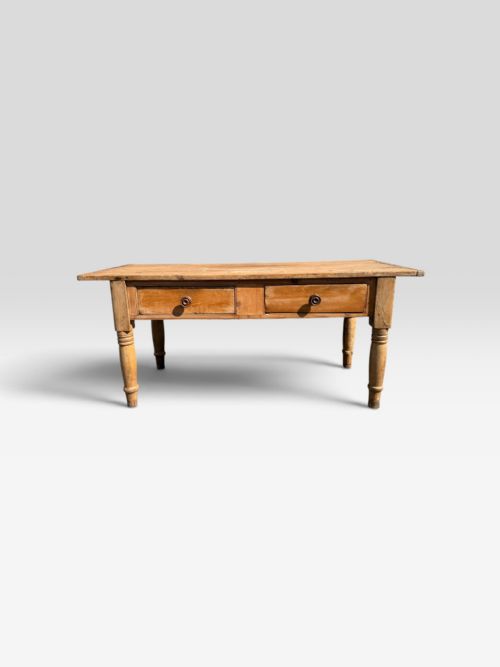
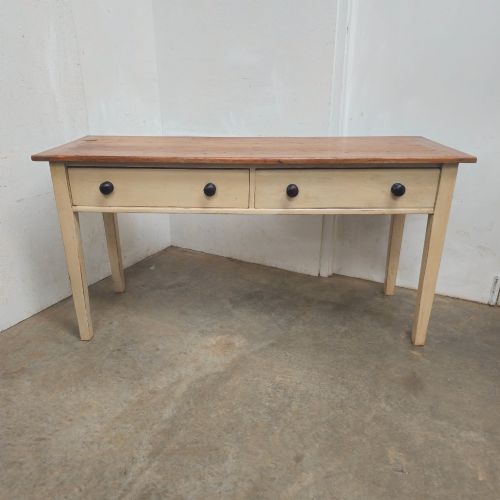
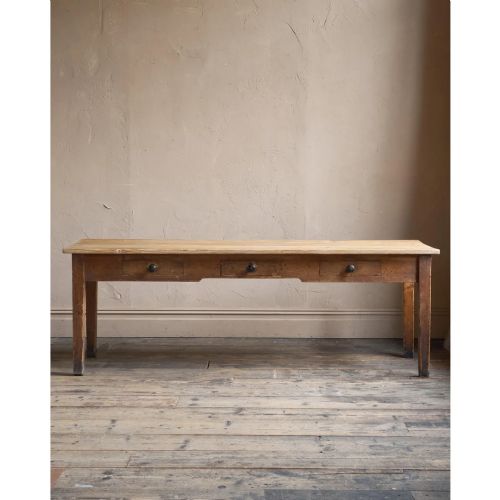
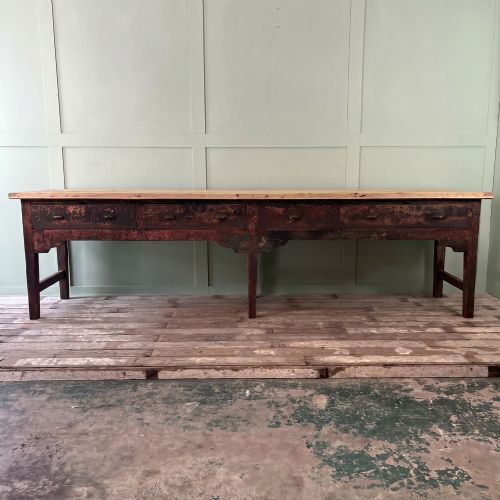
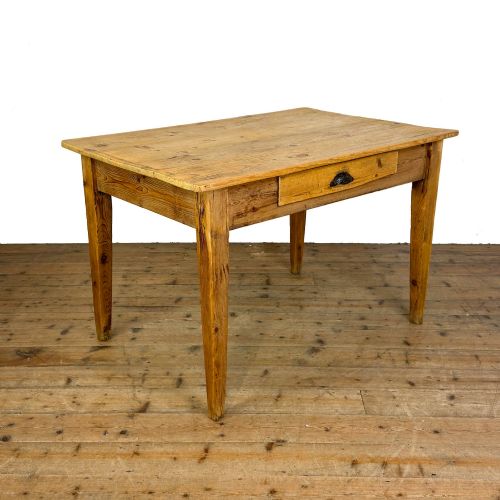
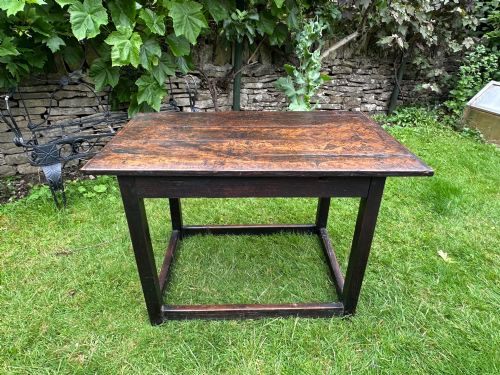
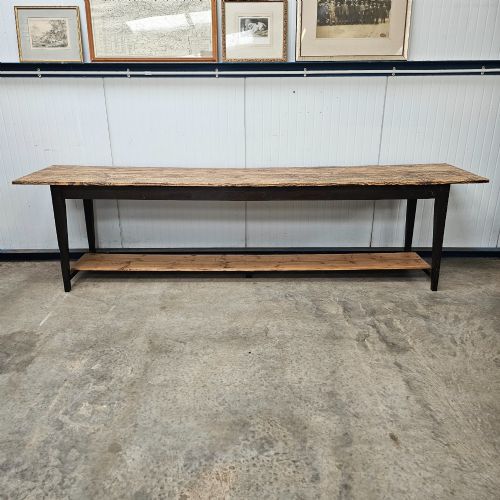
A farmhouse side table represents the smaller, more compact relation of the traditional kitchen or dining board, designed for auxiliary tasks rather than grand feasts. These pieces span from the eighteenth century through to the early twentieth century, drawing on English, Welsh, Scottish, French, and Swedish traditions.
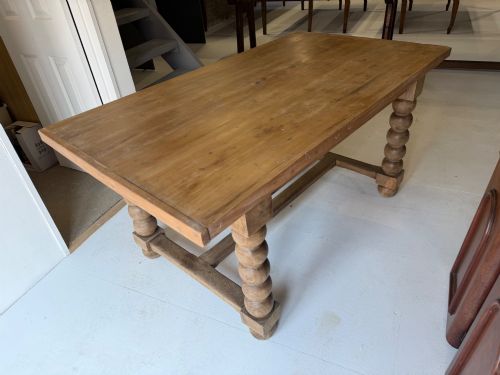
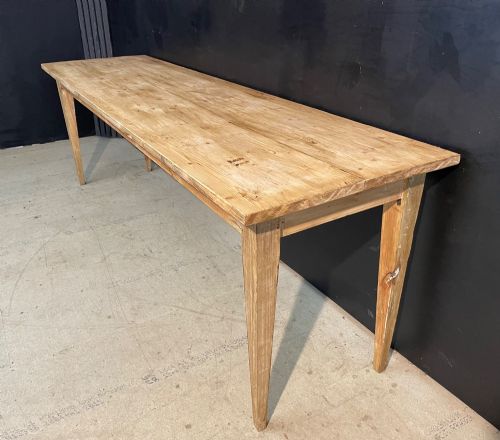
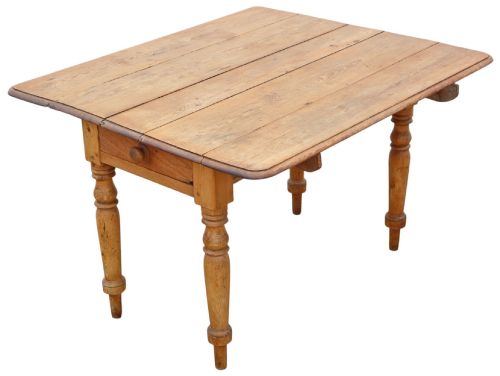
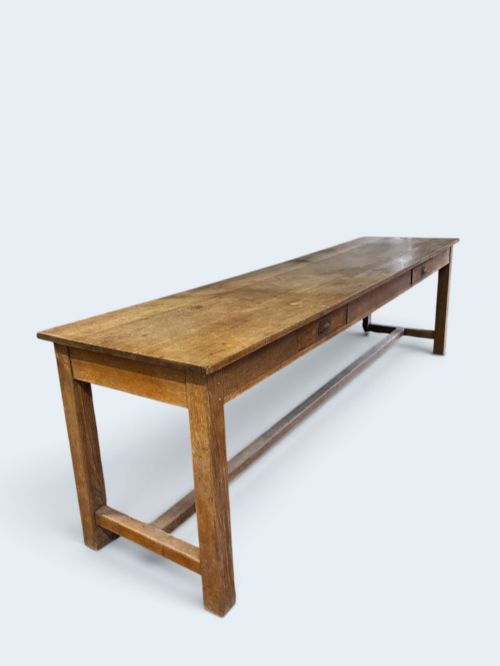
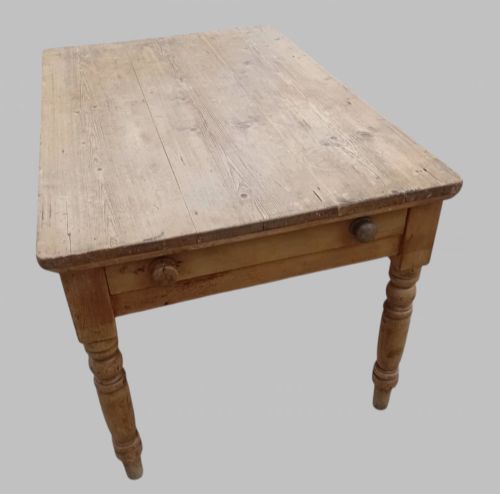
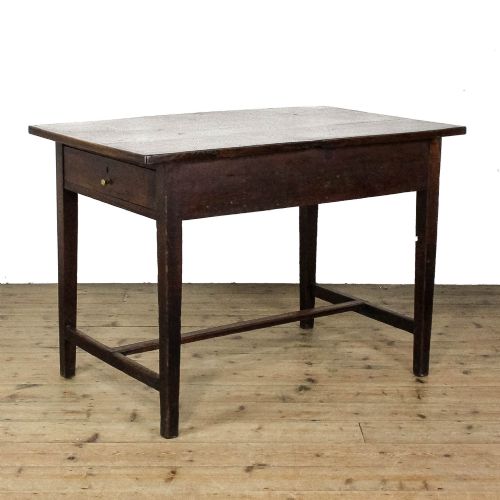
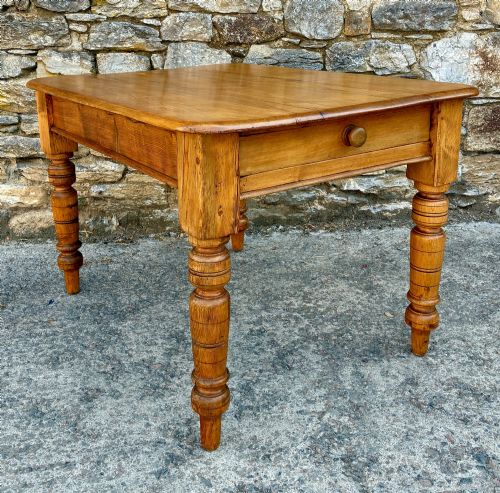
The versions met most often on this page are constructed from pine, oak, elm, or cherrywood, frequently featuring a single side drawer or a pot-shelf beneath. They appear under various descriptions including console tables, serving tables, prep tables, and occasional writing tables.
Makers built these tables for hard work in dairies, sculleries, and kitchens before they found their way into modern reception rooms and hallways. Their forms remain resolutely functional, prioritising stout legs, thick plank tops, and honest joinery over ornamental excess.
Materials and construction
Makers relied principally on softwood pine and resilient hardwoods such as oak, elm, and cherrywood for the primary structure. Planks were joined with pegged mortise and tenon joints to withstand heavy daily use in kitchens and sculleries.
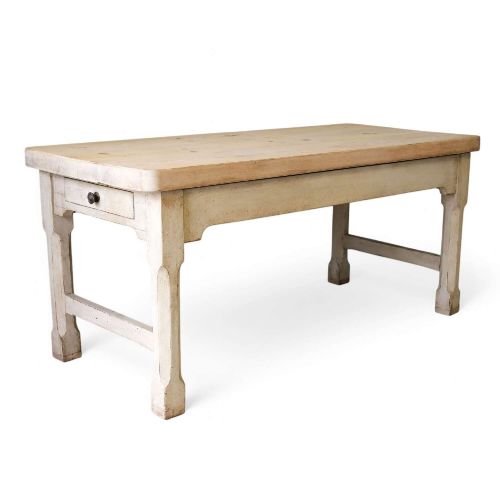
Surfaces were either left as bare scrubbed timber or finished with traditional treatments like Falu paint and later decorative coats. Iron and brass fittings occasionally appear on drawers and drop leaves, adding subtle functional detail to the wooden framework.
The inventory records regional forms including Welsh oak pieces, French provincial tables, and Swedish painted items.
Distinctions in quality
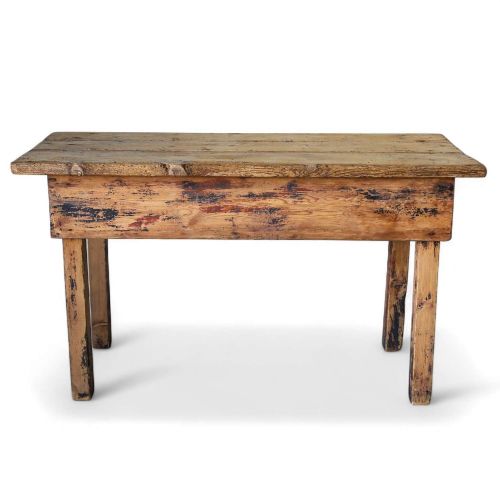
The standard of a farmhouse side table rests upon the integrity of its timber and the honesty of its wear. Pieces retaining their original painted legs or untouched scrub-tops hold greater archaeological and visual honesty than heavily restored equivalents.
Proportion and construction depth separate standard workshop output from finer country pieces. Well-judged timber thickness, original drawer linings, and cleanly integrated side rails indicate a higher grade of provincial cabinetmaking.
The Farmhouse Side Table Glossary
- Scrub-top
- A wooden table surface repeatedly scoured with water and sand to keep it hygienic for food preparation. This process leaves the grain raised and pale.
- Pot-shelf
- An open lower tier fitted between the legs of a table to store pots, pans, and heavy kitchen utensils. It provides structural bracing as well as utility.
- Drop leaf
- A hinged flap on the side of a table top that can be raised to extend the surface area. It allows the furniture to adapt to smaller rooms.
- Falu paint
- A deep red or earthy paint traditionally used in Sweden containing copper mine residue. It offers durable protection to pine and softwood furniture.
- Breadboard ends
- Transverse pieces of timber fixed across the ends of a plank top to prevent warping. They allow the main boards to expand and contract with seasonal humidity.
Farmhouse Side Table: Frequently Asked Questions
What rooms suit a farmhouse side table?
These tables adapt easily to hallways, kitchens, and living rooms where a compact surface with storage is useful. Their understated proportions allow them to sit comfortably against walls or behind sofas.
They function well as writing desks, serving ledges, or lamp tables. The inclusion of drawers or pot-shelves provides practical storage for everyday items.
How do I care for an antique wood top?
Routine maintenance requires only a dry or slightly damp cloth to remove dust. Avoid harsh chemical cleaners that strip the dry patina built up over generations of use.
Applying occasional natural wax helps nourish dry pine or oak. Keeping the table away from direct heat sources prevents the timber planks from splitting.
Are these tables suitable for daily kitchen use?
Many of these pieces were originally built for heavy kitchen, scullery, or dairy work. Solid plank construction and pegged joints mean they remain robust enough for contemporary culinary tasks.
Using boards for food preparation or serving requires sensible precautions against moisture and staining. Unsealed timber tops benefit from being treated with food-safe oils if used intensively.
How can I tell the age of the wood?
Dating relies on observing tool marks, timber selection, and construction methods. Hand-sawn planks, handmade nails, and pegged joints usually point to eighteenth or nineteenth-century origins.
Surface wear, such as historic ink stains, scrubbed grain, and natural fading, helps confirm age. Late nineteenth and early twentieth-century examples often display machine-sawn components alongside traditional joinery.