
Farmhouse Kitchen Table Drawer
A farmhouse kitchen table drawer brings immediate utility and regional character to a workspace, combining domestic function with enduring tactile appeal.
Farmhouse Kitchen Table Drawer
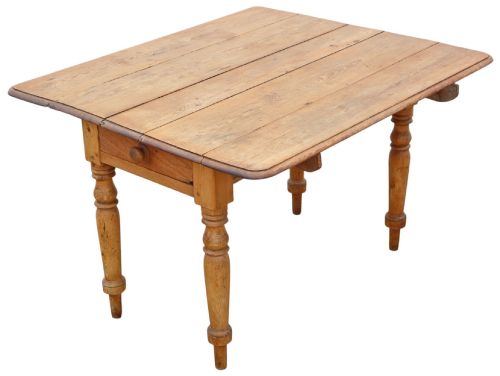
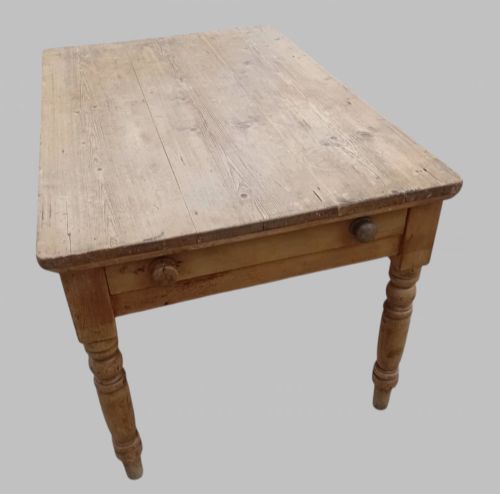
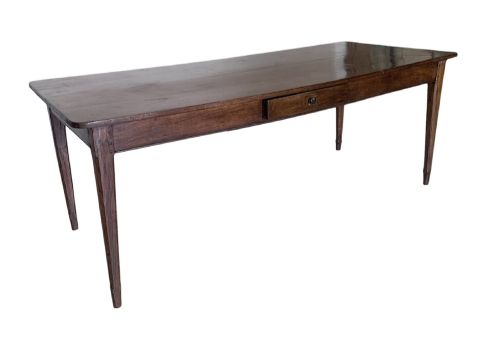
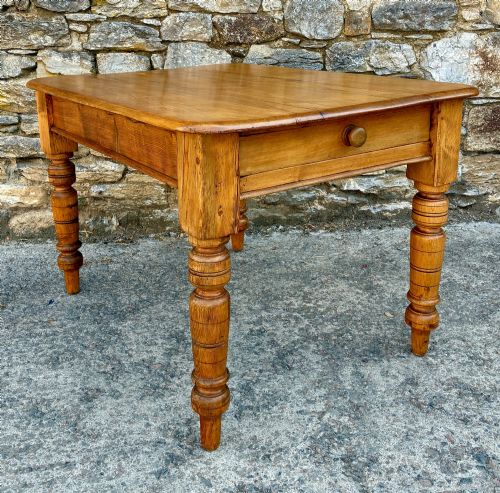
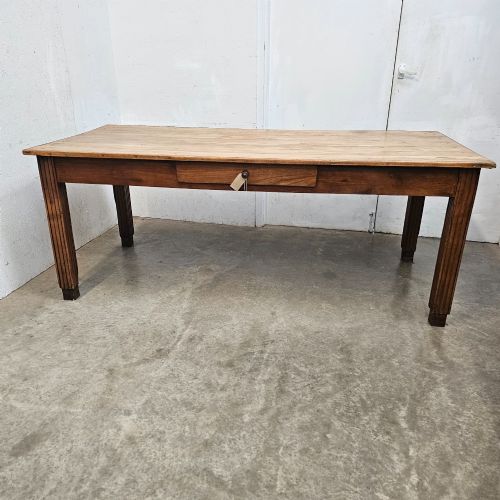
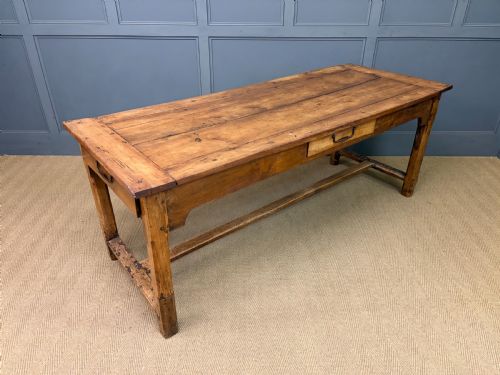
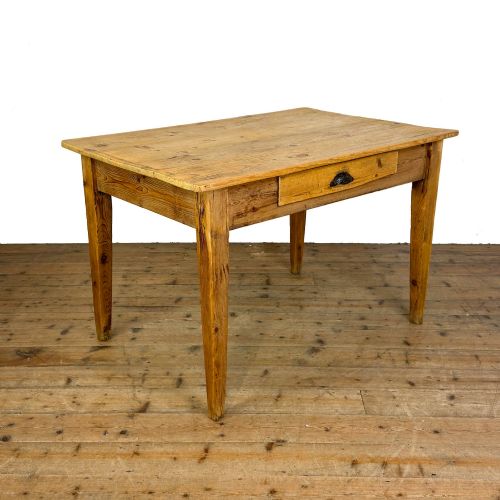
A farmhouse kitchen table drawer is an integral storage compartment built into utilitarian dining, prep, and scullery tables dating primarily from the nineteenth century. These tables emerge from domestic and agricultural settings across England, Scotland, and France, functioning as robust work surfaces for daily food preparation and communal dining.
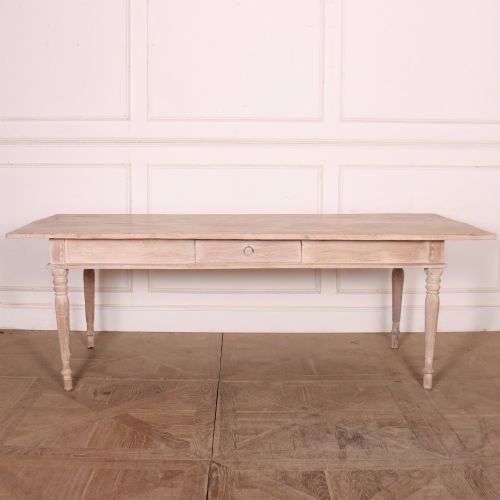
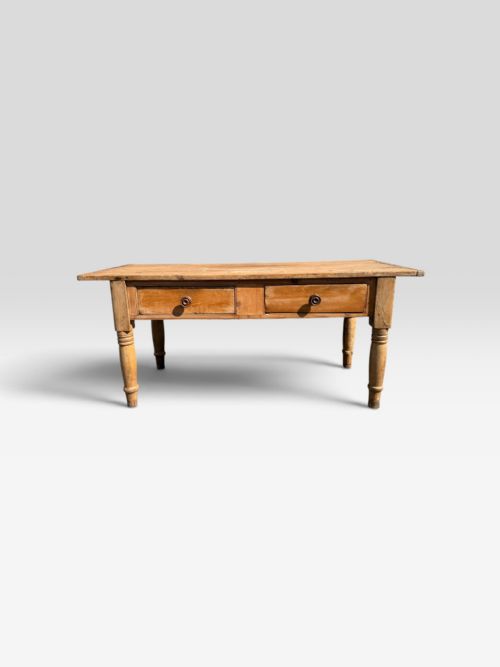
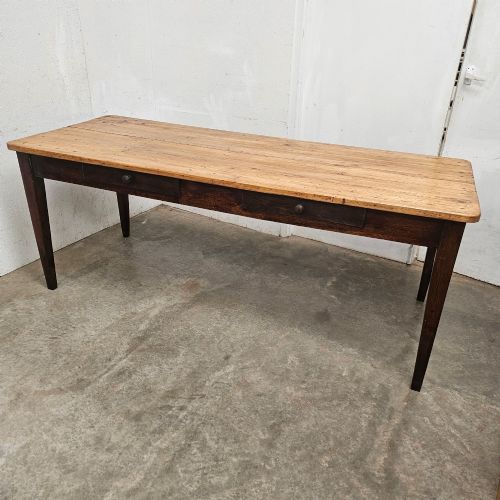
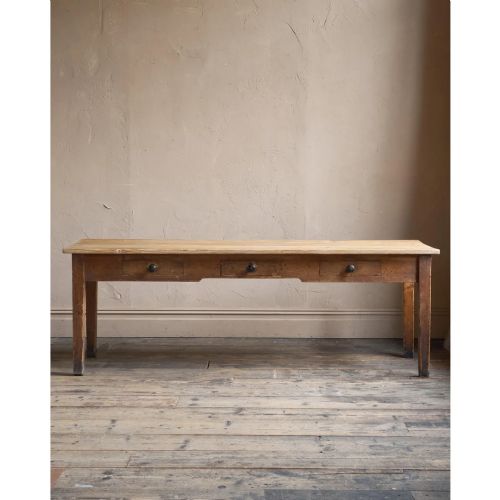
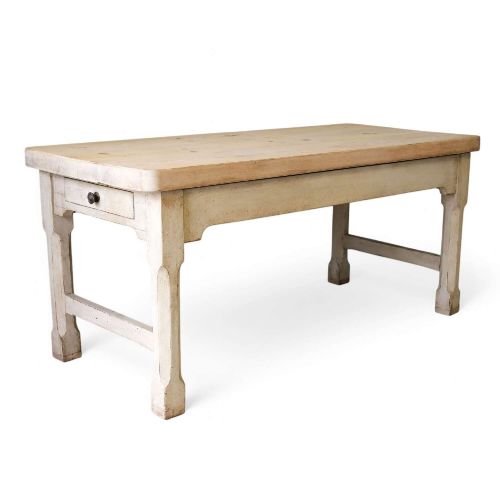
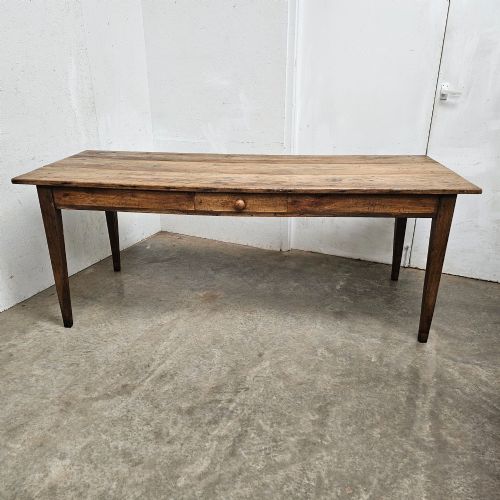
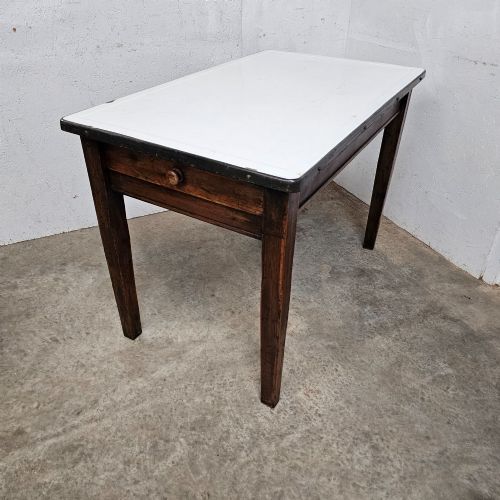
You will most frequently encounter pine and oak examples featuring either a single side drawer or dual end drawers, often paired with scrub tops or original painted finishes. Variations span from compact domestic breakfast tables to large multi-drawer refectory boards utilised in country houses and sculleries.
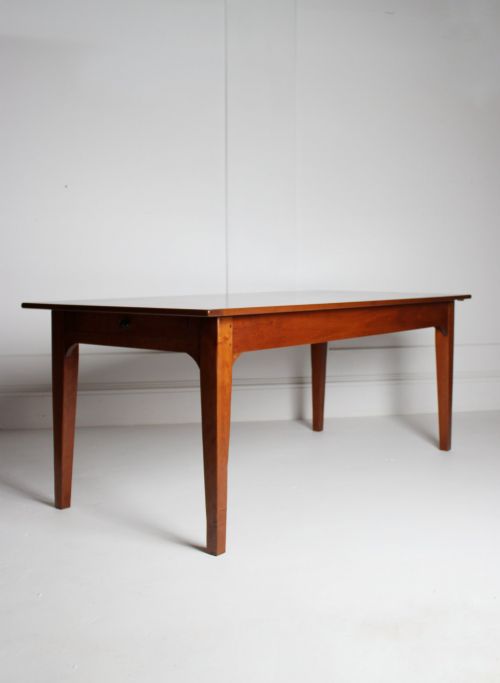
The phrase encompasses diverse regional styles, including French provincial and Victorian country designs, which utilise fruitwood, cherrywood, and elm alongside traditional softwood timbers. Each piece reflects the specific domestic needs of its era, balancing sturdy construction with accessible under-table storage for utensils and linen.
How they were made
Construction relies on solid timbers such as pine, oak, and fruitwood, joined with traditional framing methods designed to withstand heavy daily labour. Table tops often utilise thick planks joined by breadboard ends to manage seasonal wood movement, while drawer boxes feature hand-cut dovetail joints for lasting strength.
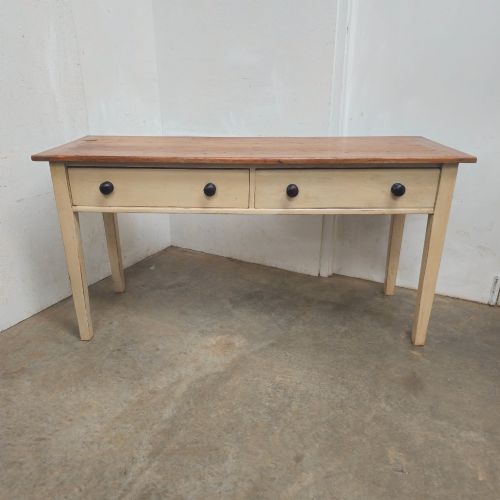
Surfaces show a mixture of scrubbed bare wood, original paintwork, and aged patination acquired through decades of domestic use. Iron and brass pulls adorn the drawer fronts, complemented occasionally by auxiliary hardware like sliding breadboards or pot shelves.
Pine and oak dominate the material record here, accompanied by fruitwood, cherrywood, and elm across nineteenth-century Victorian and Edwardian examples.
What varies in quality
Quality rests in the integrity of the timber selection, the retention of original structural elements, and the depth of surface patination. Tables retaining their original painted legs or untouched scrub tops demonstrate superior preservation compared to those stripped or rebuilt across multiple eras.
The refinement of the joinery, particularly in the construction of the drawer boxes and the smoothness of their runners, separates utilitarian workshop pieces from finer country house dining furniture. Proportion and timber thickness also dictate value, with dense hardwoods and well-balanced dimensions commanding greater presence.
The Farmhouse Kitchen Table Drawer Glossary
- Scrub top
- A bare wooden table surface repeatedly scoured with water and abrasive stone to maintain hygiene. This process creates a pale, smooth finish characteristic of nineteenth-century food preparation tables.
- Breadboard end
- A transverse piece of timber fastened across the end of a solid table top to prevent warping. It allows the main planks to expand and contract naturally with changes in humidity.
- Refectory table
- A long, narrow dining table historically used for communal meals in monastic or large domestic settings. In country contexts, these forms are adapted with integrated drawers for everyday kitchen storage.
- Dovetail joint
- An interlocking corner joint formed by fan-shaped tenons that fit together securely. It provides exceptional tensile strength for drawer construction without relying on modern metal fasteners.
- Pot shelf
- A low auxiliary tier positioned between the stretcher base of a table to hold heavy cookware and provisions. This feature maximises floor-level storage in busy rural kitchens.
Farmhouse Kitchen Table Drawer: Frequently Asked Questions
What were table drawers originally used for?
Kitchen drawers stored everyday utensils, linens, and small preparation tools close to the workspace. They kept essential items within arm's reach during communal cooking and baking tasks.
In larger sculleries and dairies, multiple drawers helped organise provisions and household accounts separately from the main dining area.
How do I identify the period of a table?
Dating relies on timber choice, tool marks, and construction techniques visible beneath the frame. Nineteenth-century pieces typically exhibit hand-sawn boards and traditional joinery rather than modern industrial fixings.
Secondary woods used inside the drawer boxes and the type of hardware fitted also offer reliable clues to the exact manufacturing decade.
Are painted finishes original?
Many tables retain their original nineteenth-century paint on the base while the top was left bare or scrubbed. Subsequent layers of paint often indicate ongoing domestic maintenance by past owners.
Evaluating the wear patterns and underlying pigment helps determine whether the finish dates to the table's initial creation or a later period.
Can these tables withstand daily dining use?
These pieces were built as heavy-duty work surfaces designed to endure generations of domestic wear and tear. Their solid timber construction makes them exceptionally resilient for modern family dining and kitchen tasks.
Routine care involves treating the wood with appropriate natural oils to protect the surface from moisture and heat damage.