






Farmhouse Dining Bench
A farmhouse dining bench brings unpretentious utility and enduring timber character to the heart of the home.
Farmhouse Dining Bench
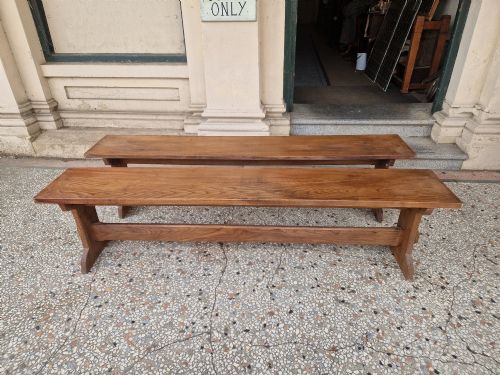
A farmhouse dining bench is a practical seating option designed to accompany kitchen and dining tables, frequently encountered in timber formats spanning the nineteenth and early twentieth centuries. These communal seats serve everyday gatherings, accommodating multiple diners alongside tables of matching scale.
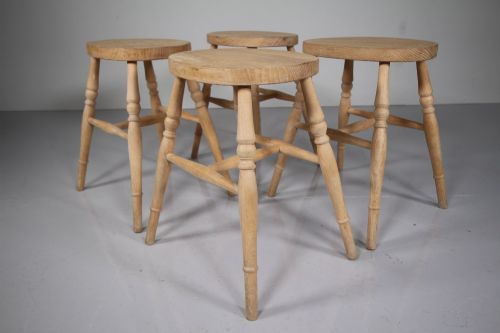
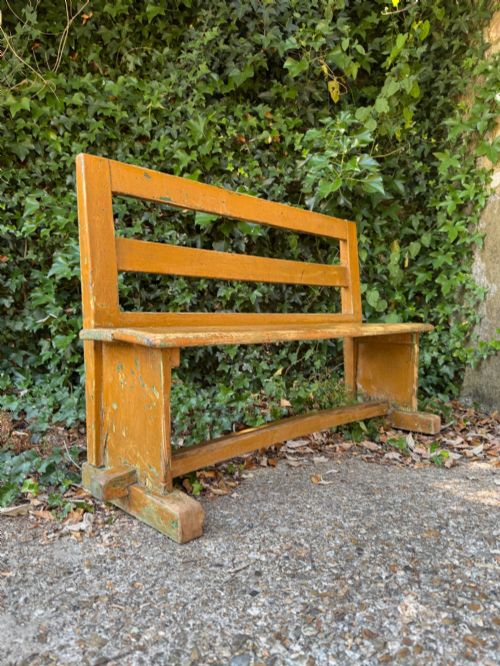
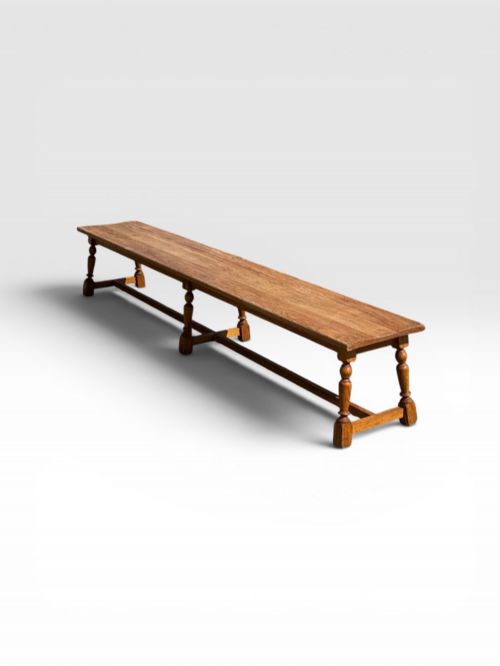
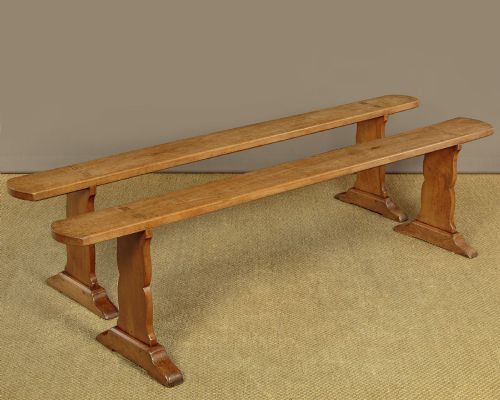
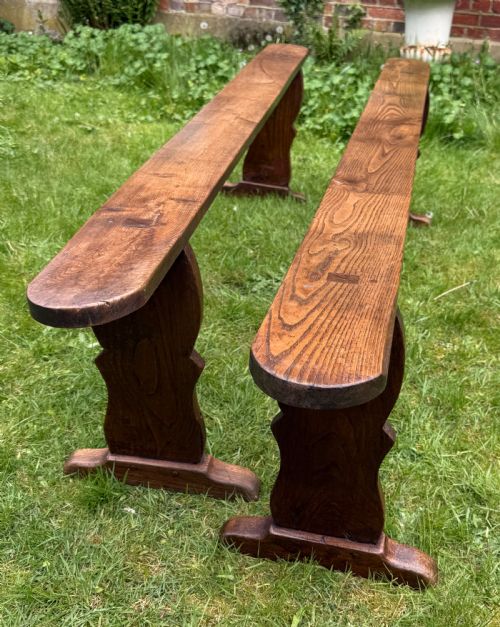
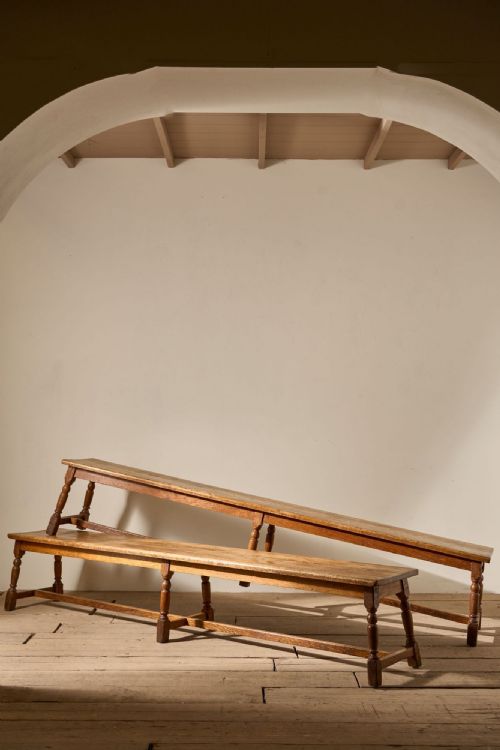
The variations on this page include long timber examples in oak, pine, and elm, originating from English, French, and Welsh workshops. Buyers meet single long seats as well as matched pairs, spanning rustic country styles and Edwardian country interpretations.
Materials and construction
Construction relies heavily on robust native timbers such as oak, pine, and elm, selected for structural strength and long plank availability. Joinery is straightforward and functional, utilising solid wood tops supported by sturdy legs or trestle bases designed to withstand heavy daily use.
Surfaces show the natural grain of the wood, sometimes finished with scrubbed treatments or historical paint layers. These methods prioritize durability and stability over ornate decoration, resulting in honest seating built for practicality.
Regional styles represented on this page span English country, French provincial, Welsh tavern, and Edwardian country traditions.
Evaluating quality and proportion
Quality rests primarily in the choice of timber and the integrity of the original construction, where dense hardwoods like oak and elm command greater respect than softer woods. The weight of the timber and the thickness of the plank top dictate the overall substance of the piece.
Proportion and length also define the upper tier, particularly exceptionally long examples or scarce matched pairs that require careful timber selection. Original surfaces free from excessive modern intervention retain more character and historical integrity.
The Farmhouse Dining Bench Glossary
- Trestle
- A structural support consisting of a horizontal beam fixed to two splayed legs, commonly found beneath long dining benches and tables. This design allows maximum legroom along the length of the seat.
- Plank-top
- A surface constructed from wide boards joined edge to edge, characteristic of substantial nineteenth-century timber furniture. This construction method displays the natural grain and growth rings of the tree.
- Scrubbed
- A finish achieved through repeated vigorous cleaning with water and sand or soap, leaving the raw timber pale and smooth. It reflects centuries of kitchen maintenance where tabletops and benches required regular washing.
- Settle
- An enclosed wooden bench featuring high backs and solid sides designed to block draughts in traditional rooms. Some versions include storage beneath the hinged seat.
- Refectory
- A long dining format originally associated with monastic dining halls, adapted into domestic vernacular furniture. These pieces are built for communal gatherings and lengthy dining.
Farmhouse Dining Bench: Frequently Asked Questions
How do I choose the right length?
Consider the length of your dining table and the space available along its sides. A bench generally looks best when it matches the table length or sits slightly shorter to slide underneath.
Allow adequate clearance at both ends of the table for diners to sit down comfortably without obstruction from table legs.
Are these benches comfortable for long dinners?
Traditional wooden benches provide firm, upright support suited for communal dining and kitchen activity. They encourage an upright posture rather than relaxed lounging.
Many owners add loose cushions or sheepskins to soften the timber surface during extended meals.
How do I clean an antique timber bench?
Dust regularly with a dry cloth and clean occasionally with a slightly damp cloth using mild soap if necessary. Avoid harsh chemical polishes that can damage old wood finishes.
Unfinished or scrubbed timber responds well to traditional beeswax to nourish the dry grain over time.
Can I mix a bench with different chairs?
Combining a bench on one side of a table with individual chairs on the opposite side creates a balanced, relaxed arrangement. This mix works particularly well in informal kitchen settings.
Matching the timber tone or period helps tie disparate seating styles together cohesively.