

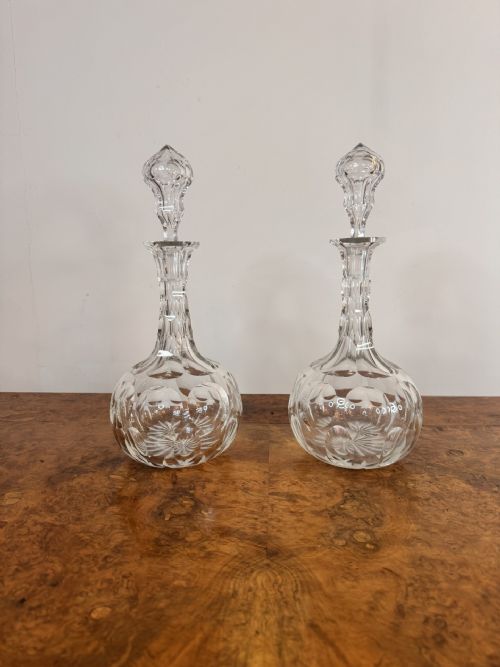
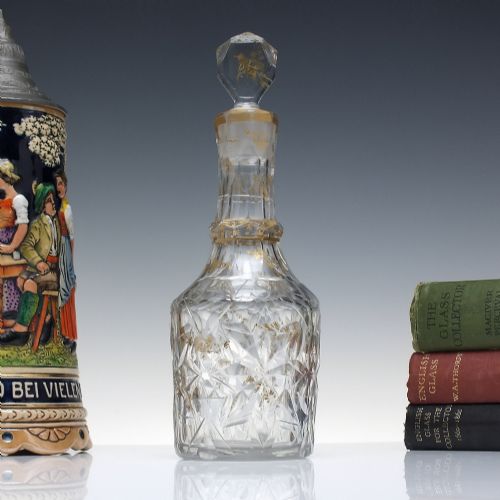
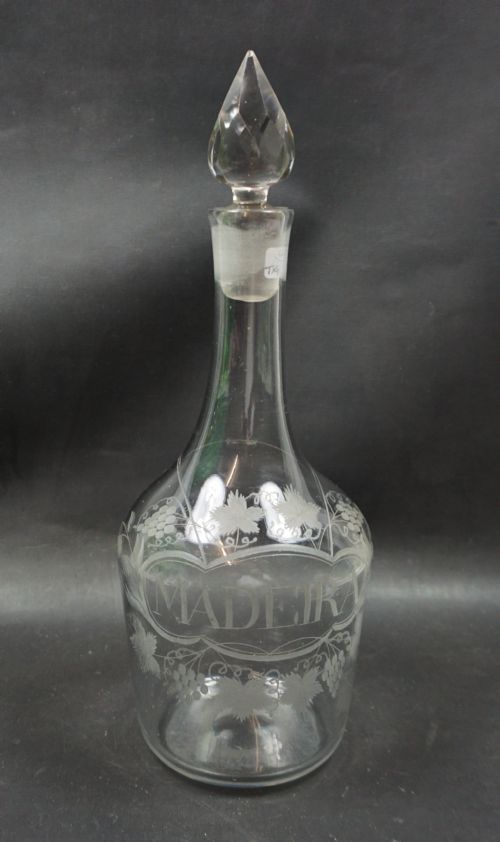


Faceted Glass Wine Carafe
A faceted glass wine carafe brings heavy brilliance to the table, and this selection spans Georgian cut vessels to Edwardian lead crystal decanters.
Faceted Glass Wine Carafe
When you search for a faceted glass wine carafe, you encounter vessels designed to hold and serve wine from the Georgian, Victorian, and Edwardian eras. The most common forms on this page include bell-shaped decanters, shoulder decanters, and tall ewers with fitted stoppers.
These vessels originate from English workshops spanning the middle of the eighteenth century through the early twentieth century. Collectors find single bottles, pairs, and occasionally larger sets sharing matching cut patterns and stoppers.
The styles range from George III gilded vessels associated with the atelier of James Giles to sturdy dark green ships decanters from the 1920s. Victorian and Edwardian examples dominate the selection, offering heavy faceted bodies intended for everyday dining.
Depth of cut and clarity
Quality rests in the crispness of the wheel cutting and the optical clarity of the metal. Deeper facets catch the light sharply, whereas softer cutting produces a muted reflection across the surface of the glass.
The weight of the lead crystal and the matching of the original stoppers distinguish finer examples. Finer pieces also display precise hand engraving, such as labeled panels or delicate floral decoration.
Faceted Glass Wine Carafe Retail Price Guide 2026
Typical asking prices for faceted glass wine carafe among the pieces listed under this phrase on Sellingantiques today, from the lower quarter to the upper quarter. They describe what is for sale here now, not the wider market.
The listings span periods from 1750 through the 1920s, featuring materials such as lead crystal, cut glass, and gold leaf.
Atelier of James Giles
The Faceted Glass Wine Carafe Glossary
- Lead crystal
- Glass containing lead oxide, which increases weight, brilliance, and the refraction of light through the facets.
- Ewer
- A pitcher or jug with a wide spout, used alongside traditional decanters for serving wine.
- Shoulder decanter
- A vessel with a broad, flat shoulder and a tapering body designed to sit securely on a table.
- Ships decanters
- A bottle with a wide, heavy base that prevents tipping aboard a rolling vessel at sea.
- Gilded
- Decorated with a thin application of gold leaf applied to the surface of the glass.
Faceted Glass Wine Carafe: Frequently Asked Questions
How do I date an old decanter?
Dating relies on the shape of the body, the style of the cutting, and the form of the matching stopper. Georgian vessels often display specific gilding or hand engraving, while Edwardian pieces use heavier lead crystal.
Examining the pontil mark on the base also provides clues regarding the manufacturing period and the age of the glass.
Are stoppers original to the bottles?
Original stoppers are hand-ground to fit the specific neck of each individual decanter. Collectors check whether the number on the stopper matches the mark or fit inside the neck.
Matching the cutting pattern across both the bottle and the stopper helps confirm they originated together.
How should I clean these decanters?
Cleaning requires warm water and mild soap, avoiding harsh scrubbing brushes that might scratch the old glass or any applied gold leaf. Rinsing thoroughly prevents residue from altering the taste of wine.
Wooden bottle beads or specialised cleaning tablets safely remove residue from the interior without damaging the faceted exterior.