

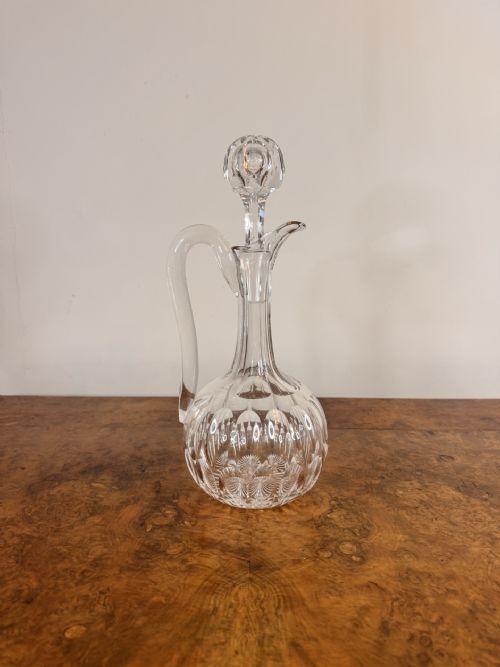
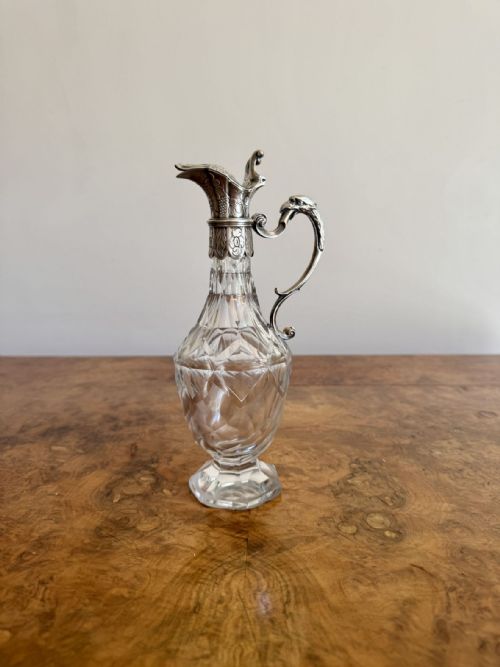


Clear Glass Wine Ewer
These clear glass wine ewer examples combine functional serving vessels with decorative glassware from the Victorian and Edwardian eras.
Clear Glass Wine Ewer
A clear glass wine ewer serves as an elegant pouring vessel for the dining table, originating in various stylistic forms throughout the nineteenth and early twentieth centuries. When you search for a clear glass wine ewer, you encounter pieces designed for dessert wine, claret, or cordials, spanning English, French, Italian, and German origins.
The selections on this page most commonly feature Edwardian and Victorian cut glass examples, alongside hand-blown specimens and pieces mounted in silver plate. Styles range from French Rococo Revival and Second Empire to Art Nouveau, demonstrating diverse craftsmanship across Europe.
These vessels take the form of decanters, pitchers, and jugs, often incorporating handles and pouring spouts suited for formal dining. Collectors find both simple glass bodies and elaborately decorated items featuring silver mounts or intricate latticinio work.
Materials and methods of construction
Craftsmen utilised clear glass, crystal, and lead crystal as the primary body materials, shaping them through hand-blowing or precise cutting techniques. Many pieces incorporate silver or silver plate for mounts, handles, and spouts, adding structural definition to the delicate glass.
Specialised decoration distinguishes specific pieces, such as white glass latticinio threads embedded within the material during the blowing process. Cut glass examples display deep geometric facets that catch the light, requiring skilled hand-polishing after the initial cutting.
Clear Glass Wine Ewer Retail Price Guide 2026
Typical asking prices for clear glass wine ewer among the pieces listed under this phrase on Sellingantiques today, from the lower quarter to the upper quarter. They describe what is for sale here now, not the wider market.
Some nineteenth-century wine ewers disguise their serious drinking purpose behind whimsical Art Nouveau curves and delicate white glass threads.
Distinctions in quality
The refinement of the glasscutting and the clarity of the crystal form the primary basis for distinction among these vessels. Sharper facets and heavier lead content indicate higher grade manufacture in Victorian and Edwardian examples.
The integration of metalwork also dictates overall merit, particularly the weight and execution of silver or silver-plated mounts. Pieces featuring intact, well-fitted metal collars and handles demonstrate superior original assembly.
Baccarat
The Clear Glass Wine Ewer Glossary
- Ewer
- A large jug or pitcher with a wide spout and handle, traditionally used for serving wine or water at the table. These items date predominantly from the nineteenth and early twentieth centuries.
- Latticinio
- A decorative glass technique involving opaque white glass threads twisted within clear glass. This method appears on mid-nineteenth-century European vessels.
- Silver Plate
- A thin layer of silver fused to a base metal such as copper or brass, commonly utilised for the mounts, handles, and rims of serving jugs. It provides the appearance of solid silver at a different cost.
- Lead Crystal
- Glass containing a high proportion of lead oxide, increasing weight, brilliance, and clarity. This material allows for deeper and sharper cutting.
- Decanter
- A vessel used to hold and serve decanted wine, closely related in form to the serving ewer. They often feature stoppers or open pouring lips.
Clear Glass Wine Ewer: Frequently Asked Questions
How were clear glass wine ewers used?
These vessels served to hold and pour wine at the dining table, particularly dessert wines, claret, or cordials. They combined practical pouring utility with ornamental display.
The handle and spout allowed hosts to serve guests directly from the vessel during formal meals. Many pieces remained on the sideboard when not in active use.
How do I distinguish Victorian from Edwardian pieces?
Victorian items often display heavier ornamentation, including ornate silver plate mounts and revivalist styles such as French Rococo or Second Empire. They date from the mid to late nineteenth century.
Edwardian examples tend to feature crisp cut glass designs that reflect the lighter aesthetic preferences of the early twentieth century. Form and mounting details usually align with the reigning tastes of their respective decades.
What is the difference between an ewer and a decanter?
An ewer typically incorporates a handle and a distinct pouring spout, designed for immediate service at the table. Decanters often rely on stoppers and may have simpler pouring rims without handles.
Some nineteenth-century manufacturing terms overlap, leading to pieces catalogued under both categories. The presence of a dedicated handle generally separates the ewer from standard decanter forms.