




Facet Cut Glass Decanter
These facet cut glass decanter pieces combine sharp optical precision with heavy tactile weight, bringing genuine period barware into daily domestic service.
Facet Cut Glass Decanter
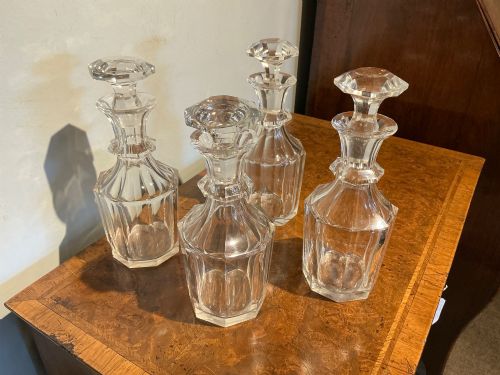
When you search for a facet cut glass decanter, you encounter vessels produced primarily across the Victorian and Edwardian eras, alongside pieces stretching back to the eighteenth century and forward into the Art Deco period. The selection on this page centres heavily on nineteenth and early twentieth century examples, ranging from single spirit bottles to pairs and complete matched sets.
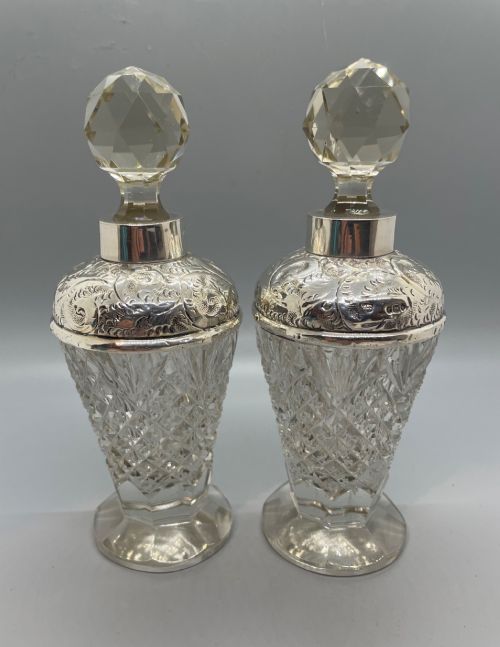
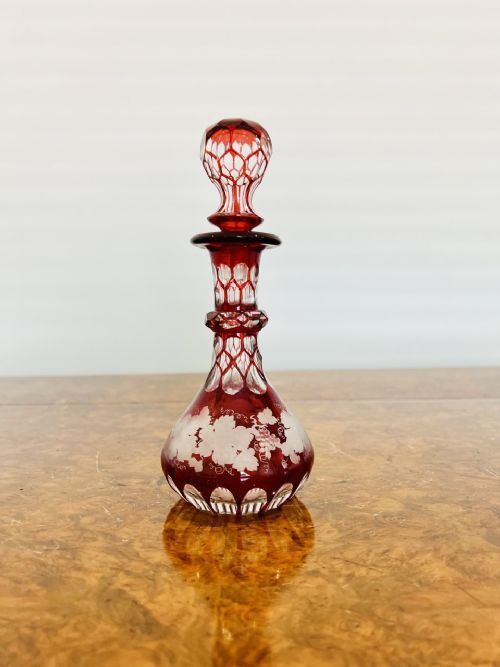
The forms extend beyond standard table decanters to include scent bottles, perfume decanters, ewers, and locking barware equipped with secure metal mechanisms. You meet bell-shaped bodies, mallet forms, and taper spirit designs, each shaped to hold wine, whisky, liqueurs, or scent.
Originating largely from English workshops, these items serve as both functional containers and decorative table objects. The domestic scale varies from small dressing table perfume bottles to large heavy spirit decanters intended for the dining sideboard.
How they were made
The manufacturing process relies upon heavy glass, lead crystal, and clear cut glass shaped by hand and wheel. Craftsmen cut geometric facets directly into the body of the vessel to catch and refract light from every angle.
Many examples incorporate sterling silver collars, mounts, and stoppers applied to the glass neck. Specialised locking mechanisms, such as those by Betjemann Brothers or Hukin and Heath, integrate metal framework securely around the crystal body.
Listings span the Victorian, Edwardian, and Art Deco periods, utilising lead crystal, cut glass, and sterling silver.
What varies in quality
The distinction between standard utility vessels and superior examples lies in the crispness of the cutting and the weight of the material. Deep, clean wheel-cut facets produce sharp light refraction, whereas softer or shallower cuts yield a duller optical effect.
The quality of associated metalwork elevates a piece, particularly heavy sterling silver mounts, hallmarked collars, and functional locking systems that operate smoothly. Original matching stoppers and thicker lead crystal blanks further distinguish the finer pieces in the range.
Betjemann Brothers·Hukin and Heath
The Facet Cut Glass Decanter Glossary
- Facet cut
- A decorative technique involving flat, polished planes ground into the surface of the glass. This method enhances the sparkle and brilliance of clear crystal.
- Lead crystal
- A heavy glass variety containing metal oxide that increases density and refractive index. It provides the ideal medium for deep wheel cutting.
- Spirit decanter
- A dedicated vessel designed for holding strong liquors such as whisky or brandy. These often feature robust proportions and secure stoppers.
- Mallet decanter
- A bottle form characterised by a straight-sided body tapering slightly toward a flat base. This stable shape gained popularity during the eighteenth and nineteenth centuries.
- Sterling silver collar
- A protective metal band fitted around the neck of a decanter or scent bottle. It often bears historical silver hallmarks indicating date and maker.
Facet Cut Glass Decanter: Frequently Asked Questions
How do I date an antique decanter?
Dating relies upon examining the shape of the body, the style of the cutting, and any accompanying metal mounts. Silver hallmarks provide exact years, while stylistic cues like heavy lead crystal and specific stopper designs point toward Victorian or Edwardian periods.
Simpler Georgian and eighteenth-century examples often feature pontil marks on the base and distinct taper forms. Comparing the thickness of the glass and the precision of the facets helps narrow the decade of manufacture.
What were locking decanters used for?
Locking decanters secured expensive spirits and wines away from domestic staff in large nineteenth-century households. A metal collar around the neck connects to a hinged arm that fastens over the stopper.
These pieces feature patented mechanisms requiring a small key to release the stopper. They represent a high-status barware accessory found mainly on grand dining sideboards.
Are scent bottles different from spirit decanters?
Scent and perfume bottles are scaled-down versions of standard decanters, designed for dressing tables rather than dining rooms. They frequently incorporate sterling silver screw caps or hinged collars alongside delicate facet cutting.
Spirit decanters possess much larger capacities and heavier bases to withstand regular handling on a bar or tray. Both items utilise identical glass-cutting techniques but serve entirely different domestic functions.
Can I still use these for serving drinks?
These pieces function safely for serving wine and spirits provided the interior is clean and free of heavy residue. Lead crystal handles modern potable liquids without issue, though hand washing remains essential.
Care should be taken with antique stoppers to prevent chipping against the glass rim. Many collectors actively use their nineteenth-century barware for daily entertaining.