



Fabric Slipper Chair
A fabric slipper chair offers a low seat designed for the bedroom, combining comfort and period charm.
Fabric Slipper Chair
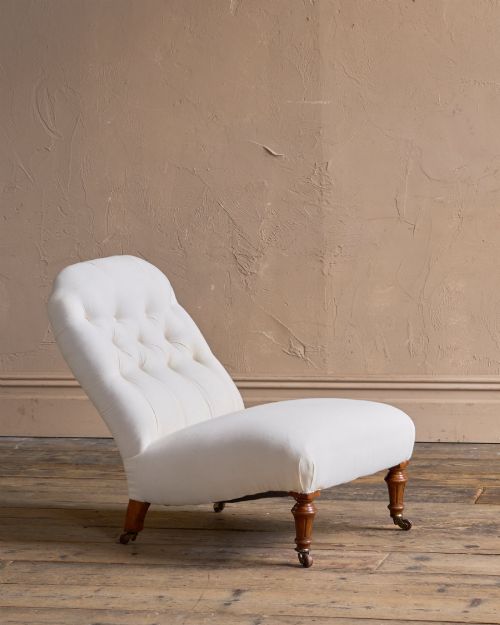
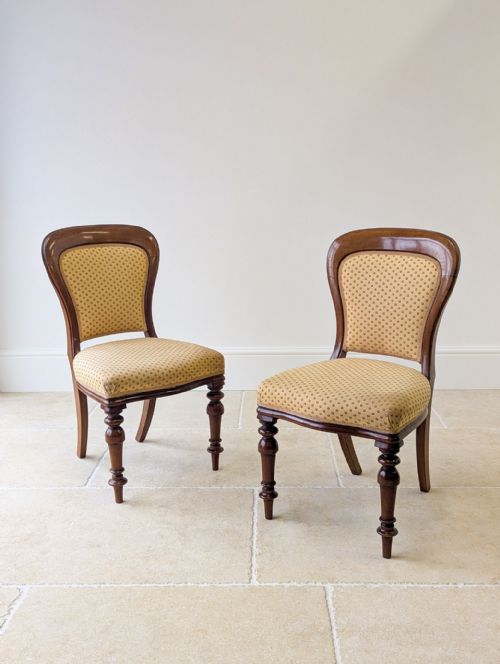
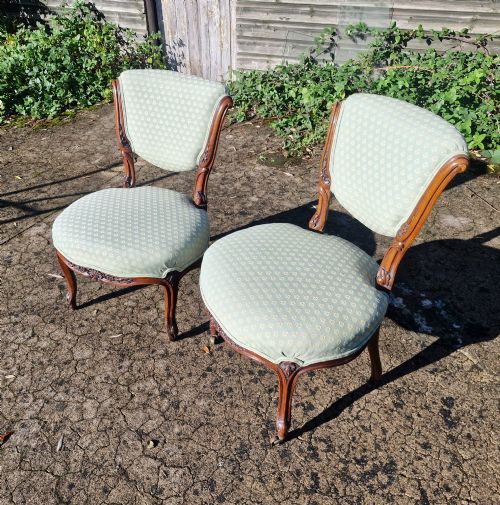
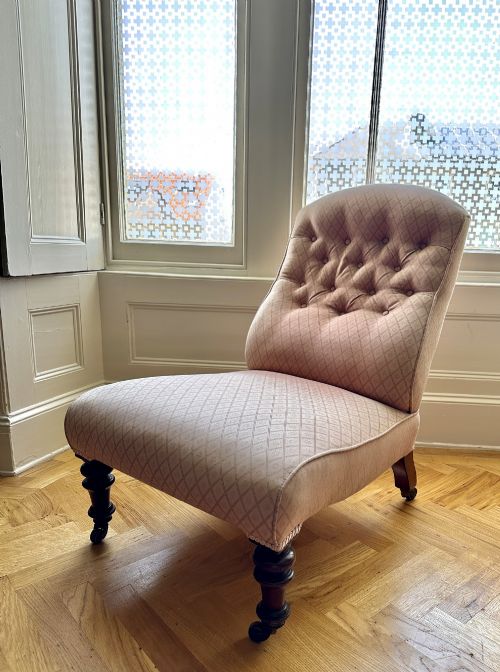
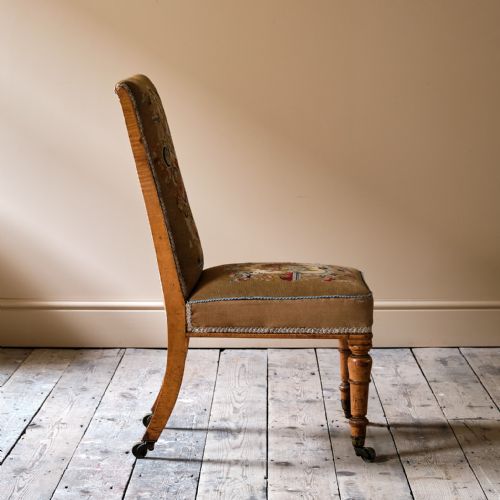
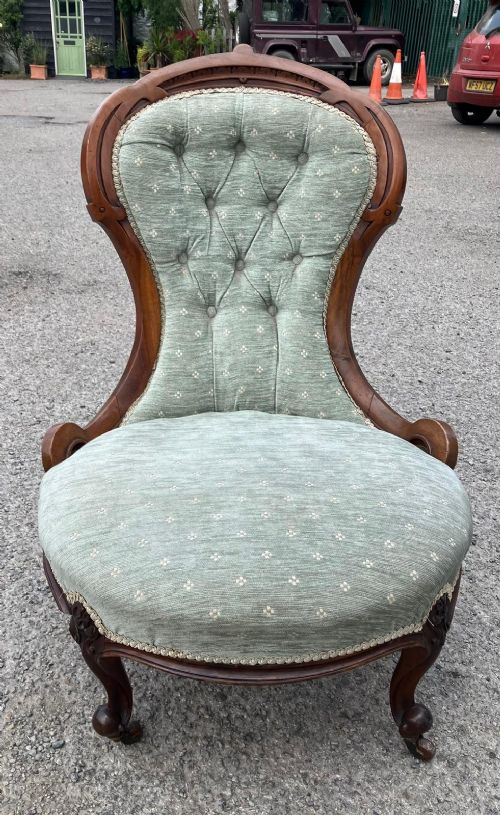
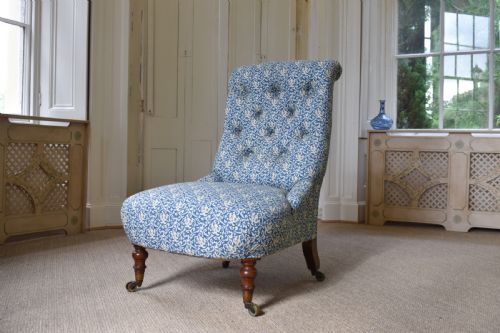
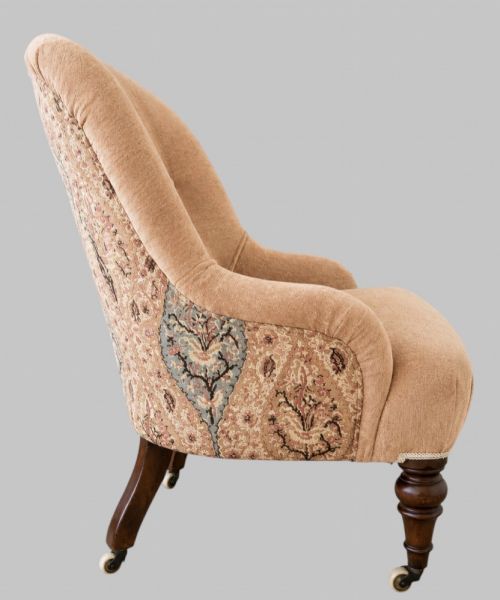
A fabric slipper chair is a low-slung seat historically used for dressing, appearing on this page across Victorian and Edwardian periods. These pieces include nursing chairs, boudoir chairs, and petite armchairs in various upholstered forms.
The versions most commonly met here span the nineteenth and early twentieth centuries, featuring low frames built for comfort in bedrooms and dressing rooms. Makers from these eras constructed them in forms such as button back, scroll back, and tub chairs.
Origins range from English Victorian workshops to French boudoirs, utilising wood frames hidden beneath textile covers. Buyers seeking a fabric slipper chair will find examples shaped by Victorian, Edwardian, and French Napoleon III stylistic traditions.
How they were made
Frames rely on timbers such as mahogany, walnut, oak, birds eye maple, and ebonised wood, often supported by iron or brass elements. Cabinet makers shaped these structural elements to hold sprung or padded seats low to the floor.
Upholstery forms the primary visible surface, employing materials like velvet, cotton, tapestry fabric, carpet, and Robert Kime Avebury fabric. Craftsmen finished these textile coverings with buttoning, gimp, and gilt details on the legs.
Fabric Slipper Chair Retail Price Guide 2026
Typical asking prices for fabric slipper chair among the pieces listed under this phrase on Sellingantiques today, from the lower quarter to the upper quarter. They describe what is for sale here now, not the wider market.
Periods represented on this page stretch from the mid-nineteenth century through the Edwardian era into the 1930s.
What varies in quality
The distinction between standard and superior pieces lies in the shaping of the wooden frame and the precision of the carved details. Walnut and mahogany structures with refined scroll backs or carved walnut show greater maker investment than plain alternatives.
Upholstery execution and textile selection separate everyday workshop output from high-end commissions by makers such as Howard and Sons. The integration of complex button backs, gilt legs, and robust internal framing dictates the standing of each piece.
Howard and Sons·CVS
The Fabric Slipper Chair Glossary
- Button back
- A upholstery technique where deep buttons are pulled through the padding in a grid pattern. This creates distinct tuasting and structured comfort on the rearrest.
- Ebonised
- Wood treated to imitate ebony through a dark staining or finishing process. This technique appeared frequently on nineteenth-century chair legs.
- Gilt
- A thin layer of gold leaf applied to wooden frames or legs. It adds decorative contrast to the darker timbers beneath.
- Spoon back
- A chair back shaped with a concave recess resembling the bowl of a spoon. This form appeared regularly on Victorian salon and nursing chairs.
- Tub armchair
- A seating form featuring a continuous curved back and arms that enclose the sitter. These pieces provide a compact and supportive shape.
Fabric Slipper Chair: Frequently Asked Questions
What is a fabric slipper chair used for?
These low seats were originally placed in bedrooms and dressing rooms to assist with putting on footwear and garments.
Today they function well as accent seating in living spaces or reading corners due to their compact proportions.
How do I identify a Victorian fabric slipper chair?
Victorian examples often feature dark woods like walnut or mahogany, substantial padding, and traditional button-backed upholstery.
They sit low to the ground and may include turned wooden legs or concealed castors for mobility.
Are Edwardian fabric slipper chairs different?
Edwardian versions tend to display lighter timber frames, such as solid oak, reflecting the shift in interior tastes away from heavy Victorian styles.
Their upholstery profiles are often more restrained while maintaining the low-slung comfort expected from the form.
What fabrics appear on these chairs?
Original and replacement coverings include velvet, cotton, tapestry weaves, and patterned textiles like Robert Kime Avebury fabric.
Some pieces also incorporate sections of carpet or antique French fabrics to achieve distinct visual textures.