


Fabric Pouch Work Table
A fabric pouch work table is a practical sewing cabinet designed to hold needlework materials close at hand in period drawing rooms.
Fabric Pouch Work Table
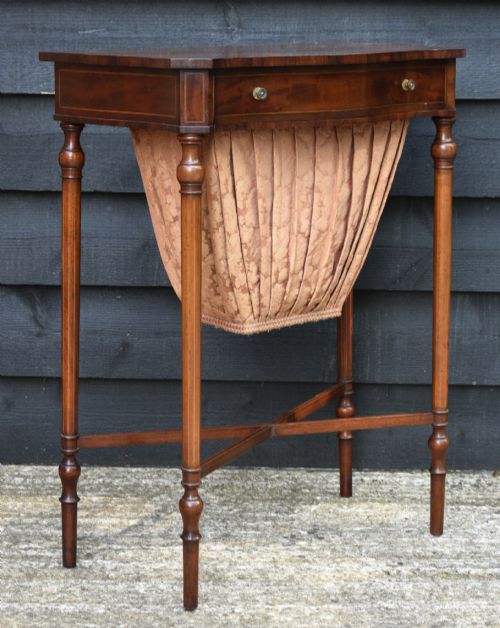
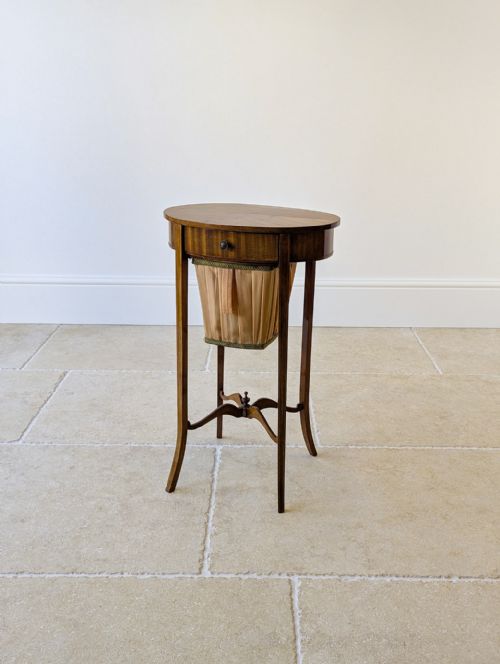
A fabric pouch work table combines a solid timber top with a suspended cloth bag designed specifically for storing sewing gear and unfinished needlework projects. These pieces serve as functional side tables or lamp tables while concealing domestic utility within an attached textile pocket.
The selections available here span several distinct historical eras, with Regency and Victorian examples appearing most frequently alongside Georgian and Edwardian designs. Most pieces take the form of small occasional tables or pedestal sewing tables constructed primarily from mahogany and rosewood.
How they were made
Cabinetmakers built these tables using dense hardwoods like mahogany, rosewood, and pollard oak, often pairing them with contrasting satinwood or boxwood stringing and brass inlay. The structural frame typically rests on a central pedestal or four slender legs, supporting a hinged wooden top above the hanging storage compartment.
Silk and cotton fabrics form the suspended work bags beneath the table surface, gathering neatly to hold textiles and sewing accessories. Joinery relies on traditional cabinet-making techniques to ensure the hanging pouch remains securely attached to the wooden frame during daily use.
Many a Victorian needlework enthusiast used the secret depths of the pouch to conceal half-finished knitting from unexpected callers.
What varies in quality
Superior examples demonstrate meticulous attention to timber selection, utilising richly figured rosewood or flame mahogany veneers alongside precise brass inlay and delicate stringing. Lower tiers rely on simpler secondary woods and plainer surfaces with minimal decorative enrichment.
The refinement of the undercarriage and the execution of the lyre ends or pedestal mounts distinguish finer workshop output from standard production. Additionally, the survival and condition of the original silk or cotton fabric pouch heavily influence the overall integrity of the piece.
John MaClean
The Fabric Pouch Work Table Glossary
- Work table
- A small domestic table fitted with drawers or a fabric bag for holding sewing materials and needlework. These items became essential furnishings in upper-class homes during the Georgian and Regency periods.
- Lyre-ended
- A furniture support shaped in the stylized form of an ancient Greek lyre. This stylistic device appears frequently on the pedestals of Regency sewing tables.
- Drop flap
- A hinged leaf attached to the side of a table that folds down when not in use to save space. Several work tables incorporate drop flaps alongside their storage pouches.
- Pollard oak
- Oak timber taken from trees that have been pollarded, producing a dense wood with distinctive clustered knot formations. Cabinetmakers prized this material for its rich decorative grain texture.
Fabric Pouch Work Table: Frequently Asked Questions
What is a fabric pouch work table?
A fabric pouch work table is a compact nineteenth-century domestic furniture piece designed primarily for sewing and needlework storage. It combines a flat wooden top suitable for use as a lamp or side table with a suspended cloth bag underneath.
Cabinetmakers constructed these items in various styles ranging from Georgian and Regency to Victorian and Edwardian. They allowed women of the household to keep their sewing projects organised and accessible in the drawing room.
How were work tables used historically?
These tables served as mobile workstations for ladies undertaking embroidery, lacemaking, and mending tasks. The hanging silk or cotton pouch held threads, needles, and fabric scraps while the wooden surface provided space for working.
Beyond their utilitarian sewing function, they doubled as occasional tables for holding small lamps, books, or decorative objects. Their versatile size permitted easy placement beside chairs or sofas in reception rooms.
How do I date a work table?
Dating relies heavily on observing the timber choices, construction methods, and stylistic motifs present in the piece. Regency examples frequently feature rosewood, brass inlay, and lyre-shaped pedestal supports, whereas Edwardian versions often display inlaid mahogany and lighter proportions.
Examining the secondary woods inside drawers and the fastening techniques helps confirm the period of manufacture. Earlier pieces from the Georgian era generally exhibit heavier timber construction compared to later Victorian and Edwardian variants.
Are the fabric pouches original?
The fabric pouches on these work tables have often been replaced over the decades due to the delicate nature of silk and cotton textiles. Finding a table with its original period fabric remains uncommon.
When replacement occurs, restorers typically use historically appropriate materials and gathered designs that match the aesthetic of the wooden cabinetwork. The presence of a modern fabric does not diminish the structural integrity of the antique base.