


Fabric Pouch Sewing Table
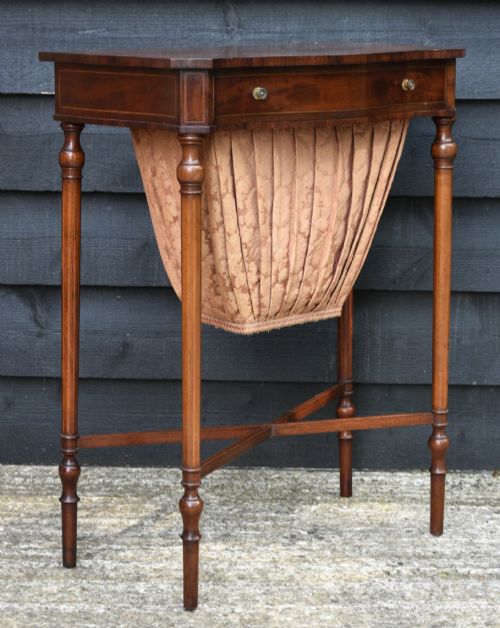
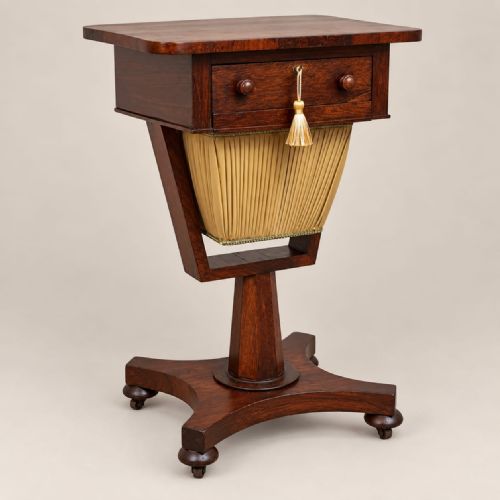
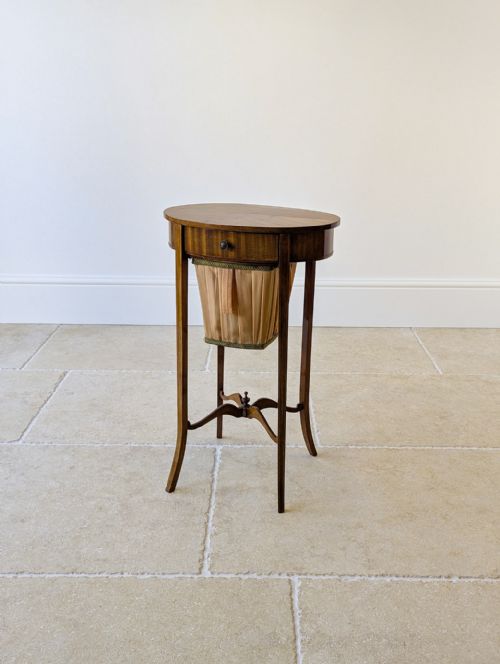
A fabric pouch sewing table combines a graceful surface with a hanging textile bag for storing needles, thread and work.
Fabric Pouch Sewing Table
A fabric pouch sewing table, also known as a work table or needlework table, serves as a compact piece designed for domestic handicrafts. Buyers encounter various forms spanning the Georgian, Regency, William IV, Victorian and Edwardian periods.
Materials and construction
Cabinet makers utilised dense hardwoods such as mahogany and rosewood for the structural frames, occasionally incorporating pollard oak or satinwood for decorative contrast. Surfaces frequently display fine inlay work using boxwood and brass stringing.
The suspended pouches utilise soft textiles including silk and cotton, gathered tightly to wooden or fabric frames beneath the main drawer or box. Drop flaps and pedestal bases provide additional flexibility and stability to the lightweight design.
Listings feature pieces spanning the Georgian, Regency, William IV, Victorian and Edwardian periods, constructed predominantly in mahogany and rosewood.
Grading quality and craftsmanship
The distinction between standard examples and finer pieces lies in the crispness of the timber grain, the precision of brass or boxwood inlay, and the elegance of structural supports like lyre ends or turned pedestals. Tables retaining their original internal compartment fittings and well-preserved silk or cotton pouches demonstrate superior preservation.
Proportion and execution dictate value, where small-scale serpentine fronts or sophisticated pedestal arrangements indicate a higher grade of cabinet making. Lesser examples feature plain secondary timbers and simpler turned legs without decorative stringing.
The Fabric Pouch Sewing Table Glossary
- Work table
- A small occasional table designed specifically to hold sewing implements, wool and needlework supplies. These pieces often feature internal compartments beneath the lid alongside a hanging fabric bag.
- Drop flap
- A hinged leaf on either side of a table top that lifts to extend the surface area when needed. They allow the furniture to maintain a compact footprint against a wall.
- Lyre end
- A furniture support shaped in the classical form of a lyre musical instrument. This motif appears frequently on the pedestals of Regency period pieces.
- Inlay
- A decorative technique where contrasting woods or metals are inserted into recesses carved into the primary surface. Boxwood and brass are typical materials used for this ornamentation.
Fabric Pouch Sewing Table: Frequently Asked Questions
What is a fabric pouch sewing table?
A fabric pouch sewing table is a small antique occasional table equipped with a drawer or compartment and a suspended textile bag underneath. It was originally designed to hold needlework, threads and sewing tools for ladies in the parlour.
Today, these versatile pieces function well as side tables or lamp tables while retaining their historical character and concealed storage capacity.
How do I date a sewing table?
Dating relies on examining the timber species, structural hardware and stylistic motifs. Regency examples often feature brass inlay and lyre-shaped pedestal bases, whereas Edwardian versions display delicate mahogany marquetry.
Reviewing the construction methods of the internal drawers and the type of secondary wood used inside also helps narrow down the period of manufacture.
Are the fabric pouches original?
The hanging bags on these tables experience heavy wear and tear over the centuries, meaning many have been relined or replaced using traditional silk or cotton fabrics.
Evaluating the stitching and textile condition alongside the age of the wooden frame helps determine whether the pouch dates to the original period of the table.
How do I use a sewing table today?
These compact tables fit easily beside a sofa or armchair as a convenient surface for a lamp, book or cup. The internal compartments and hanging pouches offer practical storage for small items like remote controls or craft supplies.
Their restrained proportions make them ideal for modern interiors where space is at a premium.