
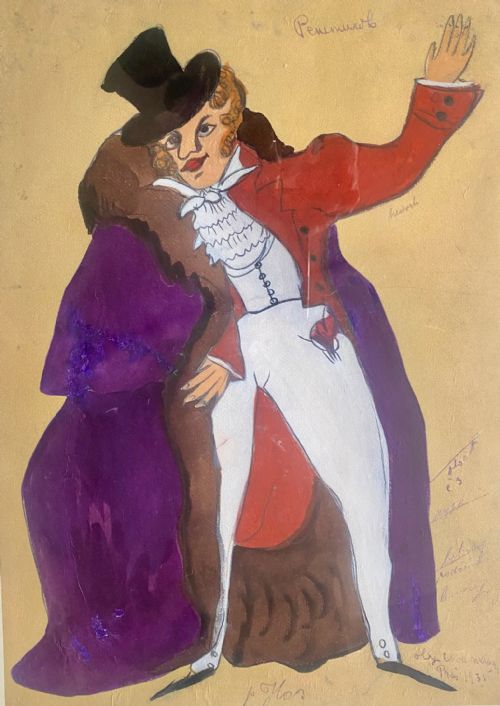


Expressionist Portrait Artwork
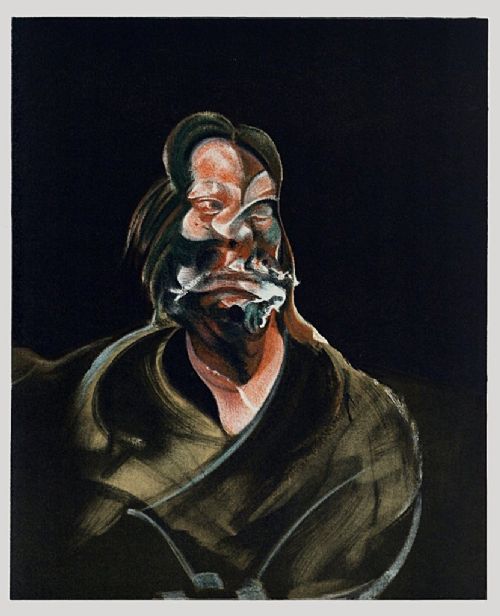
Expressionist portrait artwork captures personality through distorted forms and urgent brushwork, offering an intense psychological engagement with the sitter.
Expressionist Portrait Artwork
When you search for expressionist portrait artwork, you encounter paintings, drawings, and sculptures that prioritise emotional resonance over optical accuracy. These pieces emerge primarily from the twentieth century, spanning decades of profound social and artistic upheaval.
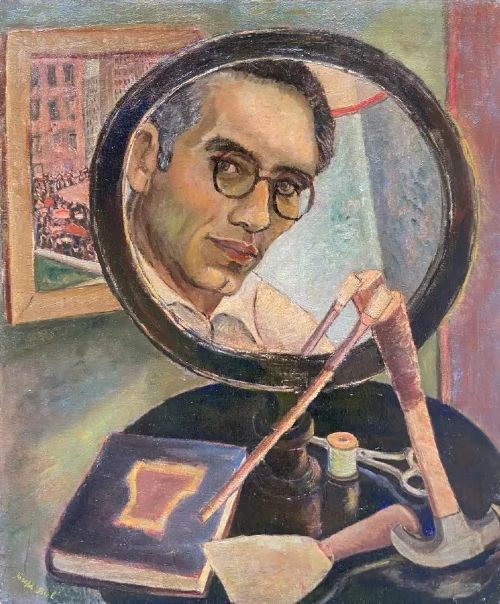
You are most likely to meet mid-century canvases and works on paper on this page, reflecting decades such as the nineteen-fifties and nineteen-forties. The subjects range from self-portraits and named sitters to anonymous nudes and theatrical figures.
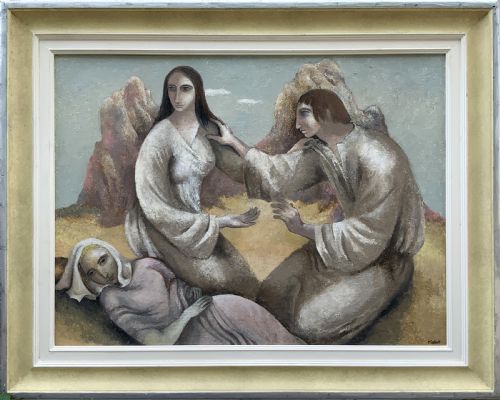
The style manifests through diverse movements recorded in the listings, including Mid-Century Expressionism, Fauvism, and Modern British art. Each piece utilises distortion of colour and line to communicate the inner state of the individual depicted.
Materials and Techniques
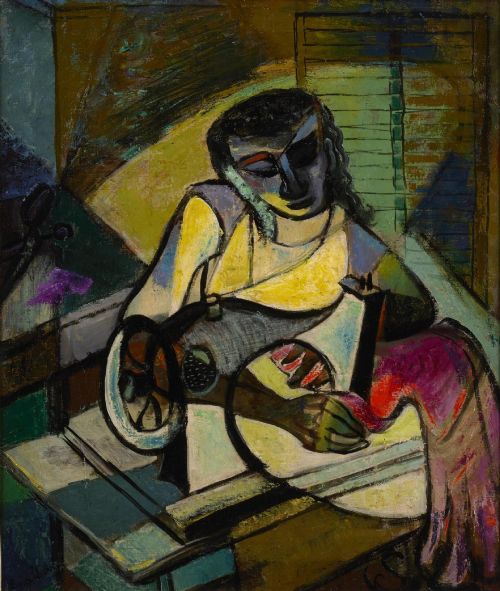
Artists apply oil paint to canvas or board, often building thick impasto layers that create physical texture on the surface. This technique allows the pigment itself to carry expressive weight through raised ridges and visible tool marks.
Works on paper employ ink, gouache, or mixed media to achieve rapid, gestural execution. Lithographs and prints offer another method of reproduction, translating linear intensity into multiple impressions.
Support materials vary from stretched canvas to wood panels and paper sheets. Some artists lay canvas directly onto board, providing a rigid foundation for heavy application of paint.
Listings feature works across multiple decades, including nineteen-twenty, nineteen-thirty, nineteen-forty, nineteen-fifty, and nineteen-sixty.
Markers of Quality
Quality rests in the conviction of the hand and the structural coherence of the composition. A successful piece demonstrates deliberate control over distortion, where every mark serves the psychological tension of the subject.
The handling of medium distinguishes exceptional works from routine output. Confident brushwork and purposeful application of pigment create depth and presence, whereas hesitant application flattens the emotional impact.
Francis Bacon·Joseph Biel·Lena Gurr·Christine Nesbit·Picabia·Rodolphe Soiron·Tony Giles·Gaetan Dumas·Baruch Shalom Oskotsky·Peter Jackson·David Cox·Jean Hippolyte Marchand·Pinchus Krémègne·Matisse·Antonio Ferri·Yetta Kane·Raymond Arthur Roadnight·Burr Singer·Richards Rubin·Bernard Meninsky·Archille Zavatta·Murphy·Tschacbasov
The Expressionist Portrait Artwork Glossary
- Impasto
- Paint applied thickly to a canvas or board, standing out in relief from the plane. This technique adds tactile dimension and captures light dynamically across the surface.
- Gouache
- An opaque water-based paint that dries to a matte finish. It provides dense coverage and vibrant colour saturation on paper supports.
- Lithography
- A planographic printing process based on the antipathy of oil and water. Artists draw on limestone or metal plates to produce multiple graphic impressions.
- Avant-garde
- Artworks that push experimental boundaries ahead of mainstream acceptance. The term describes creators who reject conventional academic representation.
- Mixed media
- An artwork combining two or more distinct artistic materials or mediums. Creators utilise this approach to introduce varied textures and visual elements into a single composition.
Expressionist Portrait Artwork: Frequently Asked Questions
What defines an expressionist portrait?
An expressionist portrait departs from realistic likeness to convey emotional or psychological truths about the sitter. Artists utilise exaggerated forms, unnatural colour palettes, and vigorous brushwork to evoke subjective feelings rather than objective appearance.
This approach shifts the focus from physical precision to internal experience, making the personality of the subject felt through the energy of the marks.
How do I care for works on paper?
Works on paper require protection from direct sunlight to prevent fading of inks, gouache, and pigments. Framing behind conservation-grade glass helps shield the delicate surface from airborne pollutants and humidity.
Keep these pieces in stable environmental conditions away from damp walls and heat sources to preserve the integrity of the paper support.
What is the difference between oil on canvas and oil on board?
Oil on canvas involves stretched woven fabric that offers natural spring and texture under the brush. This traditional support accommodates large-scale works and responds subtly to environmental shifts.
Oil on board utilises a rigid wooden or composite panel underneath the paint layer. This foundation provides firm resistance for heavy impasto and resists the sagging sometimes seen in aged canvases.
How can I date mid-century works?
Dating relies on stylistic markers, materials, and documented periods associated with the artist or movement. Mid-century pieces often reflect modernist experiments from the nineteen-twenties through the nineteen-sixties.
Signatures, exhibition labels on the reverse, and historical records help anchor the specific year or decade of creation.