


Expressionist Cityscape Canvas
An expressionist cityscape canvas captures the turbulent energy of urban streets through bold brushwork and striking colour.
Expressionist Cityscape Canvas
An expressionist cityscape canvas brings urban architecture and street life to life through distorted perspectives and emotional intensity. Buyers searching this phrase encounter works ranging from early twentieth-century German expressionist pieces to mid-century Parisian street scenes and Venetian views.
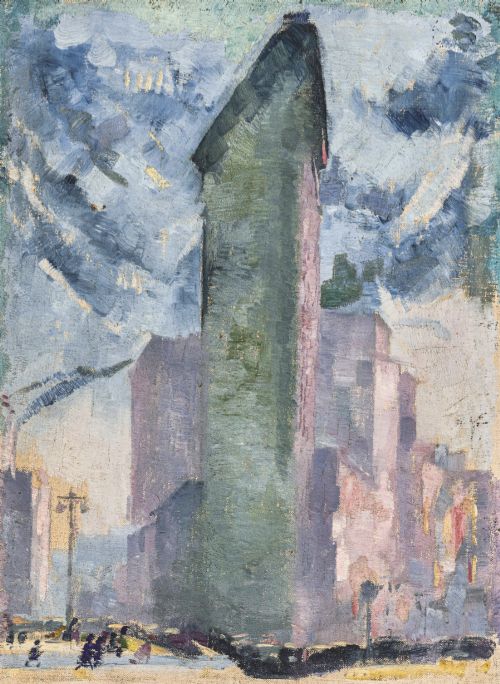
The pieces on this page primarily date from the 1910s through the 1960s, encompassing styles such as Mid-Century Expressionism, Post-Impressionism, and German Expressionism. Common subjects include Parisian quays, canals, rooftops in winter, and specific landmarks like the Flatiron Building.
Materials and construction
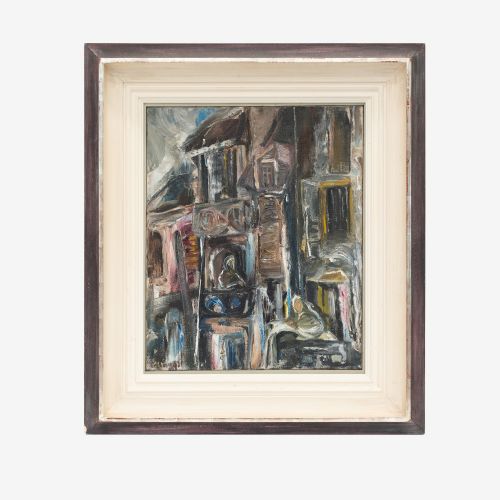
Artists relied primarily on oil paint applied to canvas, board, or wood supports to build rich textures and deep tones. Impasto techniques appear frequently, where thick layers of paint stand proud of the surface to create tactile depth in buildings and streets.
Many works retain their original frames, often fashioned from wood or gilt wood, which complement the bold handling of the pigment.
The listings span five distinct decades from the twentieth century, featuring oil paintings executed on canvas, board, and wood.
Markers of quality
Quality rests upon the confidence of the brushwork and the artist's ability to balance structure with emotional expression. Stronger examples demonstrate a deliberate control over thick impasto and colour harmony, ensuring the urban forms remain legible beneath the energetic application.
The integration of the support and the framing contributes to the overall integrity of the piece, with period frames enhancing the historical context of mid-century and earlier canvases.
Alfred Wolmark·Lilian Colbourn·Gabriel Dauchot·Hein Hoppmann·Emanuele Cappello·Pierre Peltier
The Expressionist Cityscape Canvas Glossary
- Impasto
- A technique where paint is laid on an area of the surface very thickly, usually thick enough that the brush or painting-knife strokes are visible. This method adds physical dimension and tactile quality to urban landscapes.
- Expressionism
- A modernist movement originating in Europe where artists sought to express emotional experience rather than physical reality. In cityscapes, this manifests as distorted buildings and vivid, non-naturalistic palettes.
- Gilt wood
- Wood that has been treated with a thin layer of gold leaf or metallic powder for decorative effect. Many mid-century frames utilise this finish to elevate the presentation of oil paintings.
- Post-Impressionism
- A predominantly French art movement that developed from impressionism, extending its limitations while refusing its constraints. It emphasises symbolic content, formal order, and heavier structures.
Expressionist Cityscape Canvas: Frequently Asked Questions
What is an expressionist cityscape canvas?
An expressionist cityscape canvas is an oil painting that depicts urban architecture and street scenes through an emotional, non-naturalistic lens. These works prioritize atmospheric impact and bold brushwork over strict architectural accuracy.
Created across several decades in the twentieth century, they capture the dynamic character of cities like Paris, Venice, and New York.
How do I date an expressionist cityscape canvas?
Dating relies on stylistic markers, the specific type of canvas or board support, and framing materials. Mid-century works often feature heavy impasto and vibrant palettes typical of the 1950s and 1960s.
Earlier pieces from the 1910s and 1920s frequently display tighter compositions and the distinct influences of early German or post-impressionist movements.
Where were these paintings displayed?
These artworks were traditionally housed in domestic interiors, galleries, and urban apartments to bring the vibrancy of city life indoors. Their bold forms suited both mid-century modern interiors and more traditional spaces.
Collectors today place them in living areas and studies where their strong visual presence can anchor a room.
How should I care for an oil painting on canvas?
Keep the canvas away from direct sunlight and extreme fluctuations in temperature to protect the oil paint and wood supports. Dust the surface gently with a soft, dry brush and avoid using liquid cleaners.
Ensuring stable humidity levels prevents the canvas and wooden frames from warping over time.