







Export Lacquerware
Export lacquerware brings exotic eastern craftsmanship into western interiors through gilded wooden surfaces and intricate painted scenes.
Export Lacquerware
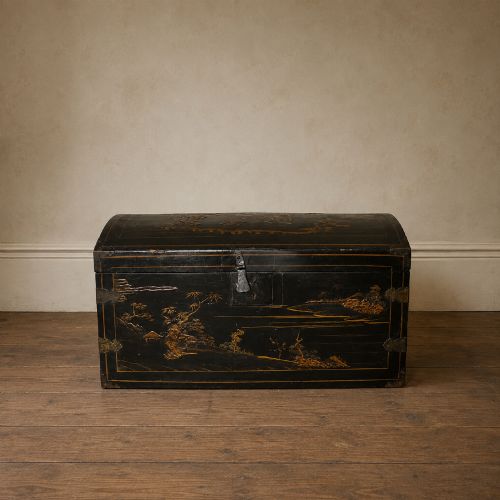
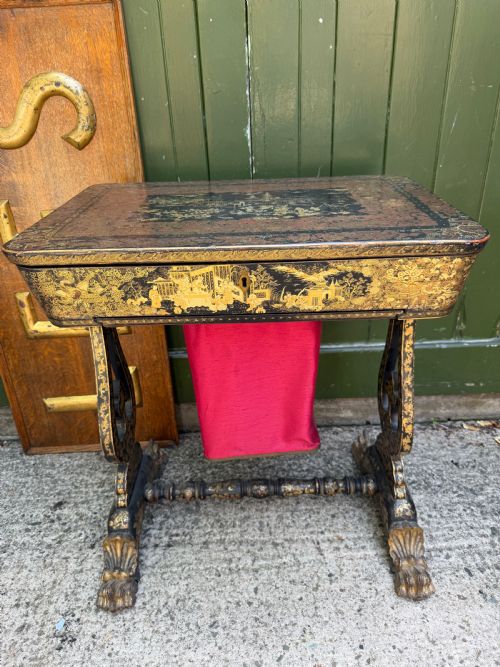
Export lacquerware comprises decorative items made for western markets, featuring cabinets, trunks, tea caddies, and vases from Chinese and Japanese workshops. Buyers seeking export lacquerware encounter pieces finished in black lacquer with detailed gold leaf decoration.
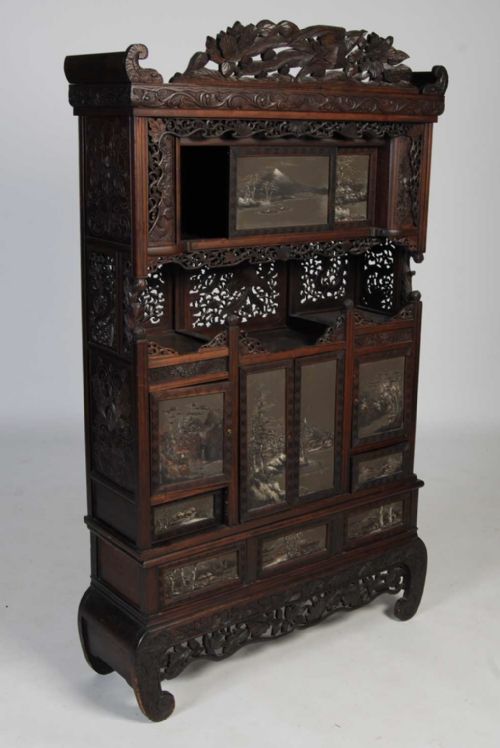
The objects span the nineteenth century, including Victorian pieces and items from the Japanese Meiji period. Forms range from monumental temple vases to small table cabinets and travelling jewellery boxes.
How export lacquerware was made
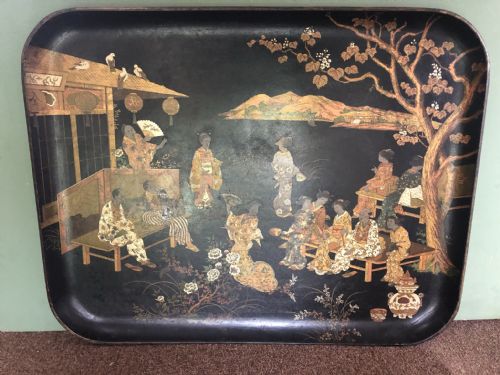
These items utilise wooden foundations coated in layers of lacquer, sometimes incorporating papier-mâché for lighter objects like trays. Artisans applied successive coats to achieve a durable surface before adding detailed artwork.
Decoration relies heavily on gold leaf and gilt painting to create contrasting scenes against black backgrounds. Metal elements such as brass and iron appear on hardware like campaign cases, trunks, and cabinets.
Export Lacquerware Retail Price Guide 2026
Typical asking prices for export lacquerware among the pieces listed under this phrase on Sellingantiques today, from the lower quarter to the upper quarter. They describe what is for sale here now, not the wider market.
Listings feature items spanning the nineteenth and early twentieth centuries, produced across Chinese and Japanese export centres.
What varies in quality
Quality depends upon the intricacy of the gilded decoration and the precision of the lacquer application. Pieces with finely detailed figurative scenes and well-preserved surface finishes stand apart from simpler iterations.
The complexity of the form also dictates the standard of the piece. Elaborate cabinets on stands and fitted work tables demonstrate higher craftsmanship than standard storage boxes.
The Export Lacquerware Glossary
- Lacquer
- A durable resin finish applied to wooden objects to create a glossy, protective surface. It forms the primary medium for these decorative items.
- Gilt
- Gold applied to surfaces by leaf or liquid to create decorative highlights. This technique defines the contrasting imagery seen on black lacquerware.
- Chinoiserie
- European artistic styles reflecting Chinese motifs and decorative patterns. It frequently characterises the aesthetic of export pieces made for western buyers.
- Meiji Period
- A Japanese historical era lasting from eighteen sixty-eight to nineteen twelve. Cabinets and panels from this time show distinct craftsmanship and design standards.
Export Lacquerware: Frequently Asked Questions
What is export lacquerware?
Export lacquerware consists of decorative wooden objects coated in resin and finished with gold decoration for international markets. These items include cabinets, trunks, and tea caddies created in Asian workshops.
Such pieces reflect cross-cultural trade during the nineteenth and early twentieth centuries. They combine traditional eastern lacquering techniques with forms suited to western homes.
How do I care for lacquer furniture?
Lacquer surfaces require protection from direct sunlight and excessive humidity to prevent fading or cracking. Dust them gently with a soft, dry cloth without applying modern chemical polishes.
Maintaining stable room temperatures preserves the integrity of the wooden substrate and the delicate gold leaf decoration. Proper handling ensures the finish remains intact over time.
How do I identify a Meiji period piece?
Meiji period items originate from Japan between eighteen sixty-eight and nineteen twelve, often taking the form of detailed cabinets on stands. They exhibit specific stylistic motifs associated with Japanese artistry of that era.
Examining the construction methods and decorative themes helps separate these Japanese works from Chinese export equivalents. The cabinetry frequently demonstrates complex interior compartments and specialised joinery.