


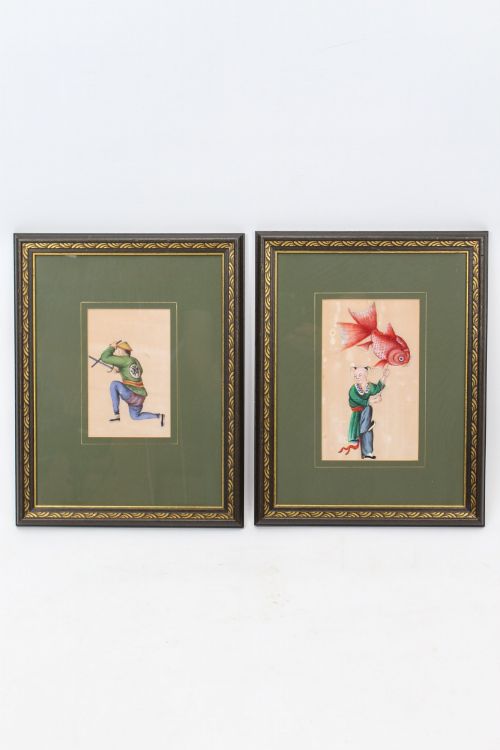


Export Art Watercolours
Export art watercolours are delicate historical paintings on pith paper and paper, offering a vivid window into trade and daily life.
Export Art Watercolours
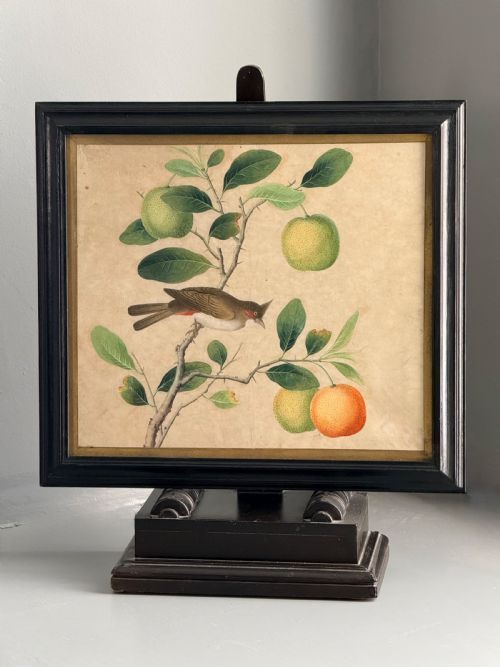
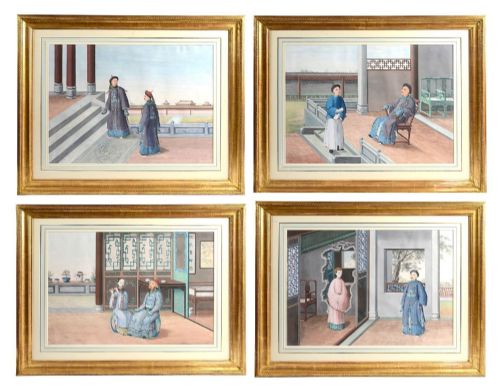
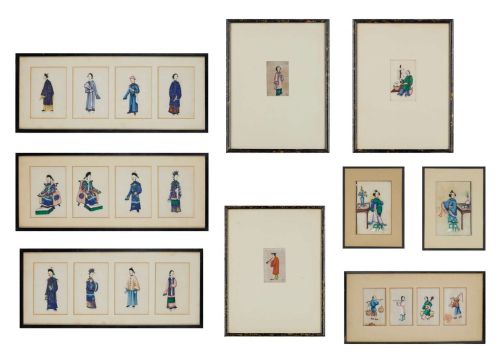
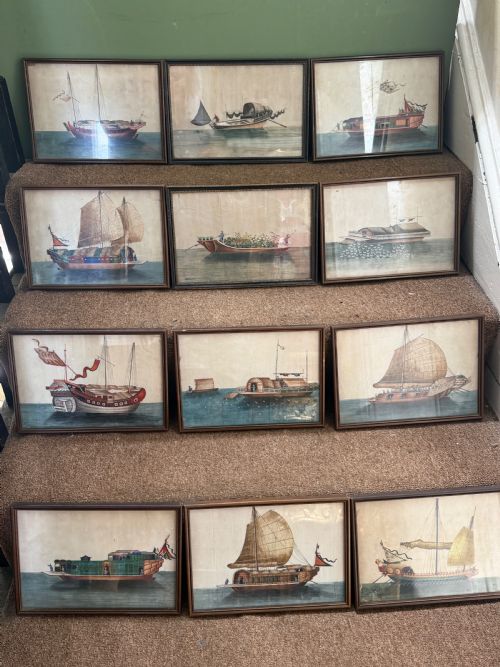
Export art watercolours represent a fascinating category of historical visual culture created primarily for Western markets during the eighteenth and nineteenth centuries. When searching for export art watercolours, collectors encounter framed paintings, wall art, and grouped sets depicting maritime scenes, figures, and natural history.
The pieces on this page span several distinct periods including the eighteenth century, the Regency era, the nineteenth century, and the Edwardian period. Buyers most frequently meet nineteenth-century examples and Qing dynasty pieces, often presented in sets of multiple framed works.
Subjects range widely across the inventory, capturing Chinese junks and ships, detailed studies of butterflies and insects, and figural compositions. These works bridge cultures, combining traditional Eastern painting techniques with formats designed to appeal to foreign merchants and travellers.
How they were made
Makers utilised watercolours and gouache applied directly to delicate surfaces such as paper and pith paper, also historically known as rice paper. Pith paper, derived from the spongy cellular tissue of the tetrapanax papyrifer plant, provides a uniquely velvety texture that absorbs vibrant pigments with striking depth.
Finished works frequently feature custom framing using wood and ebonised wood frames, often protected beneath glass. These framing choices reflect both period tastes and the practical need to preserve fragile organic painting surfaces.
Export Art Watercolours Retail Price Guide 2026
Typical asking prices for export art watercolours among the pieces listed under this phrase on Sellingantiques today, from the lower quarter to the upper quarter. They describe what is for sale here now, not the wider market.
Framing materials recorded in the inventory include glass, wood, and ebonised wood, housing single paintings as well as large sets of twelve or more.
What varies in quality
Quality in these watercolours rests largely on the fineness of the brushwork and the preservation of the delicate pith paper surface. Works displaying meticulous detail in human figures, botanical specimens, or ship rigging command greater attention from discerning collectors.
The completeness and integrity of sets also influence the character of the pieces. Intact groupings, such as sets of twelve or twenty-one related paintings, offer a more comprehensive narrative than isolated single sheets.
The Export Art Watercolours Glossary
- Pith paper
- A delicate painting surface made from the pith of the Tetrapanax papyrifer plant rather than beaten plant fibres. It possesses a spongy, absorbent quality that gives gouache and watercolour pigments a luminous, velvety appearance.
- Gouache
- An opaque water-based medium composed of ground pigments and a binding agent such as gum arabic. It differs from transparent watercolour by containing white pigment, allowing artists to build dense, solid areas of colour.
- Chinese Export
- A term describing art and decorative objects produced in China specifically for export to Western markets. These works often blend traditional Eastern subjects and materials with compositional styles requested by European and American buyers.
- Qing Dynasty
- The last imperial dynasty of China, ruling from sixteen forty-four until nineteen twelve. Many export watercolours date from the later decades of this period, documenting maritime trade and local customs.
- Ebonised wood
- Timber treated with a chemical stain or finish to imitate expensive ebony wood. It is commonly found on nineteenth-century picture frames enclosing works on paper.
Export Art Watercolours: Frequently Asked Questions
What is pith paper?
Pith paper is a fragile, velvety material cut from the pith of a specific plant native to southern China. It absorbs watercolours and gouache deeply, creating a distinct luminous finish.
Artists favoured this delicate substrate throughout the nineteenth century for vibrant botanical and figural painting sets.
How should I display these watercolours?
These works require framing behind glass to protect the exceptionally fragile pith paper and paper from atmospheric moisture and dust. They should also be positioned away from direct sunlight to prevent the gouache pigments from fading.
Because the organic materials react to humidity, stable indoor environments help preserve the condition of the paintings.
Are these paintings original?
The inventory consists of hand-painted original artworks rather than modern reproductions or prints. Each piece displays the unique brushstrokes and pigment layering characteristic of nineteenth-century production.
Artists created these works by hand in workshops catering to foreign traders and diplomats.
How do I date an export watercolour?
Dating relies on stylistic clues, framing materials, and the specific historical context of the Qing dynasty. Eighteenth-century and Regency examples often feature distinct palettes and mounting styles compared to later nineteenth-century pieces.
The inclusion of ebonised wood frames and specific maritime subjects also helps narrow the period of creation.