

Executive Office Furniture
Executive office furniture unites practical workspace with fine period craftsmanship, offering stately mahogany and walnut desks built to anchor a room.
Executive Office Furniture
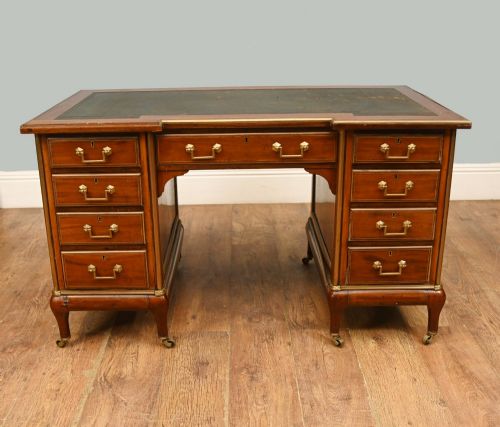
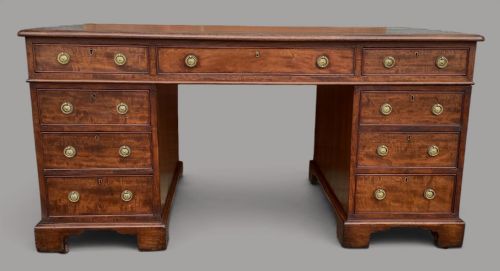
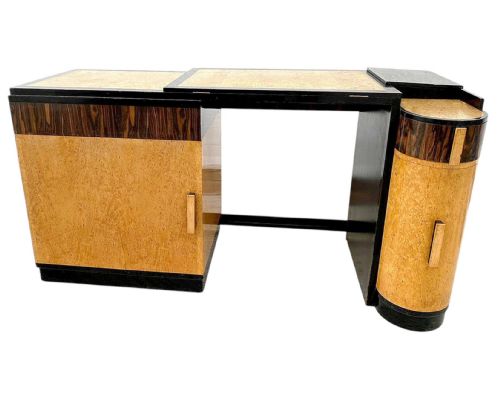
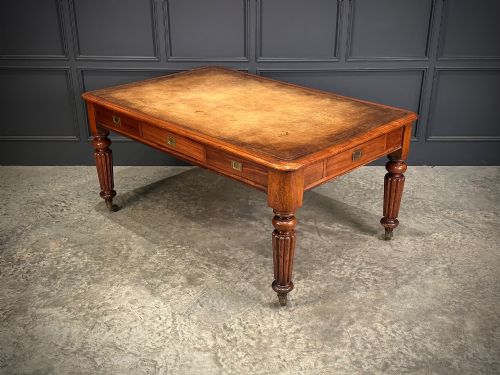
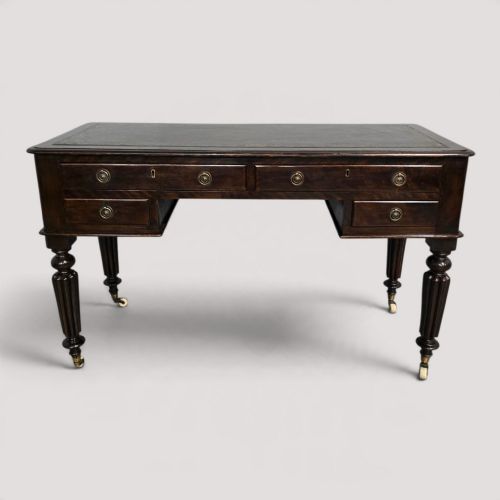
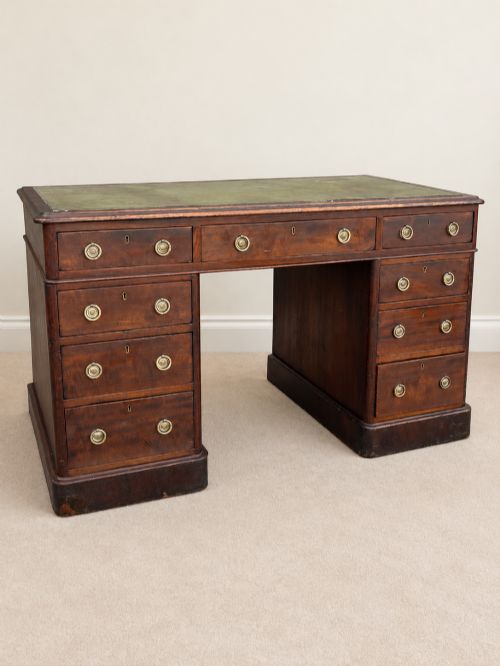
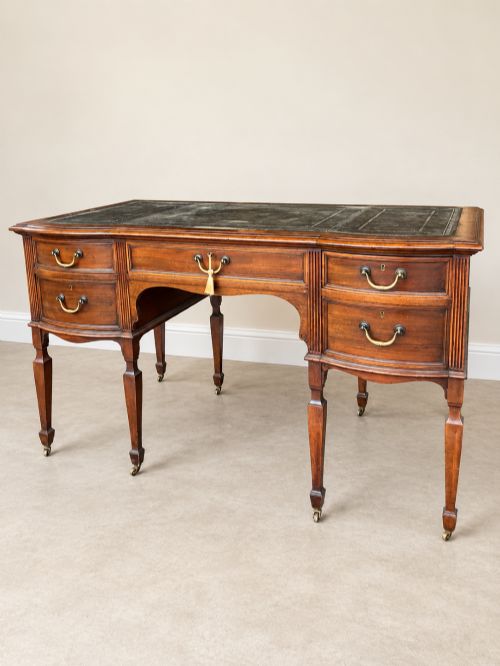
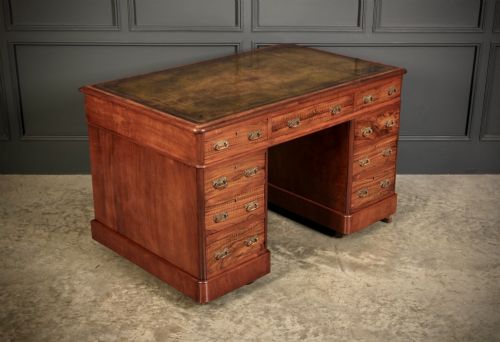
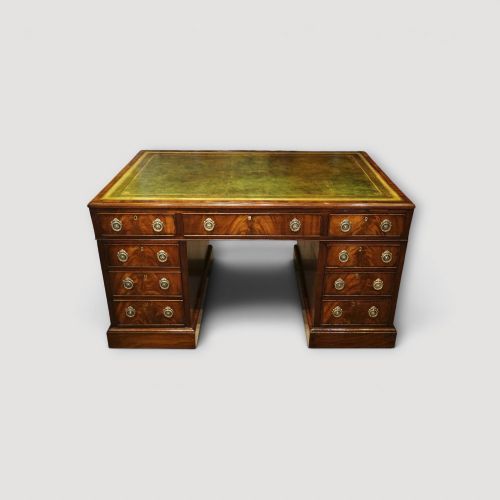
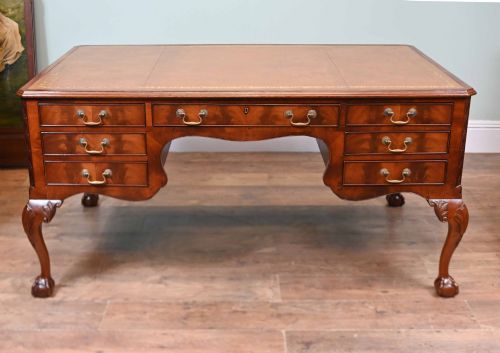
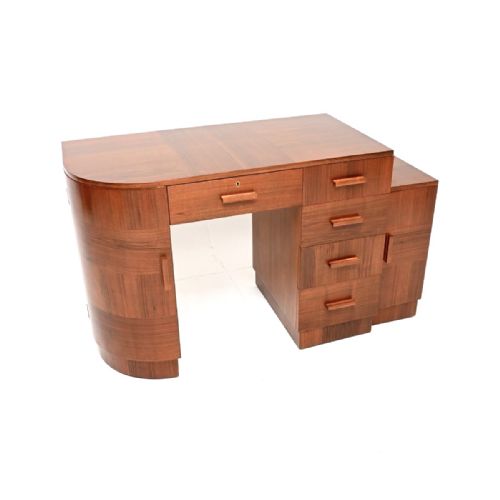
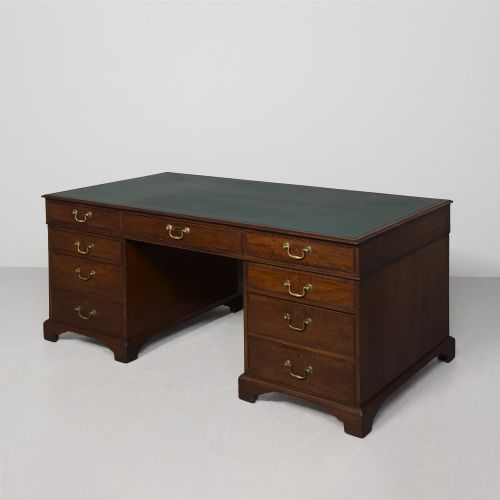
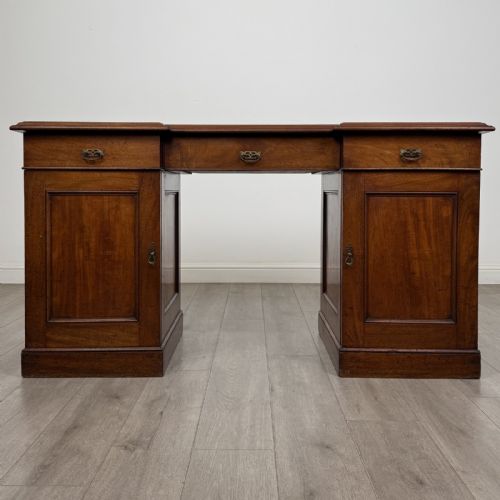
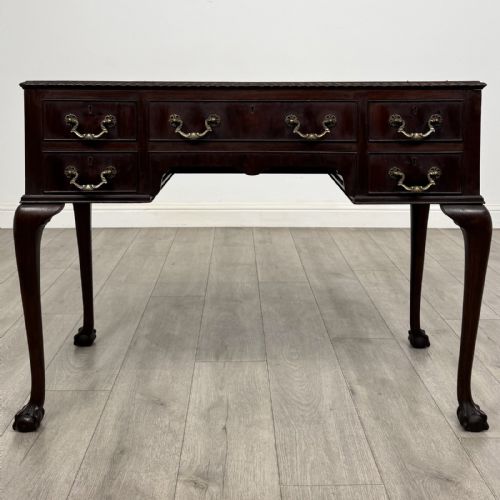
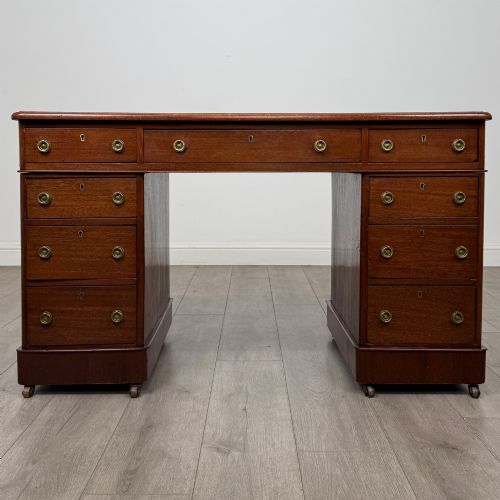
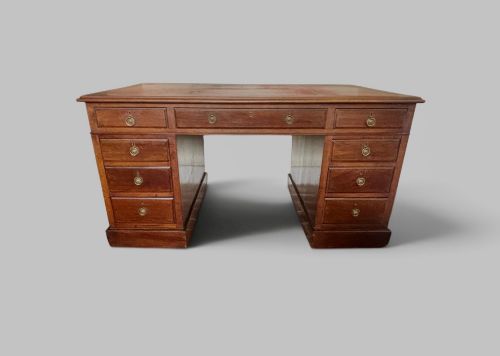
Executive office furniture primarily comprises large desks, writing tables, and complete office sets designed for professional and domestic studies. When exploring executive office furniture, buyers frequently encounter pedestal desks, free-standing partners desks, and kneehole configurations spanning the Victorian, Edwardian, and Art Deco periods.
The selection ranges from substantial mahogany twin pedestal tables to figured walnut and burr walnut designs with inset leather writing surfaces. Pieces emerge from various British and continental workshops, reflecting shifts in taste from Georgian revivalism to early twentieth-century modernism.
Many examples incorporate banks of drawers and panelled sides intended to be viewed from any angle within a spacious room. These forms serve both functional daily utility and formal decorative roles in traditional or contemporary interiors.
Materials and Construction Methods
Cabinetmakers constructed these pieces using dense hardwoods such as mahogany, oak, and walnut, often applying burr walnut or satin birch veneers to create striking surface patterns. Secondary timbers like oak and pine lined the interior drawer boxes, joined by hand-cut dovetails that ensure structural longevity.
Desks frequently integrate inset tooled leather writing surfaces, sometimes framed by gilt tooling or polished wooden borders. Brass handles, escutcheons, and occasional gilt bronze mounts provide functional hardware accents across nineteenth-century and Art Deco iterations.
Executive Office Furniture Retail Price Guide 2026
Typical asking prices for executive office furniture among the pieces listed under this phrase on Sellingantiques today, from the lower quarter to the upper quarter. They describe what is for sale here now, not the wider market.
Listings span the nineteenth and twentieth centuries, incorporating Victorian, Edwardian, and Art Deco stylistic influences across various woods.
Distinctions in Quality and Execution
Quality reveals itself in the selection of timbers, such as heavily figured burr walnut or exceptionally dense mahogany, matched symmetrically across drawer fronts and pedestals. Superior examples display meticulous carving on pillars and panels, alongside robust internal framing that prevents structural movement.
Maker attribution elevates certain pieces, with documented works by established cabinetmakers or retailers commanding greater attention for their sophisticated proportions and refined detailing. The integration of finished backs on free-standing partners desks also distinguishes superior commissions from standard single-sided versions.
Trollope & sons·Charles Andrea Nosotti·Maple & Co.·Wylie & Lochhead Glasgow·Whytock & Reid of Edinburgh·Heal's·Betty Joel·Cookes of Finsbury London·Mercier Frères
The Executive Office Furniture Glossary
- Pedestal desk
- A heavy writing desk consisting of two independent pedestals of drawers supporting a top, connected by a central section.
- Partners desk
- A large double-sided desk designed for two people to work opposite one another, featuring drawers and cupboards on both faces.
- Burr walnut
- A prized wood veneer harvested from the burl growth of a walnut tree, exhibiting intricate, swirling grain patterns.
- Kneehole desk
- A compact pedestal desk featuring a recessed central space for the user's legs beneath the writing surface.
- Dovetail
- A traditional interlocking woodworking joint used in drawer construction, valued for its resistance to being pulled apart.
Executive Office Furniture: Frequently Asked Questions
What is a partners desk?
A partners desk is a large double-sided table designed to allow two people to sit and work opposite one another. These pieces typically feature matching drawers and cupboards on both the front and rear faces.
Originally built for banking halls, legal practices, and grand libraries, they require generous floor space to be viewed properly from all sides.
How do I care for a leather desk top?
Leather writing surfaces benefit from gentle dusting with a dry cloth and occasional treatment with specialist leather balms to prevent drying and cracking. Avoid using harsh household cleaners or excessive moisture near the gilt tooling.
Placing blotting paper or protective pads beneath heavy writing implements helps preserve the vintage leather over years of daily use.
Can I use an antique desk for daily computer work?
Many period desks provide ample surface area and sturdy construction suited for modern laptop use and paperwork. However, buyers should check the kneehole height and width to ensure comfortable legroom with contemporary seating.
Drawer depths in older models may require measuring if storing modern office accessories or keyboard equipment.
How do I distinguish Victorian from Edwardian desks?
Victorian desks tend to feature heavier proportions, rich dark mahogany, and elaborate carved details such as panelled pillars or heavy brass hardware. They often reflect revivalist styles like Georgian or Chippendale.
Edwardian examples frequently present lighter woods like satin birch or lighter mahogany, alongside simpler lines influenced by Arts and Crafts or Sheraton revival preferences.