



European Village Painting
These european village painting works capture rural settlements through oils and watercolours, offering buyers intimate windows into past continental communities.
European Village Painting
A european village painting depicts rural community life, streetscapes, and surrounding countryside across various continental regions. These works range from late nineteenth-century depictions to mid-twentieth-century modernist interpretations.
Most pieces encountered on this page utilise canvas or wood panels as their primary support. Styles span from impressionist and post-impressionist approaches to german expressionism and mid-century modernism.
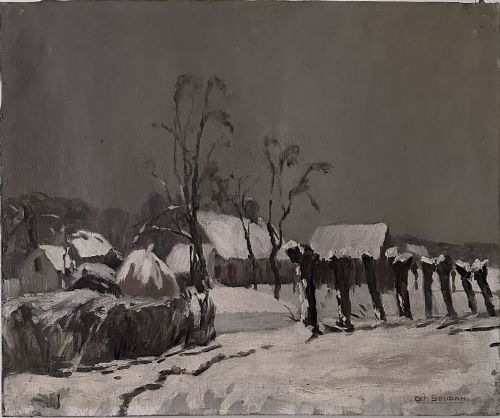
Subjects frequently centre on winter scenes, northern italian landscapes, or French and Dutch rural settlements. Artists capture these locations through expressive brushwork and varied regional palettes.
Materials and Technique
Artists typically applied oil paint onto stretched canvas or prepared wood panels to construct these village scenes. Watercolour on paper appears in specific nineteenth-century examples.
Frames often incorporate wood, gesso, and gilt wood finishes to complement the artwork. The physical application ranges from smooth impressionist blending to heavy gestural strokes found in expressionist works.
European Village Painting Retail Price Guide 2026
Typical asking prices for european village painting among the pieces listed under this phrase on Sellingantiques today, from the lower quarter to the upper quarter. They describe what is for sale here now, not the wider market.
The documented periods span from the nineteenth century through the 1950s, representing various European schools.
Judging Quality
Quality rests upon the confidence of the brushwork and the structural integrity of the paint layer across the canvas or panel. Superior examples demonstrate a clear command of light and spatial depth within the rural setting.
The sophistication of the palette and the strength of the composition separate standard decorative works from accomplished modernist and impressionist pieces. Original framing and documented artist attribution further elevate the standing of a canvas.
Paul Élie Gernez·Mercedes Legrand·A Michaelis·Henri Therme·Martin Lamotte·Christiaan Pieter Snyders
The European Village Painting Glossary
- Canvas
- A heavy woven fabric used as a surface for oil painting. It is typically stretched over a wooden frame before application.
- Oil Paint
- A slow-drying paint made by mixing pigments with oils such as linseed. This medium allows for rich blending and textured impasto effects.
- Wood Panel
- A rigid wooden support used by artists instead of canvas. Panels provide a firm, stable surface for detailed or expressive brushwork.
- Impressionism
- A nineteenth-century art movement characterised by relatively small, thin yet visible brush strokes and an emphasis on accurate depiction of light.
- Post-Impressionism
- A predominantly French art movement that developed from impressionism, extending its limitations while rejecting its deliberate limitations concerning naturalism.
European Village Painting: Frequently Asked Questions
What periods do these village paintings cover?
The works span from the late nineteenth century through the 1920s, 1930s, and 1940s, extending into mid-century modernism around 1950.
This broad chronological range records shifting artistic movements across European schools during periods of significant social change.
How were these artworks traditionally displayed?
These paintings were housed in domestic interiors, often secured within decorative wood, gesso, or gilt wood frames that matched contemporary interior tastes.
They served as focal points in reception rooms, bringing distant European landscapes and rural scenes into urban homes.
How do I distinguish impressionist from expressionist village scenes?
Impressionist pieces focus on natural light, outdoor atmospheres, and softer blended brushwork that captures transient environmental moments.
Expressionist works utilise exaggerated forms, heavier textures, and intense palettes to convey emotional resonance rather than optical realism.
What surfaces support these paintings?
Artists painted primarily upon stretched canvas or solid wood panels using oil-based paints. Paper supports appear occasionally in earlier watercolour examples.
Each surface interacts differently with the paint layers, influencing the eventual texture and preservation of the artwork.