

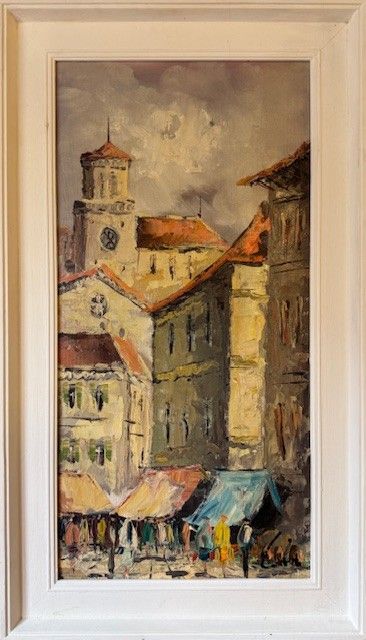


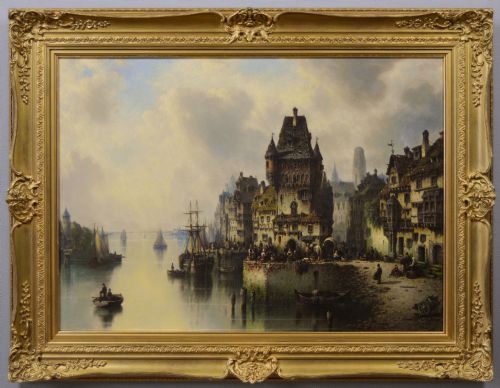


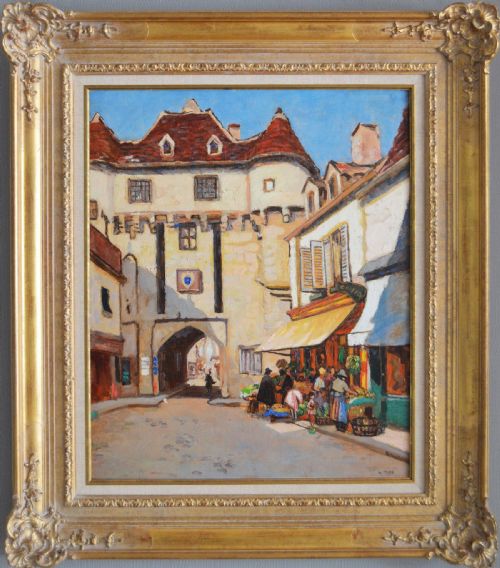
European Townscape Oil Painting
These european townscape oil painting works capture bustling streets and harbours in oil on canvas, wood, or panel.
European Townscape Oil Painting
A european townscape oil painting brings architectural views, market squares, and harbours directly into the home through oil pigments applied to canvas, panel, or board. These works range from late Georgian urban landscapes to mid-century impressions, capturing historical European street life.
The pieces available span various periods including the nineteenth century, nineteen-twenty, nineteen-thirty, and nineteen-sixty. They cross multiple stylistic movements from Dutch school traditions and nineteenth-century realism to impressionism and art deco interiors with architectural views.
How they were made
Artists painted these urban views using oil paint applied to canvas, wooden panels, or supporting boards. The physical support frequently receives a preparation of gesso before the oil pigment is laid down by the hand of the painter.
Many historical examples are housed within frames constructed of wood, enhanced with gold leaf or giltwood finishes. These framing techniques provide structural support and aesthetic contrast to the oil surface.
Current listings include works from the nineteenth century, nineteen-twenty, nineteen-thirty, and nineteen-sixty, created using oil on canvas, wood, and panel.
What varies in quality
The distinction between ordinary and superior works lies in the handling of light, perspective, and architectural detail within the urban setting. Stronger compositions demonstrate a confident command of brushwork that brings buildings and market crowds to life.
Framing and preservation contribute significantly to the overall integrity of the piece. Original giltwood or gold leaf frames that complement the painting elevate the visual impact of the work.
Paul Élie Gernez·Ludwig Hermann·Henry Schafer·Letitia Marion Hamilton
The European Townscape Oil Painting Glossary
- Oil on Canvas
- A painting medium where pigments bound in drying oil are applied to stretched woven fabric. This combination provides a flexible and durable surface that has remained standard for centuries.
- Gesso
- A white paint mixture consisting of a binder mixed with chalk, gypsum, or pigment. It serves as a prepared substrate for painting on wood panels or canvases.
- Giltwood
- Wood that has been coated with a thin layer of gold leaf or gold paint. It frequently appears on the decorative frames enclosing these historical artworks.
- Post-Impressionism
- An art movement that extended impressionism while rejecting its limitations. Artists of this style focused on abstract qualities or symbolic content rather than purely naturalistic rendering.
European Townscape Oil Painting: Frequently Asked Questions
What periods do these paintings cover?
The available works span from the late Georgian era through the nineteenth century and into the nineteen-twenties, thirties, and sixties.
This broad chronological range allows collectors to select pieces reflecting specific historical artistic movements.
What materials are used in these works?
Artists utilised oil paint applied to supports such as canvas, wood, and panel.
Frames often consist of wood finished with giltwood or gold leaf.
How do I identify different painting styles?
Styles range from Dutch school and nineteenth-century realism to impressionism, post-impressionism, and art deco.
Examining the brushwork and treatment of light helps distinguish between these distinct approaches.
Where do these townscapes originate?
The works depict continental European locations including French market squares, harbour towns, and urban landscapes.
Specific geographic references range across France and the Netherlands.