


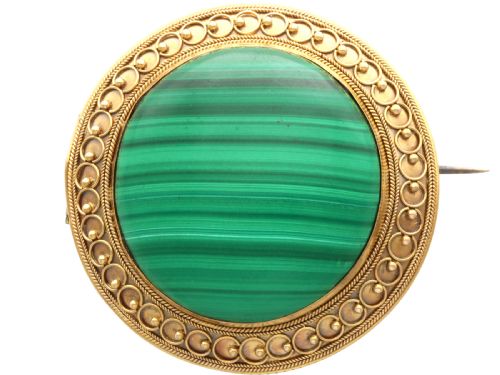


Etruscan Revival Gold Jewellery
These pieces of etruscan revival gold jewellery are classical ornaments crafted during the Victorian and Edwardian eras, offering intricate granulation and wirework.
Etruscan Revival Gold Jewellery
Etruscan revival gold jewellery comprises decorative items produced during the nineteenth century, drawing direct inspiration from ancient archaeological discoveries in Italy. Buyers searching for etruscan revival gold jewellery typically encounter earrings, brooches, and pendants spanning the Victorian and Edwardian periods.
The objects appearing here take forms such as drop earrings, lockets, and bangles, frequently constructed with distinct classical motifs. Most examples belong to the Victorian era, showcasing stylistic influences that stretch into the late nineteenth century and the Edwardian years.
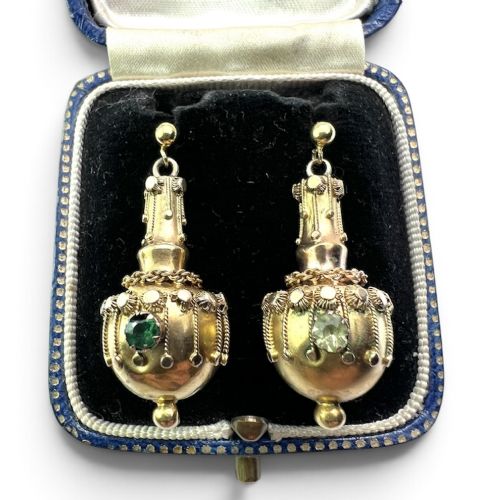
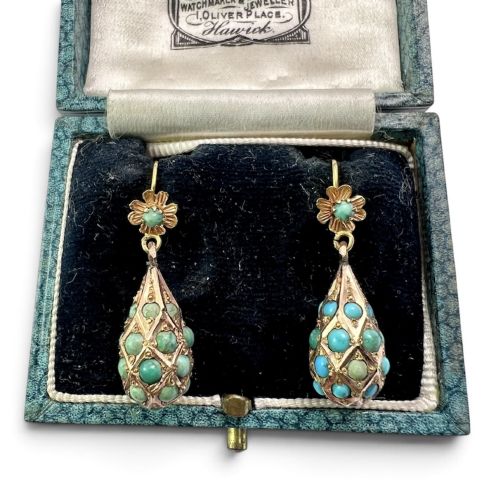
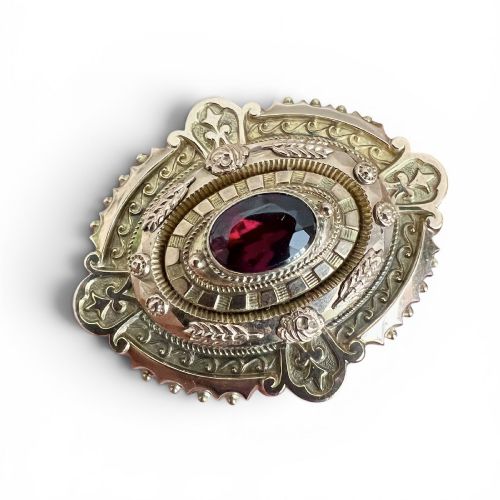
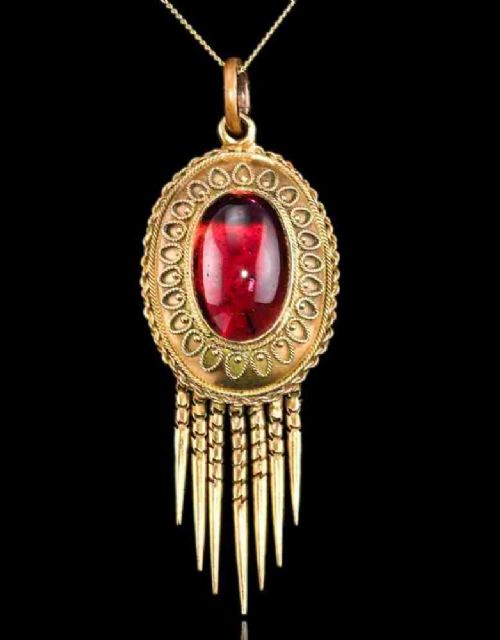
Earrings and brooches dominate the selection, often featuring garnet, turquoise, or diamond accents set within yellow gold. These ornaments reflect a distinct historical appetite for ancient Mediterranean aesthetics reinterpreted by nineteenth century goldsmiths.
How They Were Made
Goldsmiths utilised yellow gold in various purities, notably nine carat, fifteen carat, and eighteen carat, shaping the metal through casting, hammering, and wire drawing. Stones such as garnet, turquoise, and diamond were incorporated into settings that secured the gems without overwhelming the classical design.
Granulation and fine wirework define the surface decoration, requiring immense skill to solder microscopic gold spheres and threads onto the base metal. Artisans employed these labor-intensive techniques to replicate the rich texture and archaeological authenticity prized by collectors of the period.
A solitary chimera bangle proudly guards the collection, ready to ward off mythological beasts while securing a wrist with rubies and diamonds.
What Varies in Quality
The refinement of the granulation and the precision of the applied wirework distinguish exceptional pieces from standard workshop production. Superior examples display perfectly aligned microscopic gold spheres and crisp soldered elements that remain securely attached to the gold surface.
Material selection and the presence of genuine gemstones like diamonds or well-matched turquoises elevate the stature of an ornament. Weight, proportion, and the preservation of original clasps or fittings further determine the standing of each piece within the range.
Ilias Lalaounis
The Etruscan Revival Gold Jewellery Glossary
- Granulation
- A decorative technique involving the application of tiny spheres of gold to a metal surface in geometric or figurative patterns. This method requires precise temperature control during soldering to avoid melting the minute balls.
- Etruscan Revival
- A nineteenth century design movement inspired by the jewellery excavated from ancient Etruscan tombs in Italy. Makers adopted ancient motifs and complex metalworking methods to recreate this distinct classical look.
- Collet setting
- A metal collar that holds a gemstone in place by enclosing its girdle with a continuous strip of metal. This secure mounting style appears frequently in period rings and pendants.
- Foxtail chain
- A flexible jewellery chain made of curved interlocking links that resemble the bushy tail of a fox. It provides a fluid drape for necklaces and tassel earrings.
- Silver gilt
- Silver that has been coated with a thin layer of gold to give the appearance of solid gold. This technique offered a lighter weight and alternative coloration for nineteenth century ornaments.
Etruscan Revival Gold Jewellery: Frequently Asked Questions
How do I clean antique gold jewellery?
Clean these items gently with a soft brush, warm water, and mild soap to protect delicate stones and granulation.
Avoid harsh chemical dips and ultrasonic cleaners, which can loosen gemstones or damage nineteenth century settings.
Can I wear these earrings every day?
Daily wear is possible with careful handling, though antique clasps and wirework require gentle treatment.
Storing pieces separately prevents friction from damaging the fine gold granulation and softer gems like turquoise.
What is the difference between Victorian and Edwardian pieces?
Victorian items often display heavier gold weights, bold classical revival motifs, and deep coloured stones such as garnets.
Edwardian pieces generally shift toward lighter frameworks, intricate openwork, and a preference for diamonds alongside lower carat golds.
How are nineteenth century gold purities marked?
Many items feature traditional carat designations or specific regional stamps indicating nine, fifteen, or eighteen carat gold.
Unmarked pieces frequently rely on historical context, acid testing, and stylistic markers to confirm their metallic composition.