






Ethnic Textile Panel
An ethnic textile panel brings vibrant geometry and rich regional history directly into a modern interior.
Ethnic Textile Panel
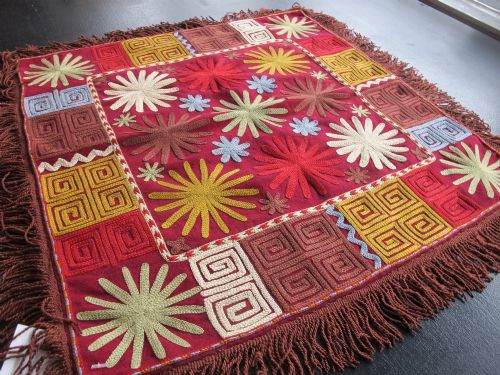
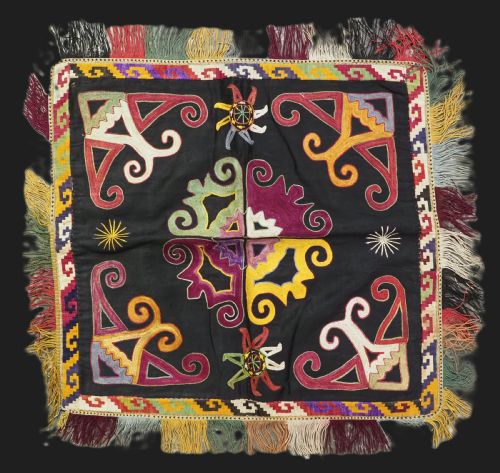
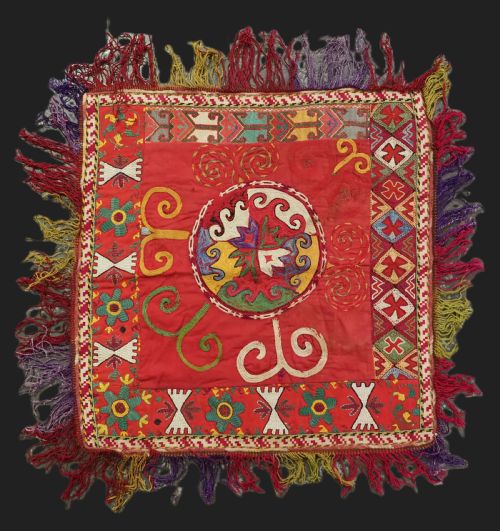
When you search for an ethnic textile panel, you encounter hand-stitched dowry embroideries, yurt wall hangings, and woven tribal fragments originating from Central Asia, Persia, Indonesia, and Africa. These pieces function primarily as wall art, bringing centuries of domestic tradition and nomadic artistry into contemporary spaces.
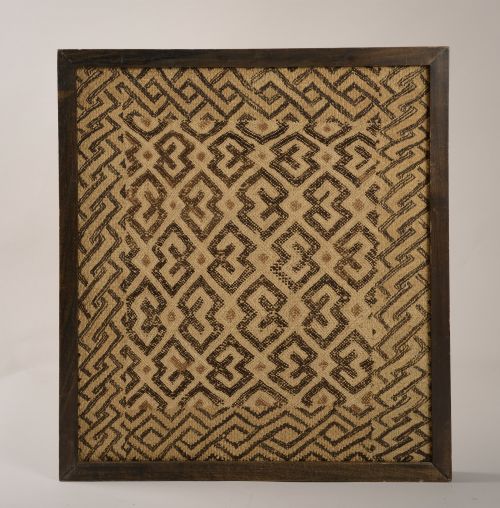
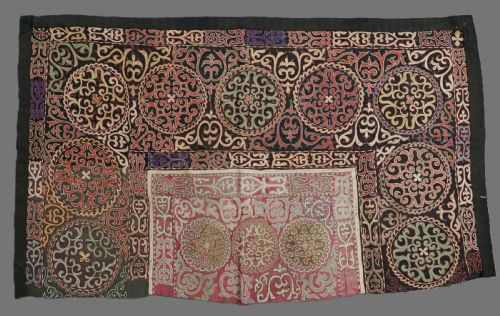
The selections on this page span from the mid-nineteenth century through the early twentieth century, incorporating specific regional types such as Uzbek Lakai embroideries, Kyrgyz tush kyiz, Turkmen chuvals, and Kuba cloth. Each object carries the distinct visual language of its maker and tribe.
Most items take the form of wall hangings, textile panels, or repurposed fragments like saddle-bags and torba ilgichs. They are chosen as much for their bold graphic designs as for their tangible connection to traditional textile crafts.
Materials and construction
Makers utilised natural materials including cotton, handspun cotton, silk, wool, wood, glass, and raffia to construct these panels. Textiles were frequently embroidered with dense silk threads onto cotton grounds, or woven using traditional tribal techniques.
Embellishments sometimes incorporate small glass elements or alternate fibres to accentuate the patterned surface. The physical structure relies on durable foundational weaves that have preserved these fabrics across generations.
Ethnic Textile Panel Retail Price Guide 2026
Typical asking prices for ethnic textile panel among the pieces listed under this phrase on Sellingantiques today, from the lower quarter to the upper quarter. They describe what is for sale here now, not the wider market.
Listings feature periods spanning from 1850 to 1920, incorporating silk, wool, cotton, and raffia across Central Asian, African, and Indonesian styles.
Variations in quality
Quality rests upon the tightness of the weave, the intricacy of the embroidery, and the preservation of the original fibres. Finer examples display exceptional precision in needlework and a vibrant retention of natural dyes.
The strength of the graphic design and the integrity of the textile panel framework distinguish finer tribal works from simpler domestic pieces. Completeness of the composition also plays a role in establishing the visual impact of the hanging.
The Ethnic Textile Panel Glossary
- Suzani
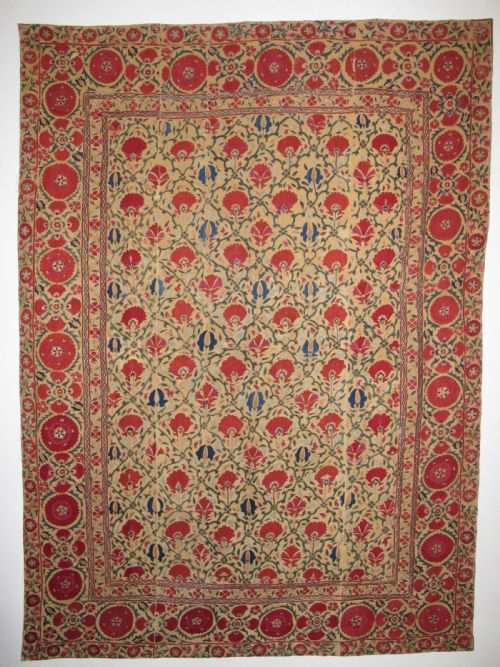
- An embroidered tribal textile originating from Central Asia, traditionally made as part of a bride's dowry. These pieces feature large-scale floral and geometric motifs stitched in silk.
- Ikat
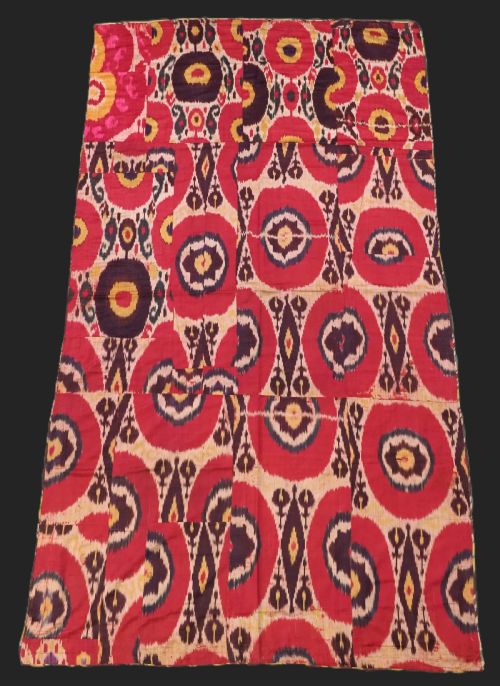
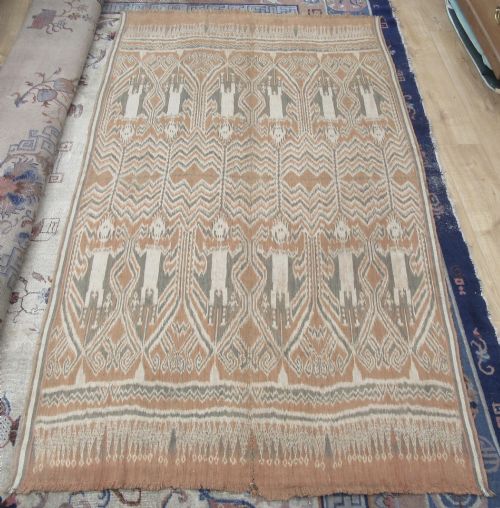
- A dyeing technique where yarns are pattern-dyed before being woven into fabric, creating characteristic feathered edges along the design motifs. Ikat panels display fluid, shifting colour boundaries.
- Chuval
- A large tribal storage bag face made by Turkmen nomads, frequently repurposed as a wall hanging to showcase its intricate goul motifs. They demonstrate traditional weaving practices of Central Asia.
- Kuba cloth
- A textile tradition from Central Africa featuring geometric pile cloth woven from raffia palm fibres. These panels are prized for their complex cut-pile textures and rhythmic patterns.
Ethnic Textile Panel: Frequently Asked Questions
How were ethnic textile panels originally used?
Many of these pieces served practical and ceremonial roles within nomadic or village households, functioning as dowry items, yurt decorations, or storage bags.
Over time, objects like storage face bags and wedding embroideries transitioned into decorative wall hangings as their aesthetic value gained recognition among collectors.
Where do these textile panels originate?
The listings span several distinct cultural regions, prominently featuring Central Asian tribal areas such as Uzbekistan, Turkmenistan, and Kyrgyzstan.
Other examples originate from Persian nomadic groups, Indian tribal communities, and the Indonesian archipelago, alongside African traditions.
How should I hang a textile panel?
Displaying a textile panel safely requires mounting methods that distribute the weight evenly across the entire upper edge to prevent fibre distortion.
Conservation-grade velcro attachments or custom-built padded sleeves allow the fabric to hang flat against a wall without sustaining puncture damage from direct pinning.
How do I date an antique textile panel?
Dating relies on examining the types of dyes used, the spin and consistency of the cotton or wool yarns, and the specific regional style motifs.
Pieces from the nineteenth and early twentieth centuries often exhibit distinct natural dye palettes and handspun fibres that differ from later commercial productions.