


Etched Glass Vessel
An etched glass vessel brings tactile depth to a room through frosted motifs, cameo layers, and engraved lines.
Etched Glass Vessel
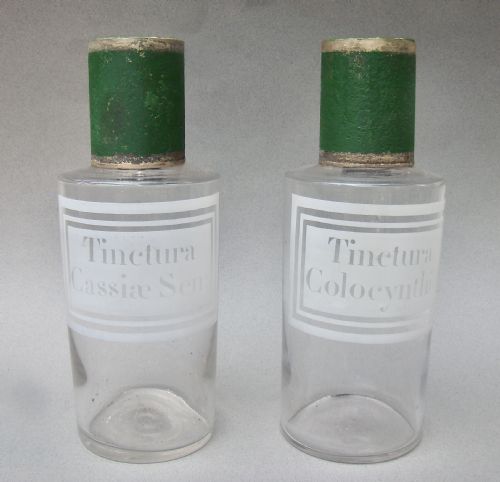
When you search for an etched glass vessel, you encounter a diverse array of decorative and functional forms spanning several centuries. The selection encompasses slender vases, practical decanters, apothecary jars, claret jugs, oil lamps, and delicate wine glasses.
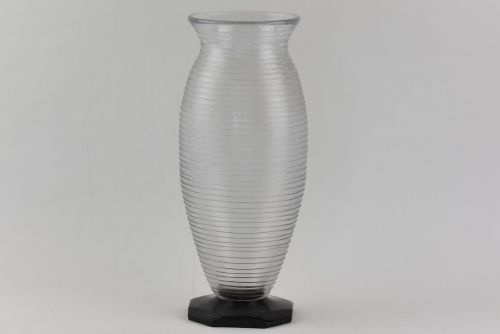
The objects originate from Victorian, Georgian, and twentieth-century workshops, capturing stylistic shifts from Neoclassical and Victorian ornamentation to organic Art Nouveau and geometric Art Deco designs.
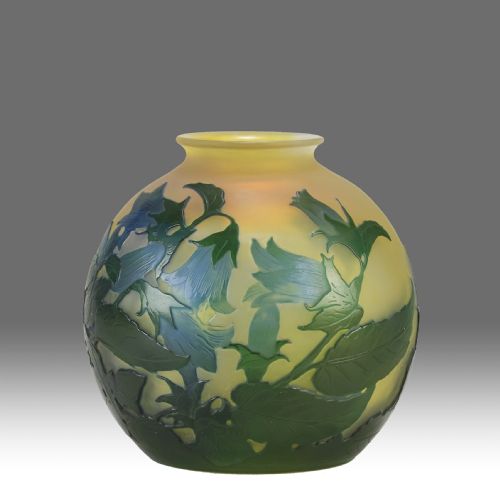
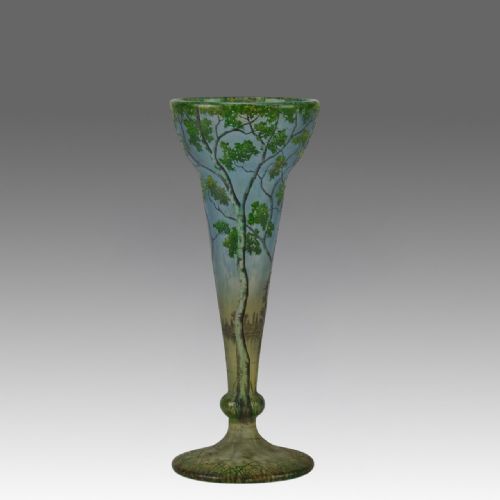
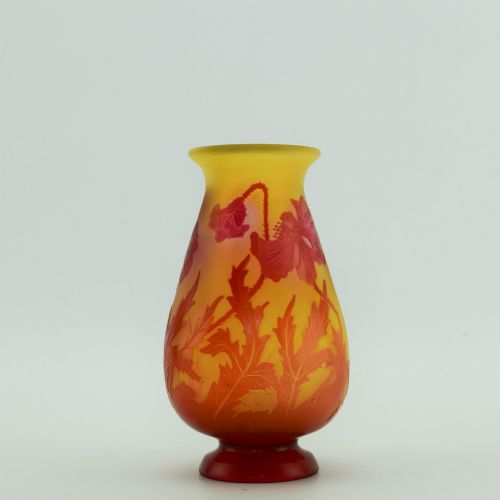
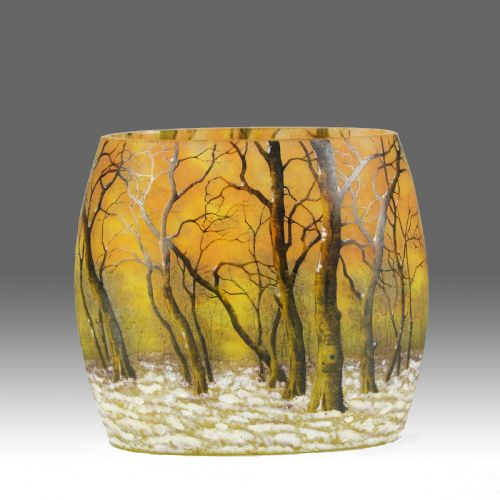
Vases dominate the offerings, particularly pieces featuring botanical or landscape motifs executed in multi-layered cameo glass or acid-etched surfaces.
Materials and Techniques
Makers utilised clear glass, frosted glass, lead crystal, and specialist mediums such as hyalite and cameo glass, sometimes combining them with enamel decoration.
Surface patterns were achieved through acid-etching, deep carving, and wheel engraving to cut through layered colours and reveal contrasting designs beneath.
Materials span standard clear glass, heavy lead crystal, coloured cameo layers, and applied enamel.
Factors of Quality
Quality rests in the precision of the carving and the depth of the cameo layers, where controlled acid biting or hand engraving creates sharp relief and subtle tonal graduation.
The artistic ambition of the design - whether an intricate landscape, a botanical study, or a structured geometric pattern - separates standard utility pieces from masterworks by prominent glasshouses.
Emile Gallé·Daum Frères·Jean Luce·Karl Palda·Schneider·Paul Heller
The Etched Glass Vessel Glossary
- Cameo Glass
- Glass formed with multiple distinct layers of different colours, carved or acid-etched away to create a raised design in relief. This technique demands exceptional skill from the glassmaker to avoid cutting through the thin outer layer.
- Acid-Etched Glass
- Glass treated with hydrofluoric acid to eat away exposed surfaces and create frosted patterns or tactile textures. The method allowed for intricate repeatable designs during the Art Deco and Art Nouveau periods.
- Rummer
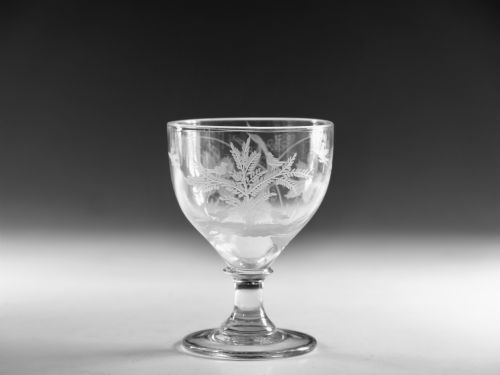
- A large, heavy-stemmed drinking glass popular in Georgian and Victorian times, frequently decorated with wheel engraving or etching. These sturdy vessels were typically used for ale, wine, or punch.
- Lead Crystal
- Heavy, brilliant glass containing metallic oxide that increases refractive index and makes the material softer for detailed engraving. It provides the clear ringing tone and weight associated with fine antique glassware.
- Enamel
- Opaque coloured glass fused to the surface of a vessel through firing to add painted details and chromatic highlights. It often appears alongside etching in Art Deco and Art Nouveau pieces.
Etched Glass Vessel: Frequently Asked Questions
What is the difference between cameo and etched glass?
Cameo glass involves physical carving or chemical etching through distinct layers of coloured glass to leave a raised, opaque motif against a contrasting background. It requires multiple layers blown together before decoration begins.
Standard etched glass relies on acid or mechanical engraving to bite directly into a single surface, creating a frosted or sunken design rather than a raised multi-coloured relief.
How do I identify Art Nouveau styles in these vessels?
Art Nouveau pieces, common around the turn of the twentieth century, feature flowing asymmetrical lines and naturalistic subjects. Look for motifs depicting landscapes, flowers, aquatic plants, and insect life.
Maker signatures on these items are typically incorporated directly into the cameo design as an integrated part of the surface artwork rather than a stamped mark.
Where were most of these antique glass pieces made?
The pieces originate primarily from renowned European centres of glass production, with French ateliers leading the Art Nouveau cameo movement and Bohemian workshops dominating later geometric styles.
English glasshouses specialised earlier in domestic forms such as rummers, decanters, and wine glasses utilising traditional wheel engraving.