


Etched Glass Lighting
Etched glass lighting brings together period illumination and decorative glass, offering functional lamps, lanterns, and shades from the nineteenth and early twentieth centuries.
Etched Glass Lighting
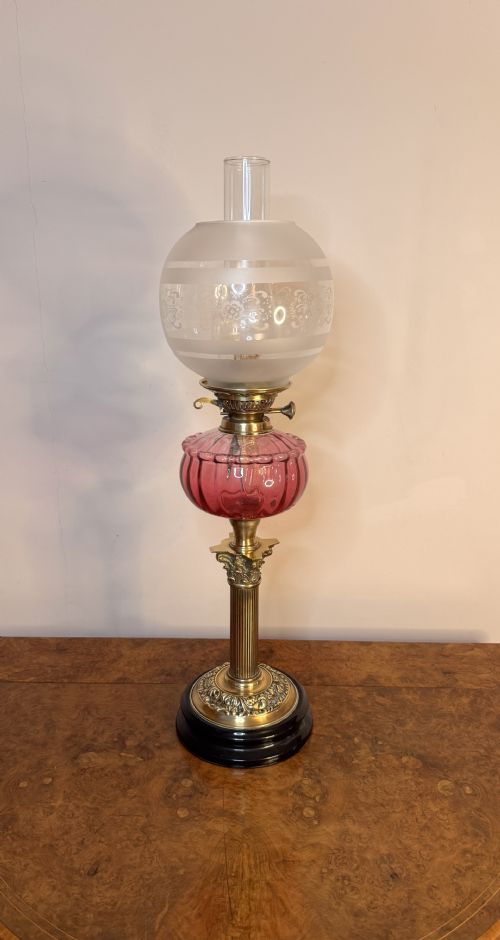
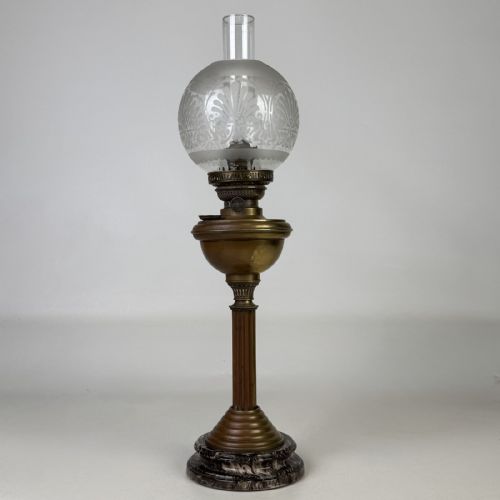
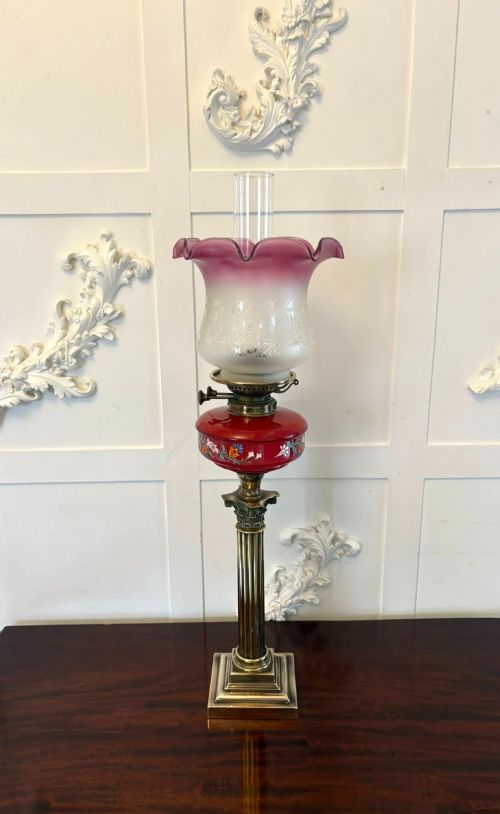
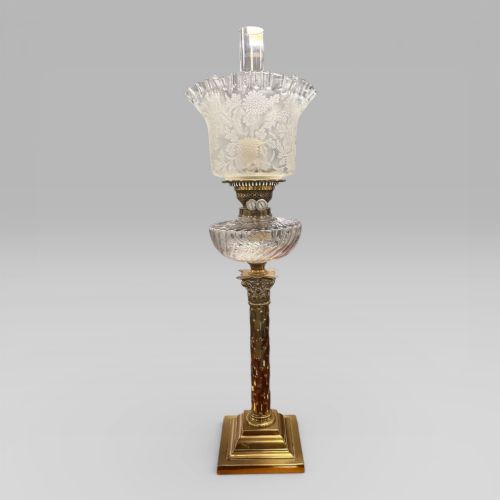
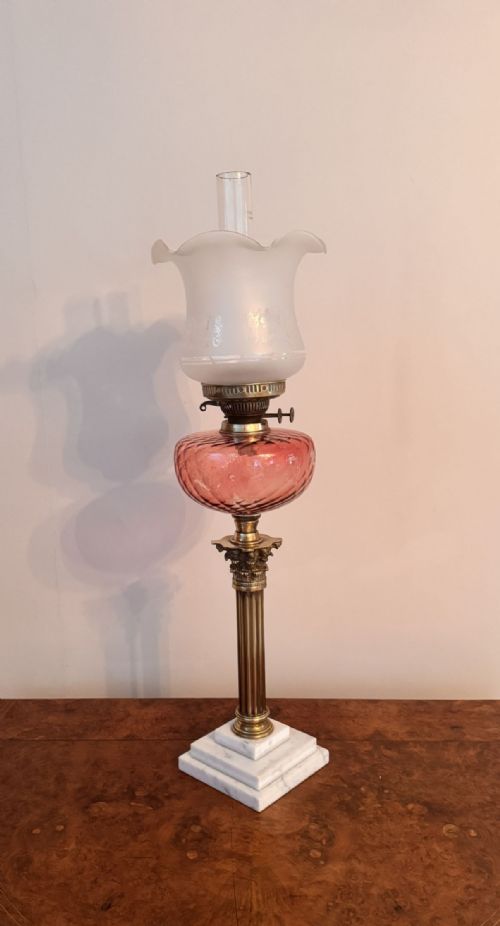
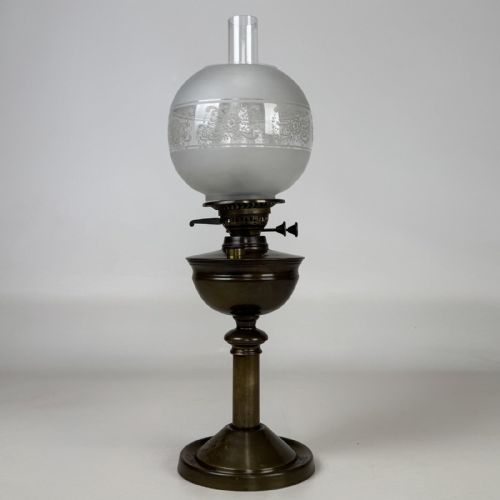
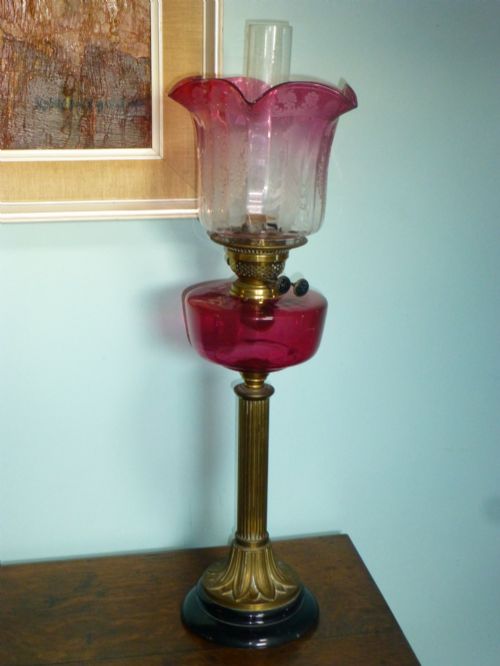
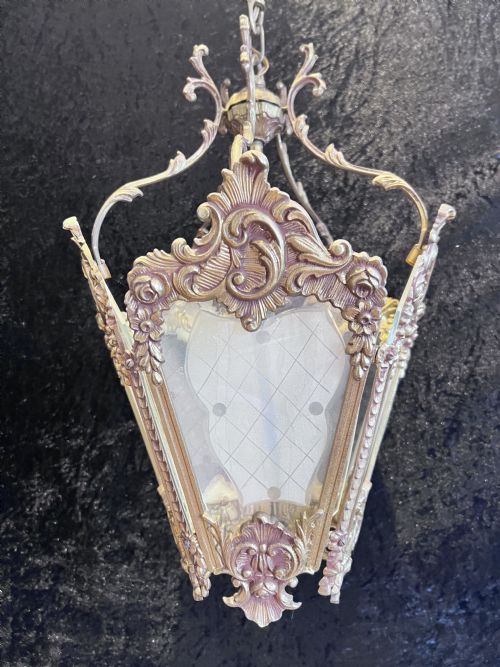
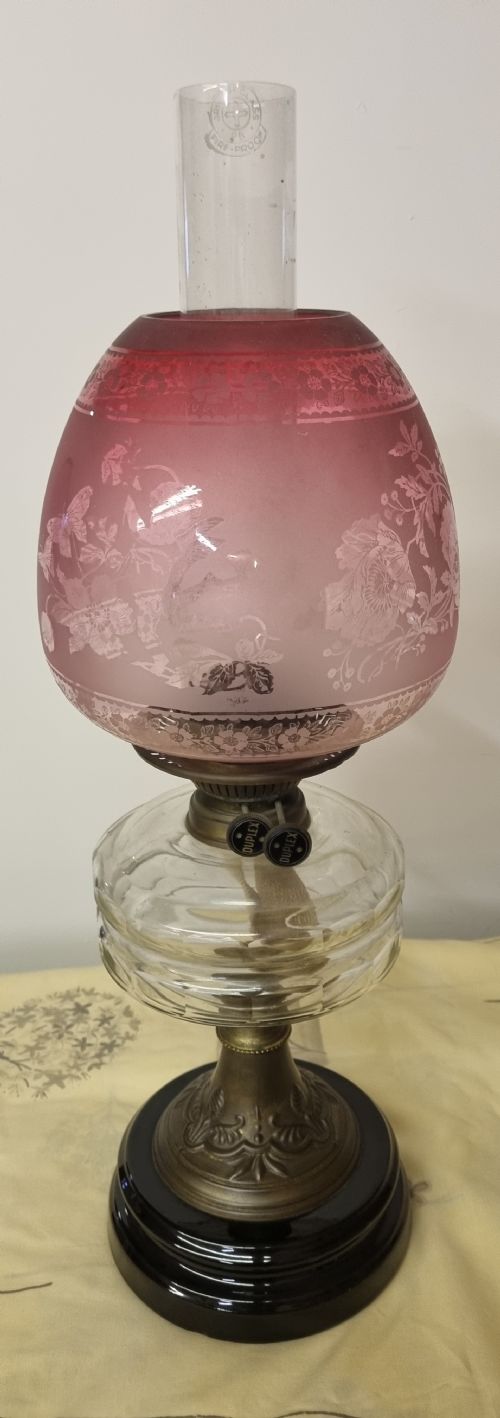
When you search for etched glass lighting, you encounter a variety of oil lamps, hanging lanterns, and pendants originating mainly from the Victorian and Edwardian eras. These pieces bridge domestic utility and decorative arts, appearing as brass oil lamps with patterned glass shades or as ceiling lanterns intended for hallways and reception rooms.
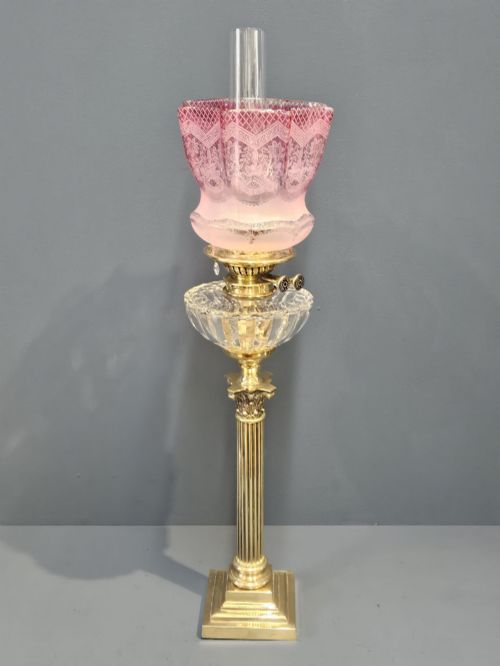
The selections on this page lean heavily towards nineteenth-century oil lamps featuring cranberry glass fonts, alongside twentieth-century French hall lanterns and Art Deco pendants. You will find brass columns paired with frosted, cut, or etched shades that diffuse light softly across a room.
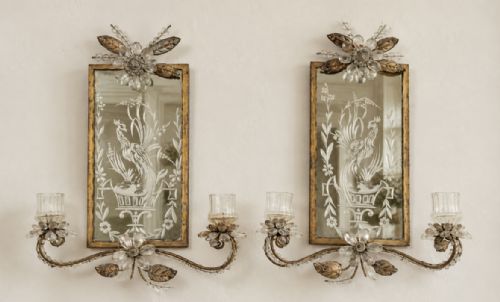
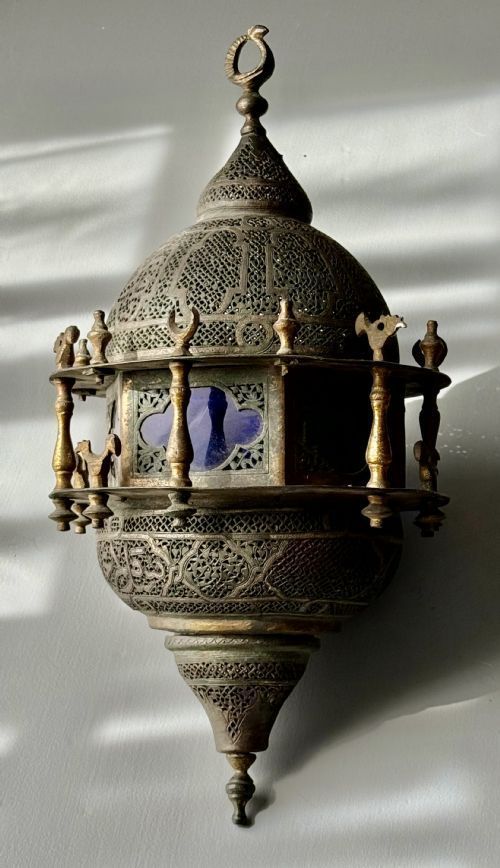
Styles range from restrained Corinthian columns to ornate Moorish Revival hanging fixtures and French Rococo sconces. The presence of ceramic, porcelain, and marble elements alongside the glass demonstrates the diverse material combinations common to these older lighting forms.
Materials and Technique
Brass serves as the primary structural metal for columns, bases, and lantern frames, often paired with cast bronze or copper components to provide stability for heavier glass reservoirs. Makers utilised this ductile metal to create intricate mouldings, Corinthian capitals, and structural mounts that support the delicate glass elements above.
The glass itself appears in several distinct forms, including cranberry glass, frosted glass, and clear crystal that has been cut or chemically etched to create opaque surface patterns. Artisans also employed hand-painting and enamelling directly onto the glass fonts and tulip shades to introduce colour and botanical motifs.
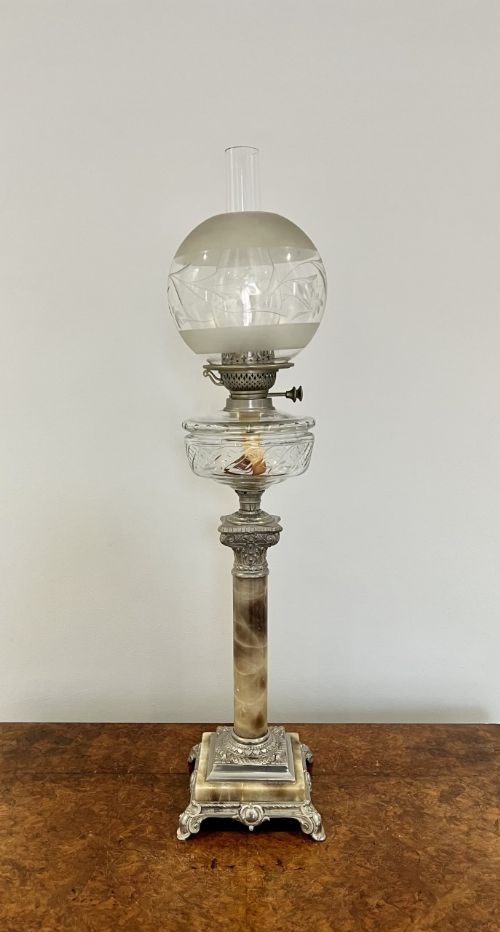
Porcelain and ceramic elements, sometimes modelled into figural shapes, work in tandem with onyx and marble to form composite bases for table and oil lamps. Metalwork components are frequently joined via threaded fixings or rivets, holding the glass fonts securely within brass galleries.
Etched Glass Lighting Retail Price Guide 2026
Typical asking prices for etched glass lighting among the pieces listed under this phrase on Sellingantiques today, from the lower quarter to the upper quarter. They describe what is for sale here now, not the wider market.
Some nineteenth-century glass barrels were made to dispense spirits rather than light rooms.
Standards of Execution
The distinction between standard and superior pieces rests on the crispness of the metal casting and the depth of the glass etching. High-grade brass components exhibit sharp architectural detailing on column fluting and base mounts, whereas lesser examples show softened edges from worn moulds.
The integration of materials dictates overall execution, with finer items demonstrating a harmonious balance between heavy metal bases and well-proportioned glass shades or fonts. The complexity of the glasswork, such as deep wheel-cutting or layered casing in cranberry glass, elevates the sophistication of the lighting fixture.
Hinks of Birmingham·Taylor Tunnicliff·Sitzendorf·Maison Bagues·Daum
The Etched Glass Lighting Glossary
- Duplex burner
- A double-wick mechanism common on nineteenth-century oil lamps designed to yield a brighter flame. These burners often bear maker names stamped into the thumbwheels.
- Font
- The oil reservoir of a lamp, typically formed from coloured, frosted, or etched glass, porcelain, or brass. It sits atop the main column and holds the fuel.
- Corinthian column
- An architectural column style featuring ornate, leaf-carved capitals adapted by Victorian makers for brass oil lamp stems. This classical revival form added formal weight to domestic lighting.
- Hall lantern
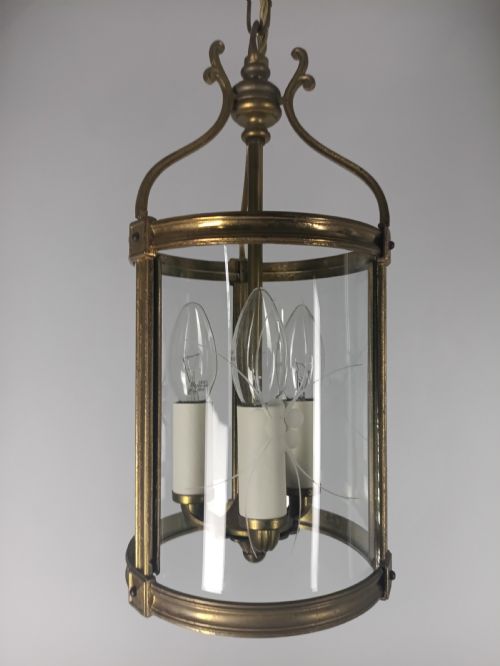
- An enclosed ceiling light suspended by a chain or bracket, historically positioned in entranceways. These fixtures utilise glass panels, sometimes etched or bevelled, held within a brass or bronze frame.
- Tulip shade
- A flared glass shade resembling an open flower, frequently etched or frosted to soften the light emitted from oil or early electric burners.
Etched Glass Lighting: Frequently Asked Questions
How do I convert an old oil lamp?
Many brass and glass oil lamps are adapted for electricity by running wiring through the original burner mechanism without altering the exterior metalwork. This preserves the historical appearance while allowing safe daily use.
Consult a qualified professional to ensure internal components meet modern electrical standards before plugging the fixture into a mains supply.
What is cranberry glass?
Cranberry glass is a pinkish-red translucent glass created by adding gold chloride to the molten batch during manufacturing. It became exceptionally popular during the Victorian era for oil lamp fonts and decorative shades.
The intensity of the colour varies depending on the gold concentration and the specific cooling process used by the glasshouse.
How should I clean etched glass shades?
Wash etched glass gently using lukewarm water and mild soap, avoiding harsh scrubbing that might damage delicate surface patterns or hand-painted details. Soft cloths help prevent scratching during the drying process.
Remove brass components or shades from their frames before cleaning to avoid moisture accumulation in hidden joints.
How do I date a brass hall lantern?
Dating a hall lantern involves examining the construction methods of the brass frame, the thickness of the glass panels, and the style of the suspension loop. Edwardian and Victorian examples often feature heavy cast brass work and hand-blown glass.
Later twentieth-century reproductions generally utilise lighter stamped metal sheets and machine-rolled glass panels with uniform thickness.