

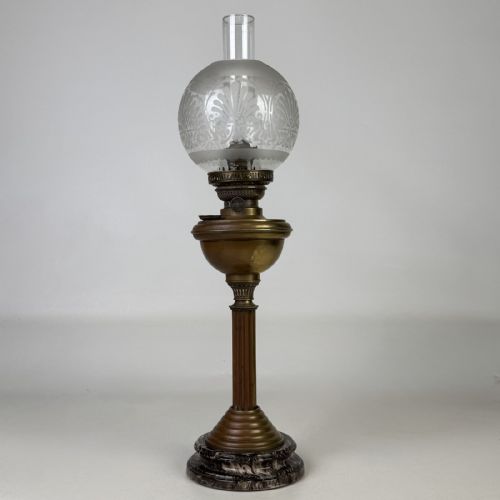
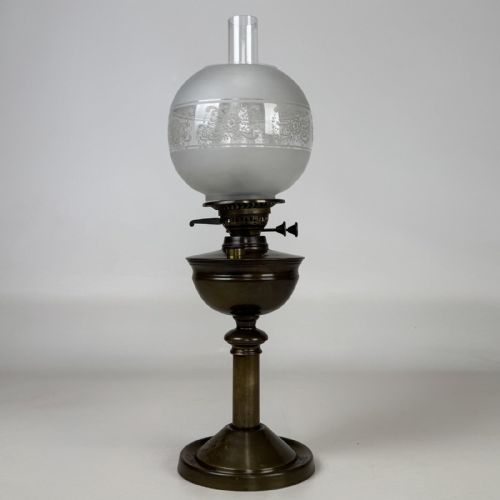
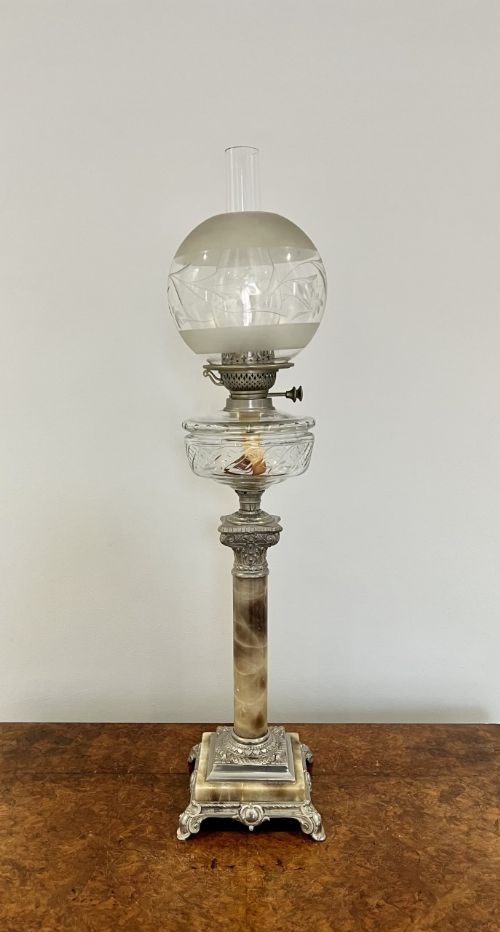
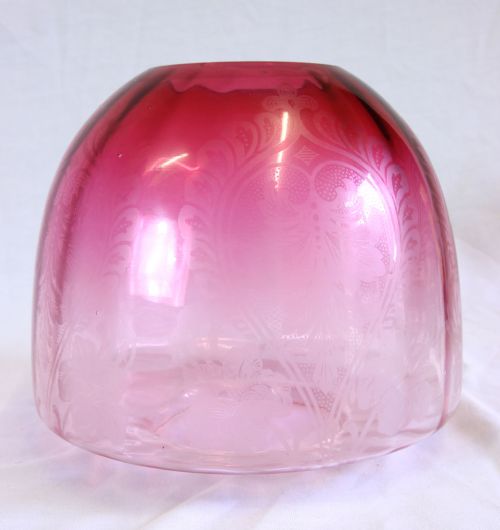


Etched Glass Globe
An etched glass globe brings a soft, diffused light to a room, holding the craftsmanship of Victorian and Edwardian lighting design.
Etched Glass Globe
An etched glass globe typically forms the shade or upper vessel for period lighting, most often seen atop oil lamps and ceiling fixtures from the nineteenth and early twentieth centuries. When searching for an etched glass globe, collectors encounter various forms including spherical shades, tulip-shaped globes, and dome ceiling fittings.
The pieces originating from the Victorian and Edwardian eras show a distinct shift from ornate brass and ceramic oil lamp assemblies to cleaner geometric lines in later Art Deco designs. Surviving examples demonstrate how functional domestic lighting doubled as decorative ornamentation in period interiors.
How they were made
Glassmakers utilised techniques such as acid-etching and frosted glass treatments to create textured surface patterns against clear or coloured backgrounds. These glass globes were frequently paired with metal components in brass, bronze, and chrome.
Coloured glass variations, including cranberry and pale green hues, were achieved by introducing mineral oxides to the molten batch before blowing and shaping the globe. Makers also integrated ceramic and onyx elements into the supporting lamp bodies.
Etched Glass Globe Retail Price Guide 2026
Typical asking prices for etched glass globe among the pieces listed under this phrase on Sellingantiques today, from the lower quarter to the upper quarter. They describe what is for sale here now, not the wider market.
Victorian oil lamps often smell faintly of long-burned paraffin, a comforting reminder of nineteenth-century sitting rooms.
What varies in quality
The depth and clarity of the acid-etching define the finer examples, where crisp motifs stand out sharply against frosted or polished grounds. Heavier glass weight and uniformity in thickness indicate superior production standards from established makers and workshops.
The integration between the glass globe and its original metal or ceramic mounting reveals the overall standard of manufacture. Pieces that retain matching components and undamaged rims represent higher quality within the surviving selection.
Hinks of Birmingham·Messengers·Karl Palda·Harrods
The Etched Glass Globe Glossary
- Acid-etching
- A decorative technique using acid to eat away exposed areas of glass, leaving a frosted pattern. This method creates detailed designs with soft, tactile edges.
- Cranberry glass
- A rich red transparent glass produced by adding gold chloride to the molten mixture. It appears frequently in Victorian oil lamp components.
- Font
- The oil reservoir section of a lamp, often rendered in coloured glass, ceramic, or metal. It sits beneath the burner and supports the glass shade.
- Frosted glass
- Glass treated to scatter light, producing a translucent white appearance. It softens glare while retaining an even luminosity.
Etched Glass Globe: Frequently Asked Questions
How do I identify a Victorian glass shade?
Victorian glass shades often feature heavy hand-blown construction, distinct colour palettes like cranberry or pale green, and traditional acid-etched floral or foliate motifs.
They generally display heavier glass weight and were designed to fit standard nineteenth-century brass oil lamp burners.
Were these globes used for oil lamps or lighting?
These glass globes served primarily as protective and decorative shades for nineteenth-century oil lamps before many were later converted for electricity.
Their form directed air currents and softened the bright flame of burning oil while casting diffused light across the room.
What is the difference between frosted and etched glass?
Frosted glass has a uniform opaque surface created by acid immersion or sandblasting to diffuse light evenly across the entire piece.
Etched glass involves selective treatment to form specific patterns and designs against a clear or frosted background.
How do I clean an antique glass globe?
Careful hand washing in warm, soapy water using a soft cloth is recommended to protect the delicate etched surfaces and tinted glass finishes.
Harsh chemical cleaners and abrasive scouring pads should be avoided entirely to preserve the original surface texture.