

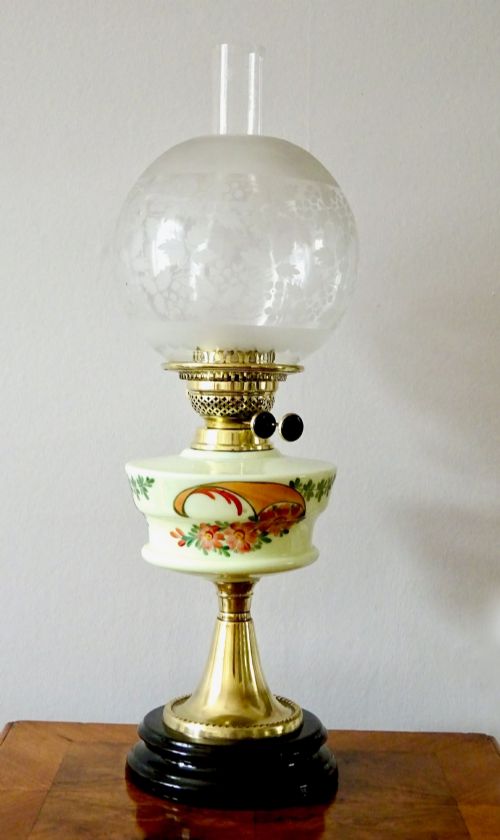


Etched Glass Desk Lamp
An etched glass desk lamp brings tactile warmth and period character to a room, combining brass, bronze, and frosted glass.
Etched Glass Desk Lamp
When you search for an etched glass desk lamp, you encounter items primarily spanning the Victorian, Edwardian, and Art Deco periods, alongside pieces dated around nineteen-ten and nineteen-thirty. These objects encompass various forms including table lamps, oil lamps, and desk lamps.
The pieces you are most likely to meet on this page include brass table lamps with ruby etched glass shades, alongside converted oil lamps and swan neck desk lamps from the early twentieth century. Materials range from brass and bronze to silver plate and frosted glass.
Makers and origins recorded in the evidence span English, French, German, and Czech aesthetics, with specific works attributed to Daum and Karl Palda. The assortment bridges nineteenth-century utility with twentieth-century decorative design.
How they were made
The construction of these lamps relies heavily on cast and turned brass, bronze, and silver-plated metal forming the structural bases and swan neck frames. Ebonised wood occasionally provides contrasting foundation elements.
Glass components include frosted, crystal, and ruby glass, often finished with acid etching or enamelled winter landscape decoration. Some designs incorporate delicate glass beads to soften the illumination.
Listings feature materials including brass, bronze, silver plate, frosted glass, glass beads, and ebonised wood across Victorian and Art Deco styles.
What varies in quality
Quality separates through the crispness of the metal casting in the brass or bronze bases and the depth of the hand-etching on the glass shades. Superior examples display precise detailing in enameled scenes or intricate ruby flashed glass.
The integrity of the original components, such as matching burners on oil lamp conversions and unpolished patination on the metalwork, distinguishes finer survivals from lesser altered pieces.
Daum·Karl Palda·Gaggenau
The Etched Glass Desk Lamp Glossary
- Etched glass
- Glass decorated by applying an acidic substance to eat away the surface, creating opaque designs. This technique allows for detailed patterns that diffuse light softly.
- Ruby glass
- A deep red glass created by adding gold chloride or copper to the molten mixture. It is frequently flash-cut or etched to reveal clear glass underneath.
- Swan neck
- A curved metal arm resembling the neck of a swan, commonly used on desk lamps to direct the light source downwards. This design gained popularity during the Edwardian period.
- Silver plate
- A thin layer of silver applied to a base metal such as copper or brass. It provided the luxurious appearance of solid silver at a lower cost during the nineteenth century.
Etched Glass Desk Lamp: Frequently Asked Questions
How do I clean an etched glass shade?
Wash the glass gently in lukewarm soapy water using a soft cloth, avoiding abrasive pads that can scratch the surface.
Dry the shade thoroughly with a lint-free towel before reattaching it to the brass or bronze mount.
Are these lamps safe for modern desks?
Many older oil lamps and desk lamps have been successfully wired for electricity to suit contemporary use.
Check the internal wiring and consult a qualified electrician to ensure compliance with current safety standards.
What period do most desk lamps date from?
The pieces on this page primarily date from the Victorian and Edwardian eras, extending into the nineteen-thirties.
Stylistic markers such as brass swan necks and ruby etched shades point directly to these late nineteenth and early twentieth-century origins.
Can I replace a missing glass shade?
Finding a period-correct replacement requires matching the fitter size and the specific etching style of the original base.
Victorian and Art Deco replacement shades appear independently in the antiques market if measured carefully.