
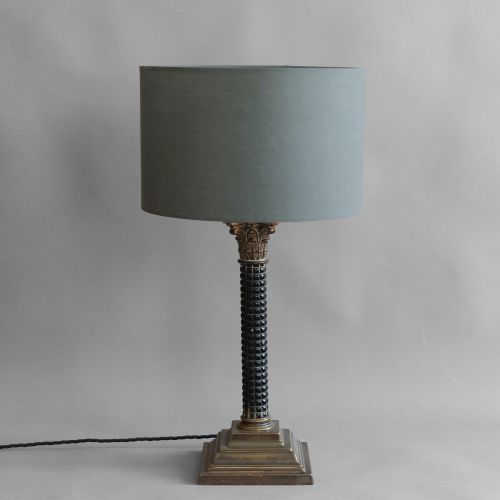
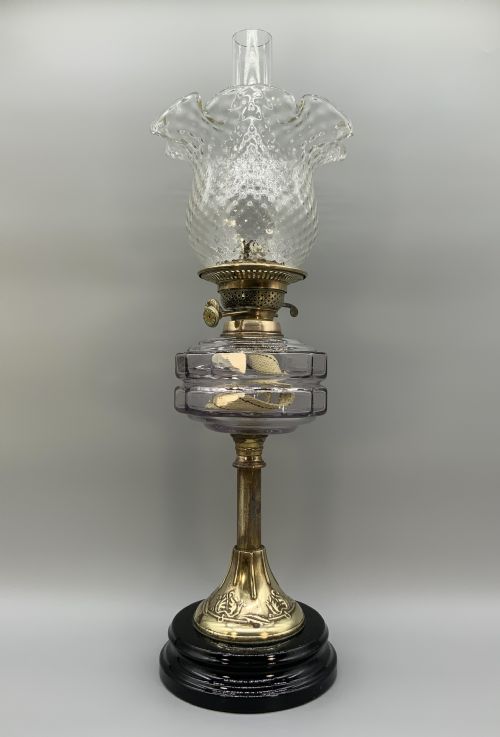
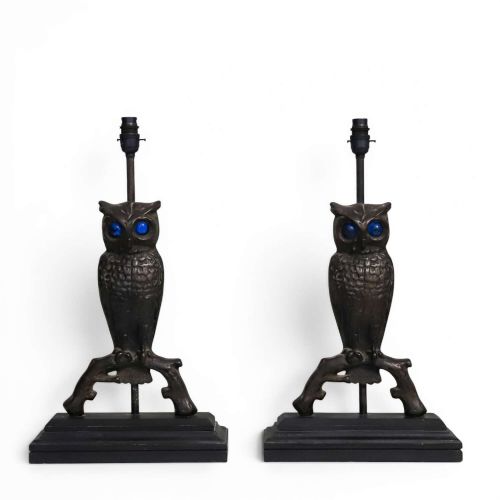


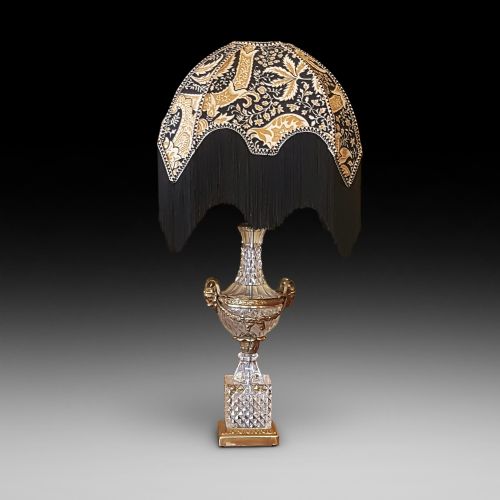
Black Glass Table Lamp
A black glass table lamp combines a deep lustrous sheen with functional illumination, offering a striking silhouette for any interior.
Black Glass Table Lamp
A black glass table lamp brings together the dark reflective qualities of glass with period lighting forms. You will find pieces originating from the Victorian era up through the Art Deco period, demonstrating how lighting technology shifted over decades.
The selection here includes conversions from earlier oil lamps alongside electric pieces designed in the twentieth century. Bases and bodies incorporate contrasting materials such as brass, ceramic, and marble to support the glass elements.
While many examples showcase European manufacturing, particularly French work from the nineteen-twenties and thirties, others reflect Victorian domestic lighting traditions. These lamps serve as both practical light sources and sculptural objects.
How they were made
Makers utilised heavy moulding and hand-blowing techniques to shape the glass components, often mounting them onto metal or ceramic plinths for stability. Brass, wrought iron, and chrome provide structural support and decorative mounts.
Surface treatments range from polished metal fittings to intricate carved details on supporting bases. Many pieces combine glass reservoirs or columns with metal burners or collar mounts.
The listings span the Victorian era, Edwardian period, and nineteen-thirties, incorporating brass, ceramic, marble, and wrought iron alongside glass.
What varies in quality
The distinction in quality rests upon the weight of the glass, the precision of the metal casting, and the integrity of the original construction. Superior examples demonstrate crisp definition in moulded details and robust mounting without structural compromise.
Design attribution and stylistic coherence also separate standard production items from more ambitious pieces of the period. The harmony between the glass body and its supporting hardware dictates the overall visual success of the object.
Eileen Grey·Degue·Karl Palda
The Black Glass Table Lamp Glossary
- Art Deco
- A design style from the nineteen-twenties and thirties characterised by geometric shapes, streamlined forms, and modern industrial materials. It replaced the organic curves of earlier movements.
- Victorian
- Pertaining to the reign of Queen Victoria, spanning the nineteenth century, known for ornate decoration and historic revival styles. Pieces from this time often utilise heavy brass and ceramic foundations.
- Spelter
- An alloy of zinc and lead used as a cheaper substitute for bronze in decorative figures and lamp bases. It takes patination well to resemble heavier metals.
- Wrought iron
- Iron that has been heated and worked with tools by a smith, common in French lighting bases of the interwar period. It offers strong structural lines with hand-forged texture.
Black Glass Table Lamp: Frequently Asked Questions
How do I date a black glass table lamp?
Dating relies upon examining the manufacturing techniques, mounting hardware, and prevailing stylistic markers of the period. Victorian examples often incorporate heavy brass collars and ceramic burner assemblies, whereas nineteen-thirties pieces lean towards geometric forms and chrome or wrought iron supports.
Changes in wiring standards and switches also provide clues, though many older lamps have been modernised for contemporary use.
Are these lamps safe to use today?
Most antique and vintage lamps require inspection by a qualified electrician to ensure the internal wiring meets current safety standards. Older brass and metal components should be checked for stability.
Rewiring preserves the historic exterior while making the lamp entirely functional for everyday domestic use.
How do I clean a glass lamp base?
Cleaning requires a soft, dry cloth to remove dust from the glass surface without abrasive action. Avoid harsh chemical cleaners that might damage vintage lacquered metal mounts or patinated surfaces.
Take care around delicate fittings and hand-blown elements when handling the lamp.
Where should I place a table lamp?
These lamps suit side tables, desks, and occasional surfaces where they can function as task lighting or accent illumination. Their dark reflective surfaces work well against lighter walls to create visual contrast.
Consider the scale of the base relative to the furniture piece it occupies.