




Etched Glass Barware
Etched glass barware brings together tactile crystal, ruby glass and silver plate for pouring wine, champagne and cocktails with period style.
Etched Glass Barware
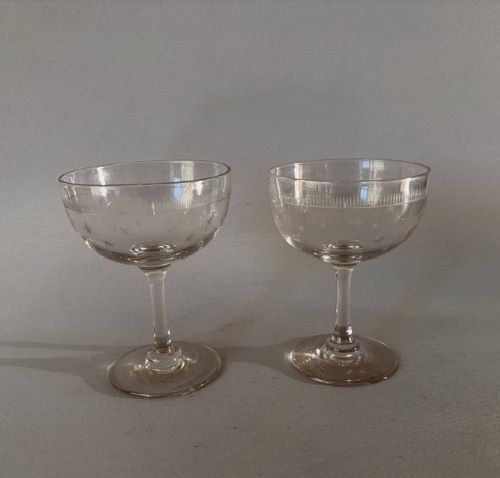
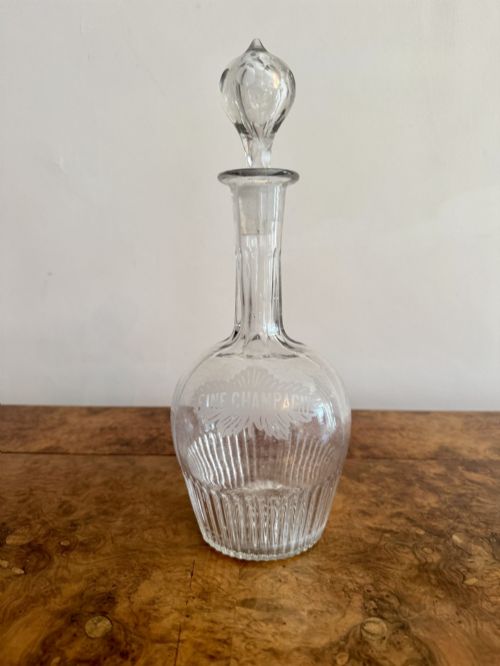
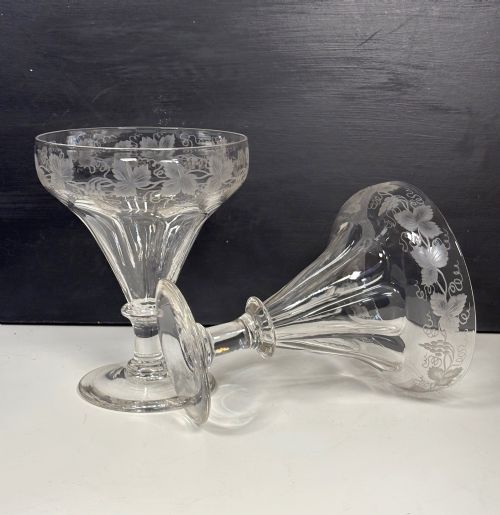
Etched glass barware comprises decanters, claret jugs, champagne coolers, cocktail shakers and cordial glasses intended for serving spirits and wine. These pieces span the Victorian, Edwardian and Art Deco periods, ranging from tall hock decanters to matching glassware sets.
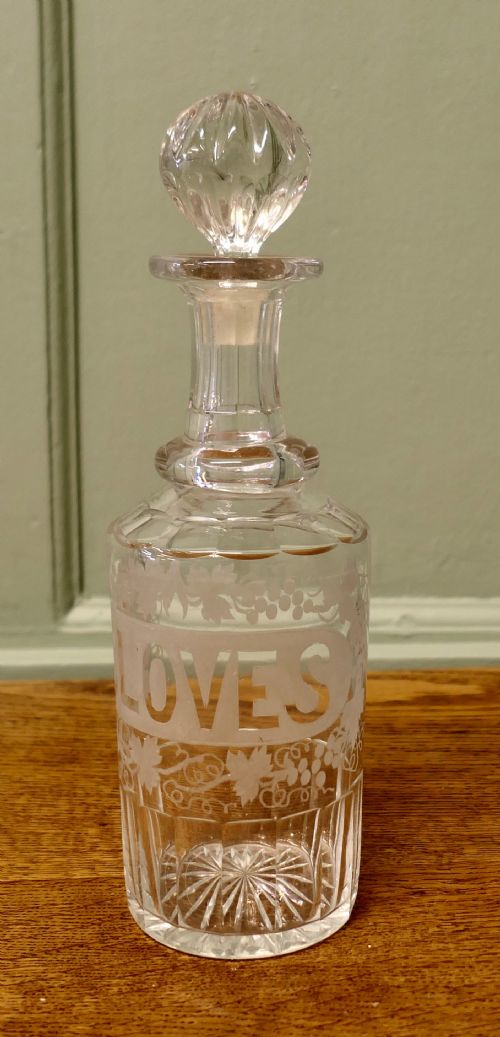
Buyers most frequently encounter Victorian and Edwardian decanters alongside Art Deco cocktail sets and French soda syphons. The forms include ruby and cranberry glass vessels, silver-mounted ewers, and heavy lead crystal cut with floral motifs.
Glass, silver plate and wheel engraving
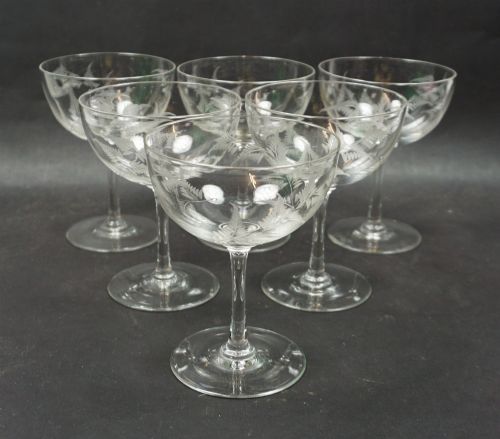
Makers shaped glass through blowing and moulding, utilising crystal, coloured glass and colour-over-crystal techniques to achieve varied hues like cranberry and ruby. Surface decoration relied upon wheel engraving, acid etching and cutting to create floral and geometric patterns.
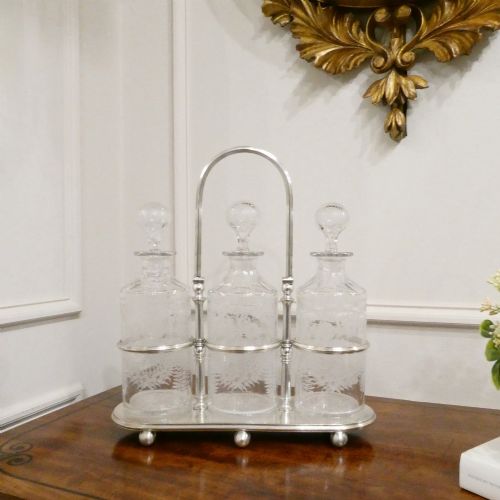
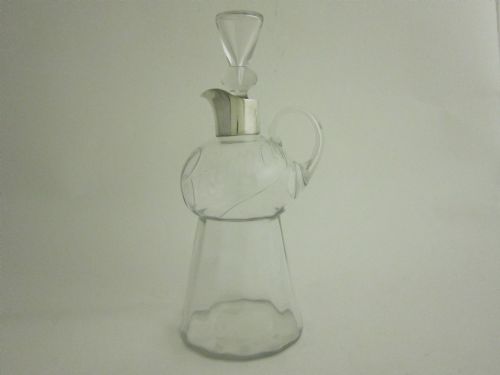
Metal mounts in sterling silver, silver plate, gilt bronze and wrought iron provide handles, lips and figurative stoppers. These mounts are fixed to the glass bodies using collars and secure mountings characteristic of nineteenth and early twentieth-century workshops.
Etched Glass Barware Retail Price Guide 2026
Typical asking prices for etched glass barware among the pieces listed under this phrase on Sellingantiques today, from the lower quarter to the upper quarter. They describe what is for sale here now, not the wider market.
Jazz age drinkers enjoyed their martinis from Art Deco cocktail shakers complete with jazz man motifs.
Clarity, matching sets and metal mounts
Quality rests upon the clarity of the glass, the depth of the wheel engraving, and the preservation of original stoppers and matching glassware. Complete sets, such as decanters paired with six matching glasses, stand above single survivors.
The integration of metal mounts, from solid silver collars to gilt bronze or wrought iron frames, dictates the upper tier of execution. Crisp floral etching and heavy lead crystal distinguish superior vessels from simpler pressed or blown pieces.
The Etched Glass Barware Glossary
- Claret jug
- A vessel specifically designed for serving red wine at the table, usually fitted with a hinged silver-plate or sterling silver handle and spout.
- Hock decanter
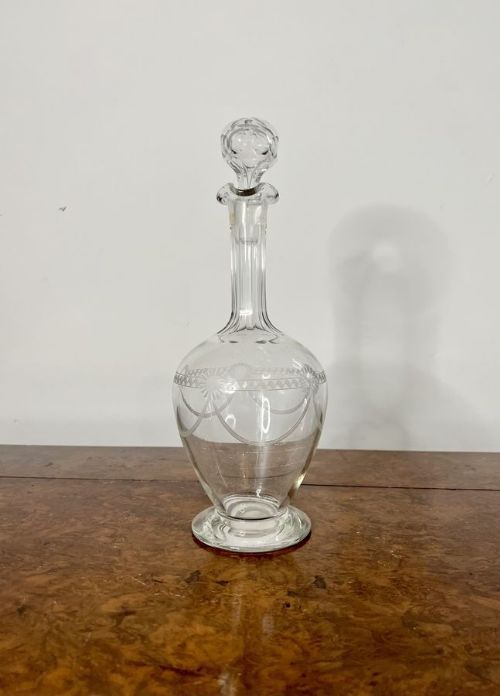
- A tall, slender wine decanter often produced in coloured or colour-over-crystal glass during the nineteenth century.
- Soda syphon
- A pressure vessel used for dispensing carbonated water, frequently encountered in French glass with metal fittings from the early twentieth century.
- Colour-over-crystal
- A glass-making technique where a thin layer of coloured glass is cased over a clear crystal body before being cut away to reveal patterns.
- Stopper
- The glass or figurine plug that seals the neck of a decanter, where matching original stoppers significantly affect the piece.
Etched Glass Barware: Frequently Asked Questions
Are these decanters suitable for daily use?
Many Victorian and Edwardian decanters remain entirely functional for serving wine, spirits and water at the modern table. Their heavy lead crystal and robust silver-plate mounts were built for practical hospitality.
Take care with antique glass when placing them on hard surfaces, and hand-wash them rather than placing them in modern dishwashers.
How do I date etched glass barware?
Dating relies upon stylistic markers, such as the heavy floral motifs of Victorian pieces, the lighter Garland work of the Edwardian era, or the geometric lines of Art Deco cocktail sets. Hallmarks on silver mounts provide precise assay years where present.
Form also guides attribution, with slender hock decanters pointing to the mid-to-late nineteenth century and soda syphons or cocktail shakers pointing towards the interwar period.
What does silver-mounted glass mean?
Silver-mounted pieces feature structural collars, handles, lips or stoppers made of sterling silver or silver plate attached directly to the glass body. These mounts were added to reinforce rims and provide secure pouring spouts.
Inspect the joinery where the metal meets the glass to see how securely the collar is seated around the neck of the decanter or jug.