





Etched Drinking Glasses
These etched drinking glasses bring tactile pattern and light to a table, offering historical glassware for everyday service or display.
Etched Drinking Glasses
When you examine etched drinking glasses, you encounter forms ranging from late eighteenth-century rummers and gin glasses to Victorian wine services and Art Deco cocktail suites. The pieces met most frequently on this page belong to the Victorian period and the twentieth century, taking shapes like wine glasses, tumblers, and large suites.
Makers shaped these items for practical dining and entertaining, producing everything from single goblets with hunting scenes to extensive sets of thirty-four French glasses. The material record demonstrates how form evolved from Georgian square-based rummers to sleek Art Deco jugs and cocktail shakers.
How they were made
Glassmakers utilised clear glass, lead crystal, lead glass, and coloured glass such as ruby and cobalt blue to form the body of each vessel. Technicians then applied cutting, engraving, and acid-cutting methods to etch decorative motifs directly onto the surface.
Certain vessels integrate metal elements, combining glass bodies with silver plate, particularly in serving trays and cocktail accessories. Artisans shaped stems through techniques like air twisting, whilst finishing bowls with wide foot bases.
Etched Drinking Glasses Retail Price Guide 2026
Typical asking prices for etched drinking glasses among the pieces listed under this phrase on Sellingantiques today, from the lower quarter to the upper quarter. They describe what is for sale here now, not the wider market.
Listings span the eighteenth century through to Art Deco nineteen-thirties pieces, incorporating glass, lead crystal, mirror, and silver plate.
What varies in quality
The distinction between standard items and superior examples rests upon the crispness of the wheel engraving and the depth of the cut decoration. Heavier lead crystal and consistent wall thickness signal greater skill in the initial blowing and forming process.
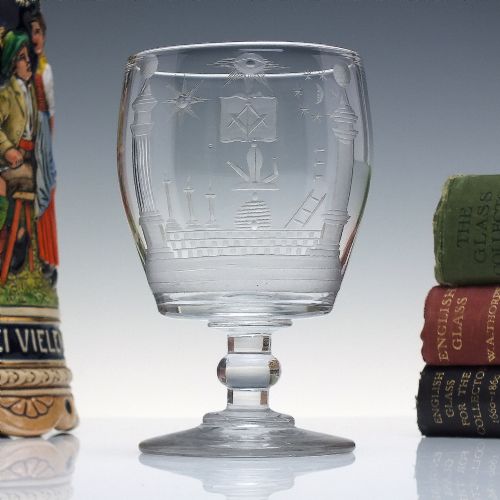
Completeness alters the character of a group, separating matched suites of many pieces from assembled harlequin sets or isolated single goblets. The complexity of the etched scene, such as detailed hunting motifs or elaborate Masonic symbols, elevates the visual interest of the vessel.
Stevens and Williams
The Etched Drinking Glasses Glossary
- Rummer
- A heavy, short-stemmed drinking glass popular in the eighteenth and nineteenth centuries. These vessels typically feature a wide bowl suited for ale, wine, or spirits.
- Lead crystal
- Glass containing metal oxide that increases weight, brilliance, and resonance. This material allows for deeper and sharper cutting without chipping.
- Air twist
- A decorative stem enclosing a spiral of elongated air bubbles trapped within the glass. Makers produced this effect by drawing and twisting heated metal before shaping.
- Acid cut
- A technique utilising hydrofluoric acid to eat away exposed areas of glass to create cameo relief or frosted patterns. This method produced soft-edged designs distinct from wheel engraving.
Etched Drinking Glasses: Frequently Asked Questions
How do I date an etched glass?
Dating relies on observing the form of the bowl, the thickness of the metal, and the pontil mark on the base. Georgian pieces often display square or folded feet, whilst Victorian examples frequently show heavier press moulding or deep wheel engraving.
Art Deco items shift towards geometric profiles, matching the prevailing design vocabulary of the nineteen-twenties and thirties. Comparing the style of the etching to documented periods clarifies the likely decade of manufacture.
Can I use antique etched glasses daily?
Many of these drinking glasses remain sturdy enough for occasional use at the dining table. Hand washing prevents thermal shock and protects the delicate etched surface from modern dishwasher detergents.
Lead crystal and heavier rummers tolerate careful handling better than thin-walled Georgian wine glasses. Storing them with adequate clearance prevents rim chipping.
What is a harlequin set?
A harlequin set consists of individual glasses that share similar periods or styles rather than originating from a single factory production batch. These groupings allow collectors to assemble a matching functional number from scattered survivors.
Slight variations in height or etching pattern distinguish the individual pieces within the assembly. Such sets offer a practical route to serving guests with antique glassware.