


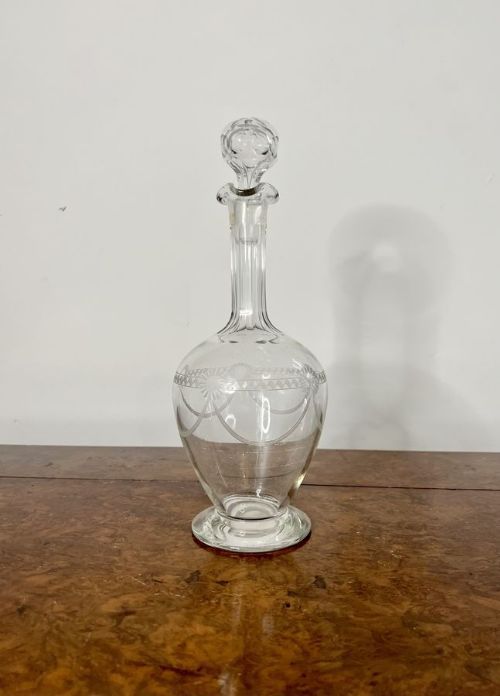


Etched Crystal Wine Glasses
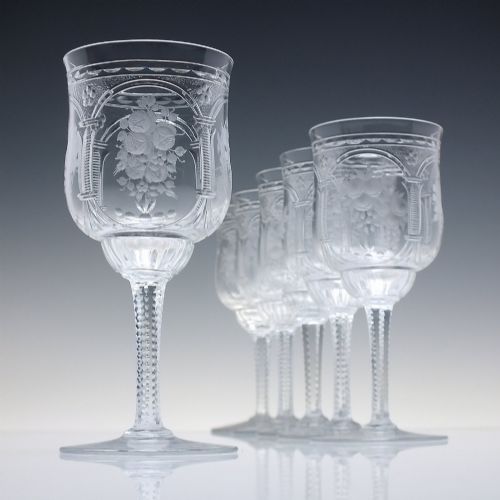
These etched crystal wine glasses bring nineteenth-century weight and delicate wheel-carved ornament directly to the modern table.
Etched Crystal Wine Glasses
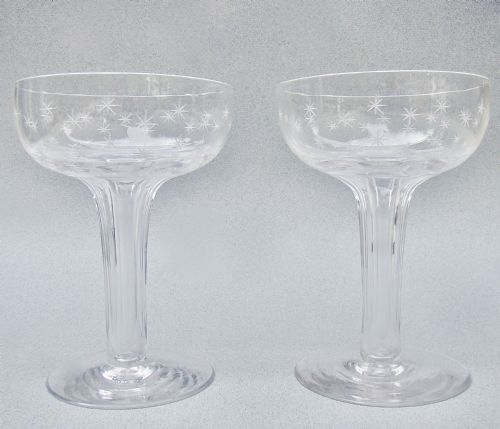
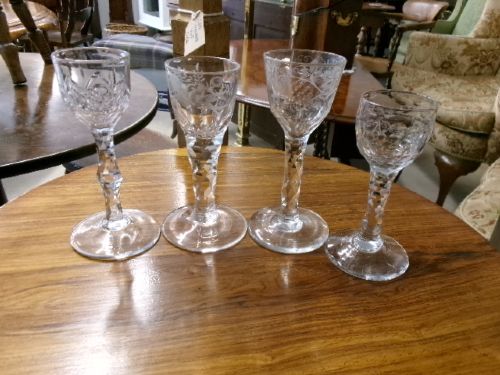
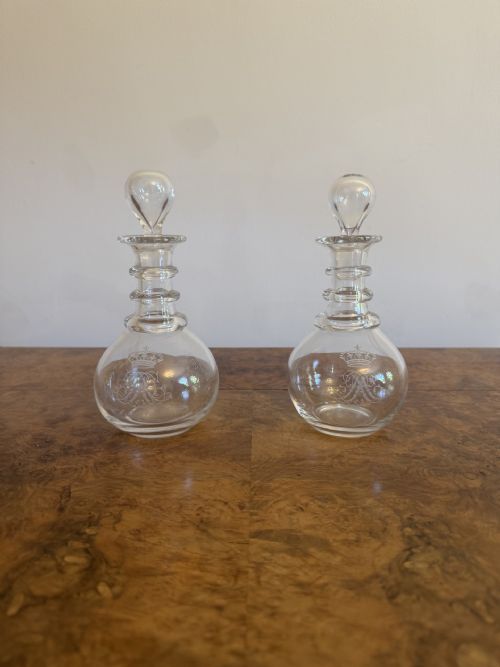
When you search for etched crystal wine glasses, you encounter drinking vessels, decanters, and goblets originating primarily from the Victorian and Edwardian eras. The selection frequently includes matched sets or harlequin groups featuring star, grape, and vine motifs across clear glass and colour-over-crystal forms.
How they were made
Many specimens combine glass with secondary materials including silver plate, gilt bronze mounts, and silver collars. This integration of metalwork elevated utilitarian vessels into decorative table service items.
What varies in quality
Quality rests upon the depth and crispness of the wheel-cut or etched ornament, alongside the brilliance and clarity of the underlying crystal. Pieces with deeply carved motifs and well-balanced proportions demonstrate superior craftsmanship compared to shallow or routine surface decoration.
The weight and resonance of the metal-infused glass also distinguish finer pieces, as does the seamless integration of secondary elements like silver mounts and stoppers. Uniformity across a set indicates careful workshop production.
Asprey and Co. Ltd·Stevens and Williams·Orfèvrerie Produx Saint Hilaire·St Louis Crystal
The Etched Crystal Wine Glasses Glossary
- Lead crystal
- A type of glass containing metallic oxide that increases weight, brilliance, and refractive index. This composition allowed nineteenth-century artisans to achieve deeper, sharper cuts.
- Etched glass
- A technique where acid or tools create decorative designs upon the surface. This method produces soft, frosted lines rather than deep geometric facets.
- Claret jug
- A large pouring vessel designed specifically for serving red wine at the dining table. They frequently incorporate silver-plated mounts and hinged lids.
- Roemer
- A traditional continental European large wine glass, often featuring a ribbed stem and coloured bowl. These pieces frequently display detailed wheel-engraved ornamentation.
Etched Crystal Wine Glasses: Frequently Asked Questions
Can I use antique wine glasses daily?
These lead crystal vessels suit occasional formal dining when handled with care. Hand washing protects the delicate etched surfaces and mounted metal elements from harsh detergents.
Thermal shock can crack nineteenth-century glass, so avoid exposing them to sudden temperature changes. Storing them upright on stable shelving prevents rim damage.
How do I clean vintage decanters?
Residue inside tall decanters clears away using warm water and specialist cleaning beads rather than abrasive brushes. Gentle rotation loosens sediment without scratching the interior walls.
Allowing the vessel to dry completely upside down prevents moisture pooling around the base. Silver collars require non-abrasive polishes applied carefully to avoid contact with the crystal.
What is colour-over-crystal glass?
This technique involves casing a clear crystal body in a thin outer layer of coloured glass before cutting through the top layer. The process reveals the clear glass underneath, creating high-contrast patterns.
Ruby and amber overlays appear frequently in nineteenth-century drinkware. The double-layer construction demands exceptional skill from the glassblower.
How do I date Victorian glassware?
Pontil marks on the undersides of vessels often indicate nineteenth-century production methods before smooth mechanical grinding became standard. Stem forms, bowl proportions, and matching styles offer further clues.
Etching motifs shifted from simple geometric stars to naturalistic botanical scenes as the century progressed. Comparing specific decorative details against known period examples helps narrow the decade.