




Etched Cameo Vase
An etched cameo vase brings layered glass colour and botanical or landscape motifs into a room, made primarily during the late Victorian and early twentieth-century periods.
Etched Cameo Vase
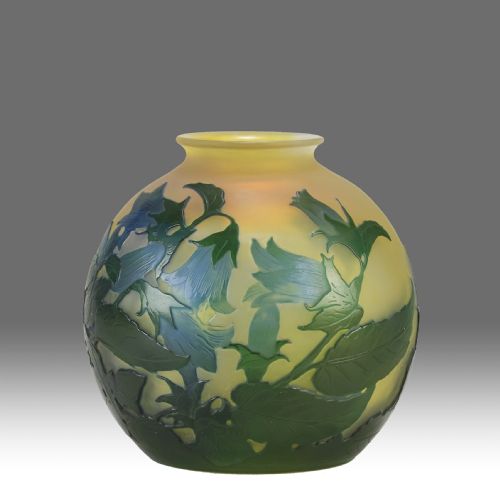
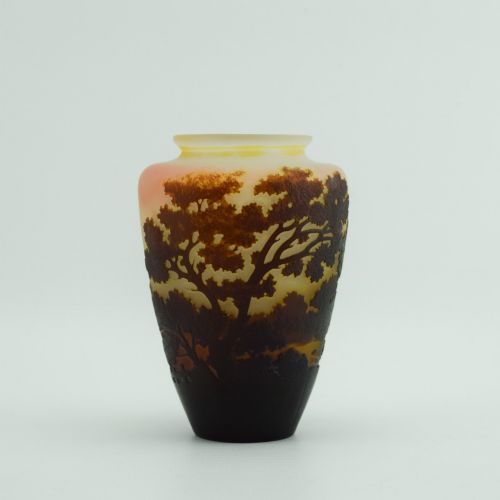
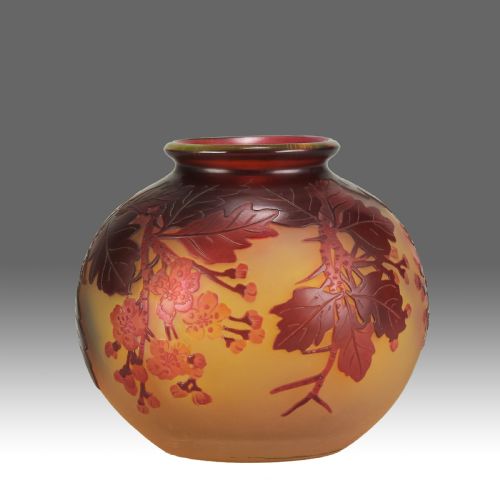
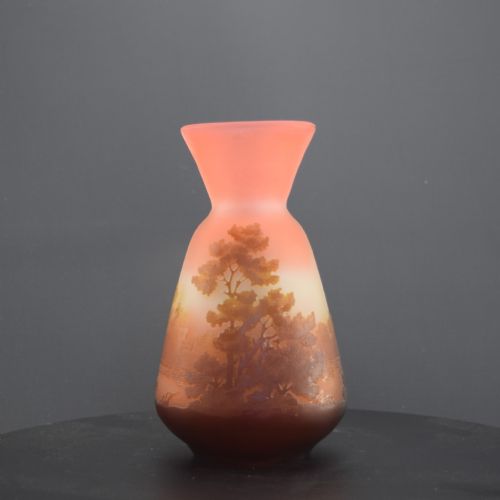
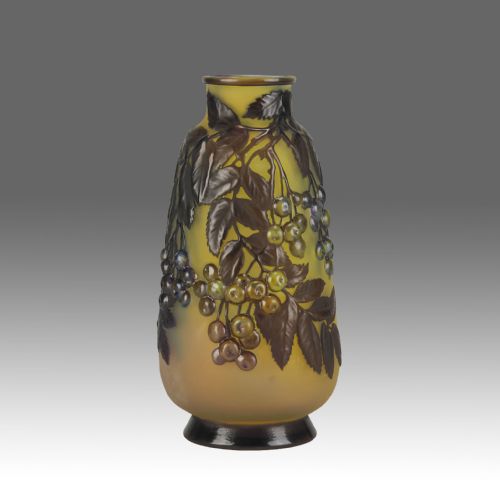
When someone searches for an etched cameo vase, they encounter vessels fashioned from multi-layered glass that display raised designs carved or etched into the surface. The majority of these pieces originate from the Art Nouveau and Art Deco periods, created by prominent French workshops and English makers.
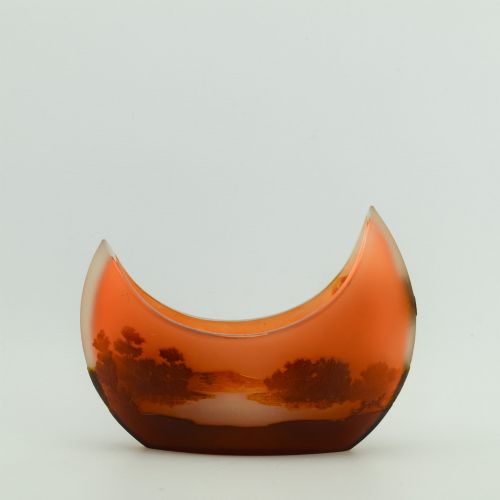
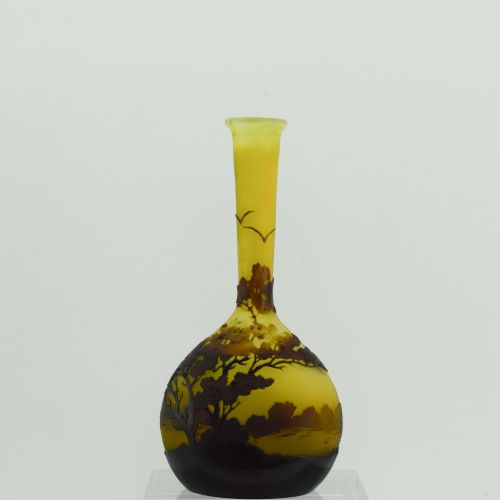
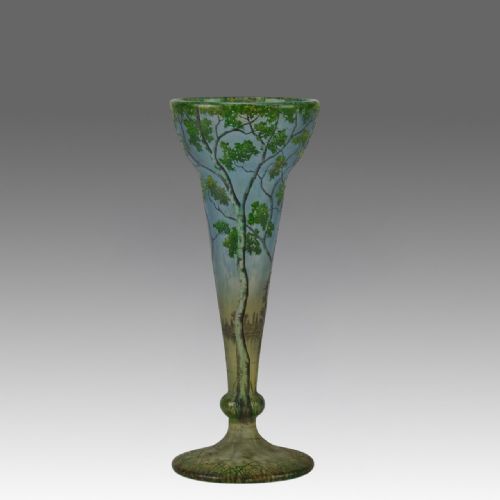
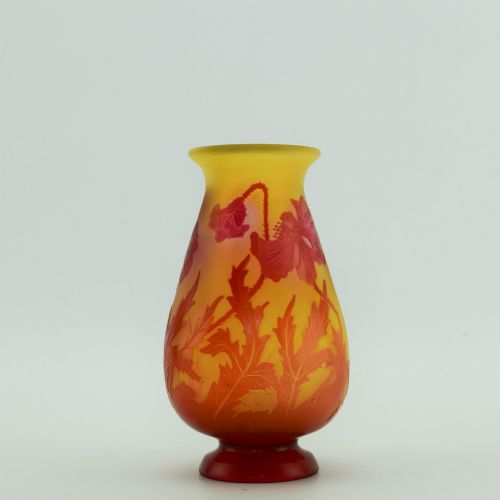
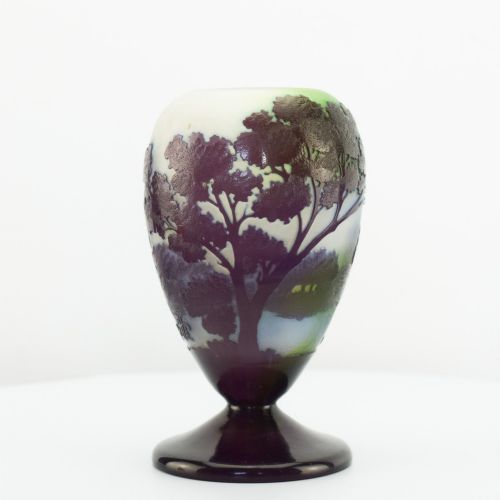
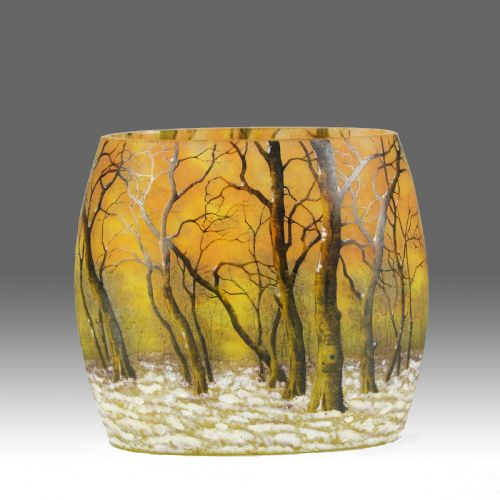
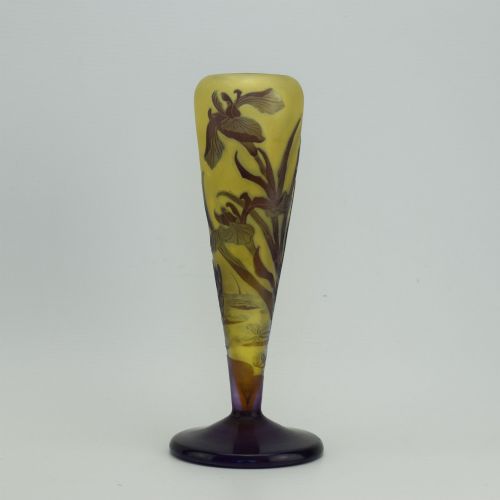
The forms seen most frequently on this page include banjo vases, crescent-shaped vessels, and tall footed cylinders. Makers utilised botanical subjects such as cornflowers, poppies, irises, and honeysuckle, alongside atmospheric landscape scenes.
Originating predominantly from around 1890 through to the 1920s, these vessels showcase the height of cameo glass production. Collectors select them for their sculptural depth and the interplay of coloured glass layers under light.
How they were made
Artisans built these vessels using multiple layers of coloured glass fused together in a furnace. By dipping or casing glass in contrasting shades, makers established the foundational depth required for carving.
Acid-etching techniques and wheel-carving were then employed to eat away the outer layers of glass, exposing the background and leaving the raised floral or landscape motifs standing proud. Additional details such as enamel, frosted glass surfaces, or gold leaf accents were occasionally applied to enhance the composition.
Listings span the Victorian era, 1890, 1900, 1910, and 1920 periods, featuring Art Nouveau and Art Deco styles in cameo glass.
What varies in quality
The distinction between standard production and exceptional work rests on the complexity of the layering and the precision of the acid-etching. Pieces featuring intricate multi-coloured landscapes or botanicals demand superior technical control over pieces with simpler, uniform tones.
Depth of relief and the subtlety of the colour transitions also determine the standing of a vessel. The finest examples display a painterly handling of the glass layers, where light passes through the frosted or cameo body to reveal nuanced shades of brown, peach, orange, and purple.
Emile Gallé·Daum Frères·Thomas Webb and Sons·Schneider·Paul Nicolas
The Etched Cameo Vase Glossary
- Cameo Glass
- Glass vessels formed with two or more distinct layers of contrasting colours, allowing carved or etched designs to stand out in relief.
- Acid-Etched Glass
- Glass decorated by applying acid to eat away specific areas of the surface, creating sunken designs or textured backgrounds.
- Art Nouveau
- A decorative style prevalent around 1900 characterised by flowing, organic lines and floral motifs derived from nature.
- Frosted Glass
- Glass treated to achieve a matte, non-glossy appearance that diffuses light gently across the vessel.
- Enamelled Glass
- Glass painted with vitrescent enamels and fired in a kiln to add permanent surface colour and detail.
Etched Cameo Vase: Frequently Asked Questions
What is an etched cameo vase?
An etched cameo vase is a glass vessel featuring multiple fused layers where the outer colour is carved or acid-etched away to leave a raised design.
These pieces typically date from the late nineteenth century to the 1920s and showcase organic motifs or landscapes.
How do I identify Art Nouveau glass?
Art Nouveau glass is recognised by its fluid, naturalistic forms and motifs inspired by plants, flowers, and water scenes.
Look for asymmetric shapes and signature cameos depicting flora like irises, poppies, or local woodland landscapes.
Where were cameo glass vases made?
The majority of cameo glass vases were produced in France, particularly around Nancy, by leading glassmakers and studios.
English makers such as Thomas Webb and Sons also produced notable cameo vessels during the Victorian era.
How should I display a cameo vase?
Place your vase in a location with strong natural light to allow the layered glass colours and translucent qualities to show clearly.
Keep them away from direct edges or high-traffic areas to protect the carved surface from accidental impacts.