

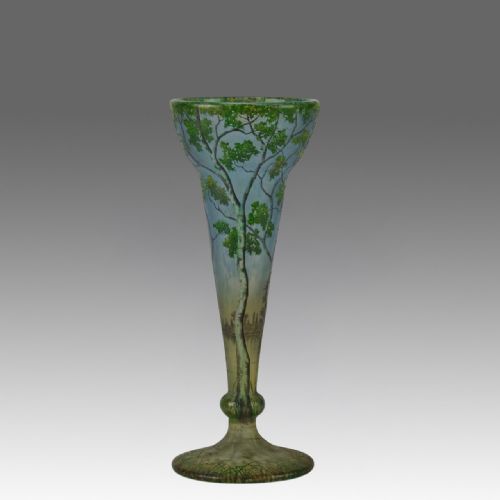
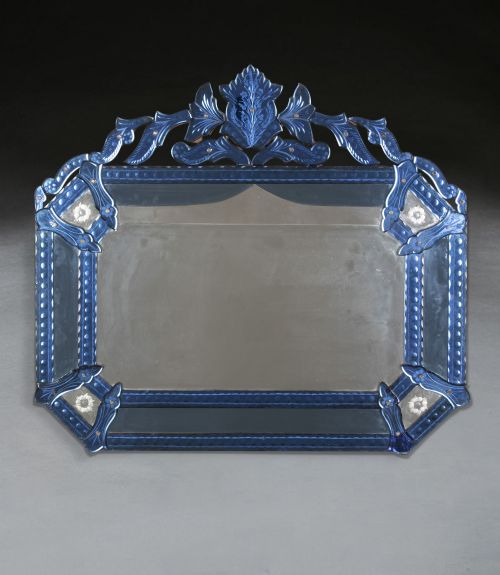


Etched Blue Glass
Etched blue glass items bring rich colour and tactile depth to a room, ranging from Victorian lamps to Art Nouveau vases.
Etched Blue Glass
Vases, oil lamps, mirrors, decanters, bowls, trays, hanging lanterns, and soda syphons represent the primary forms found within this phrase. Cobalt glass and cameo glass appear frequently among the pieces offered by dealers.
Origins span France, Italy, and Bohemia, demonstrating diverse regional approaches to working with tinted material. Buyers encounter items ranging from nineteen-hundred productions to nineteenth-century examples.
How they were made
Makers utilised glass and cameo glass, often combining cobalt or coloured layers over clear foundations. Acid-etching techniques allowed artisans to cut through surface layers to reveal contrasting tones beneath.
Enamel details and frosted finishes supplement the primary glass construction in several examples. Supporting metalwork incorporates brass, silver plating, and pierced or embossed brass frames.
Wooden elements appear alongside glass components in specific furnishing pieces such as mirrors. Artisans integrated structural brass and wood to mount hanging lanterns, lamps, and wall mirrors.
Etched Blue Glass Retail Price Guide 2026
Typical asking prices for etched blue glass among the pieces listed under this phrase on Sellingantiques today, from the lower quarter to the upper quarter. They describe what is for sale here now, not the wider market.
Materials appearing across the current inventory include cameo glass, frosted glass, brass, enamel, and wood.
What varies in quality
Depth and crispness of the acid-etching or cameo work distinguish finer pieces from simpler productions. Well-executed landscape and floral motifs demonstrate superior control over the glass layering process.
The integration of metal mounts, such as pierced brass or silver plating, influences the overall integrity of items like oil lamps and hanging lanterns. Weight and clarity of the underlying cobalt or coloured glass also set examples apart.
Daum Frères·Emile Galle
The Etched Blue Glass Glossary
- Cameo Glass
- Glass vessels formed with multiple layers of different colours, where top layers are carved or acid-etched away to create raised designs. This technique demands precise craftsmanship to achieve sharp tonal contrasts.
- Cobalt Glass
- Deep blue glass coloured by the addition of cobalt oxide during the melting process. It provides a rich ground for subsequent etching and cameo carving.
- Acid-Etched Glass
- Glass decorated by applying acid to eat away exposed surfaces while protecting other areas with a resist. The method produces intricate matte patterns against polished or coloured backgrounds.
- Frosted Glass
- Glass treated to achieve a textured, translucent surface rather than a clear transparency. It diffuses light softly when utilised on lamp shades and lighting fixtures.
- Hock Decanter
- A tall bottle traditionally used for serving hock or white wine. These vessels frequently feature colour over crystal glass construction.
Etched Blue Glass: Frequently Asked Questions
What is etched blue glass?
Etched blue glass covers decorative and functional items made from tinted or layered glass treated with acid or carved to reveal patterns. These pieces include vases, lamps, and mirrors produced during the nineteenth and early twentieth centuries.
Makers across France, Italy, and Bohemia utilised cobalt and cameo techniques to create rich surface textures and deep colour variations.
How do I date a piece?
Dating relies on stylistic markers such as Art Nouveau floral motifs or Victorian lamp designs, alongside material construction methods. Pieces span from the nineteenth century through the nineteen-thirties.
Examining the integration of brass mounts, cameo layering, and signature styles helps place items within specific periods like nineteen-hundred or the eighteen-eighties.
How were oil lamps used?
Antique oil lamps provided domestic illumination before widespread electric lighting, utilising tinted glass fonts and shades to soften the glow. They stood on tables or hung in rooms as functional lighting fixtures.
Over time, many of these lamps transitioned into purely decorative interior elements while retaining their original brass and glass components.
How do I style these items?
These glass objects introduce vibrant cobalt and turquoise tones into a room when placed on mantelpieces, tables, or walls. Vases and bowls suit tabletops, while mirrors and hanging lanterns anchor larger wall spaces.
Combining different forms from similar periods helps create a cohesive display that highlights the depth of the coloured glass.