



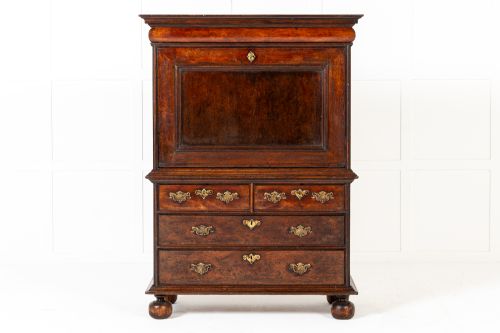


Escritoire with Drawers
An escritoire with drawers combines a drop-front writing surface with concealed compartments and lower storage drawers.
Escritoire with Drawers
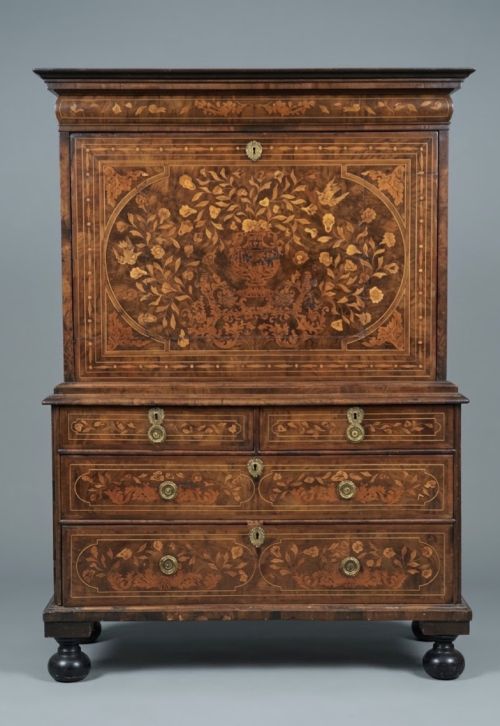
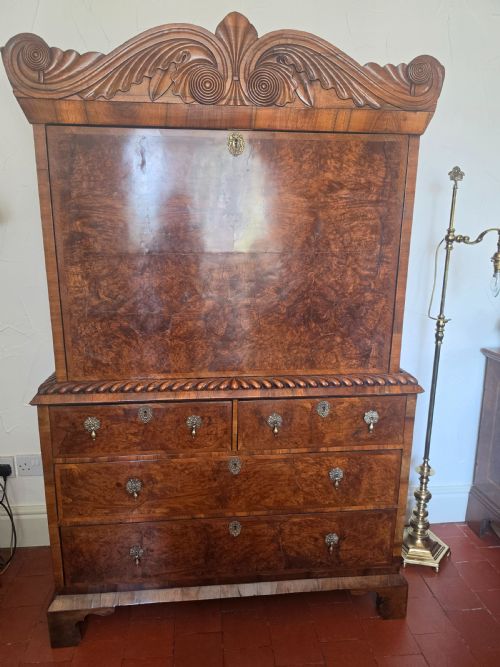
When you search for an escritoire with drawers, you are looking at a specialised case piece designed for correspondence and document storage. These cabinets feature a drop-front fall that conceals an interior arrangement of small drawers and pigeonholes above a set of larger external drawers. The examples found here span from early walnut forms of the seventeen-hundreds through to Edwardian and later nineteenth-century interpretations.
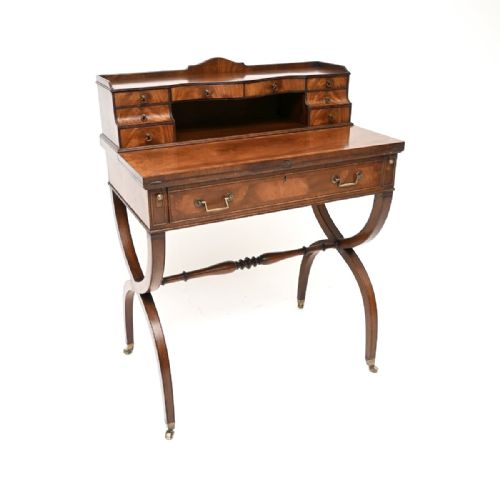
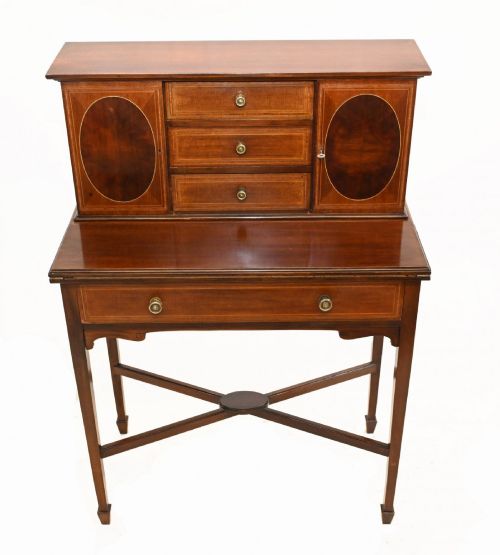
The most common versions met on this page are eighteenth-century walnut pieces and nineteenth-century French or English desks and writing cabinets. Walnut and mahogany predominate, often enhanced with satinwood or marquetry inlay. Alongside traditional bureau formats, you will encounter specialised forms such as the Carlton House desk, the bonheur de jour, and the metamorphic writing table.
How they were made
Cabinetmakers constructed these pieces using solid and veneered hardwoods over sturdy softwood or oak carcases. Walnut and mahogany serve as the primary foundational woods, frequently embellished with burr walnut or satinwood veneers to create patterned surfaces on the fall fronts and drawer facades. Brass handles, escutcheons, and occasional ormolu mounts provide structural and decorative hardware.
Surface decoration relies heavily on timber selection, crossbanding, and marquetry rather than applied carving. French examples incorporate vernis martin finishes and fitted marble tops, while English makers utilised fine inlay and polished leather writing surfaces. Secret drawers and internal compartments demonstrate intricate carpentry designed to secure private documents.
Escritoire with Drawers Retail Price Guide 2026
Typical asking prices for escritoire with drawers among the pieces listed under this phrase on Sellingantiques today, from the lower quarter to the upper quarter. They describe what is for sale here now, not the wider market.
Listings feature walnut as the dominant primary material across seventeenth and eighteenth-century pieces, supplemented by mahogany and satinwood in later eras.
What varies in quality
The distinction between standard and superior pieces rests on the choice of timber and the precision of the cabinetwork. Finer examples display carefully matched burr walnut or figured mahogany veneers that wrap continuously across the drawer fronts and fall, showing an intentional eye for grain patterns. Secondary woods inside the concealed drawers and carcase construction reveal the diligence of the original workshop.
Hardware integrity and internal complexity also dictate the standing of a piece. Original brasses, smooth-running internal mechanisms, and tightly fitted secret drawers separate exceptional items from simpler vernacular production. The harmony of proportions between the upper writing cabinet and the lower chest of drawers determines the visual success of the design.
Heals
The Escritoire with Drawers Glossary
- Escritoire
- A writing cabinet featuring a fall-front desk section combined with storage drawers. This form evolved to provide both a secure writing surface and enclosed document organisation.
- Fall front
- A hinged writing flap that drops down to a horizontal position for use. When closed, it conceals the interior stationery compartments and locks the upper section.
- Marquetry
- Elaborate patterns created by fitting different wood veneers onto a structural panel. This technique decorates the exterior surfaces of continental European pieces.
- Bonheur de jour
- A light lady's writing desk with a small cabinet or set of drawers on the upper surface. These refined pieces often appear in nineteenth-century interpretations.
Escritoire with Drawers: Frequently Asked Questions
What is an escritoire with drawers?
An escritoire with drawers is a tall furniture form that combines a vertical cabinet, a fold-down writing surface, and a chest of drawers beneath. It was designed to keep correspondence and personal documents organised and secure.
The fall-front flap opens to reveal an architectural interior of small drawers and pigeonholes, while the lower section provides traditional storage space for larger household items or clothing.
How were these writing cabinets used?
These pieces served as private writing desks and correspondence centres in the home before the widespread use of dedicated studies. Owners stored stationery, account books, and letters within the compartmentalised interior.
The lockable fall front allowed sensitive documents to remain hidden and secure when the desk was not in use, making it an essential piece of furniture for the household master or mistress.
How do I tell different periods apart?
Early examples from the seventeen-hundreds typically feature figured walnut, herringbone banding, and candle slides or bracket feet. The proportions are architectural and the internal compartments are often highly detailed.
Later pieces from the nineteenth century and the Edwardian era introduce mahogany, satinwood, marquetry, and sometimes marble tops or metal mounts. Construction methods inside the drawers and the style of the brass hardware help confirm the date of manufacture.
Where should I place one at home?
An escritoire with drawers suits a drawing room, a home office, or a quiet corner of a bedroom where its vertical proportions do not overwhelm the floor space. Because the drop front extends forward when opened, ensure there is sufficient clearance in front of the cabinet.
Keep these walnut and mahogany pieces away from direct sunlight and strong heat sources to protect the delicate veneers and polished timber surfaces from drying out.