




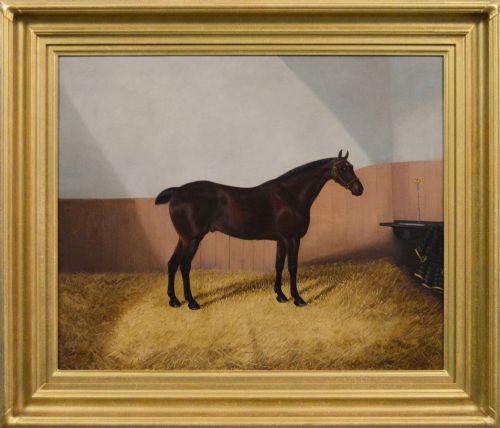
Equine Oil Artwork
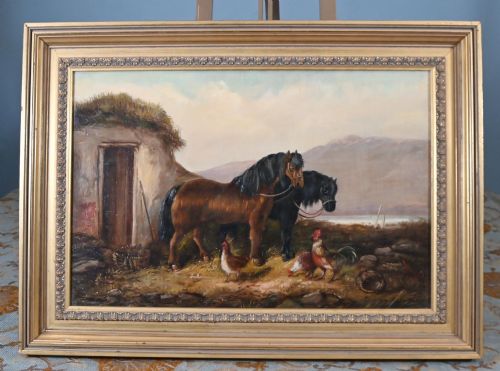
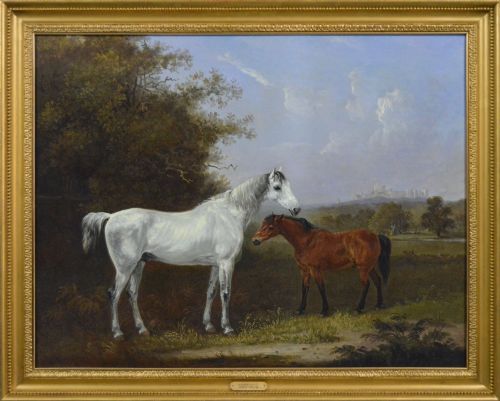
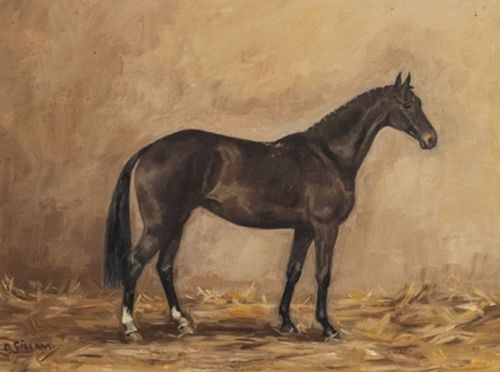
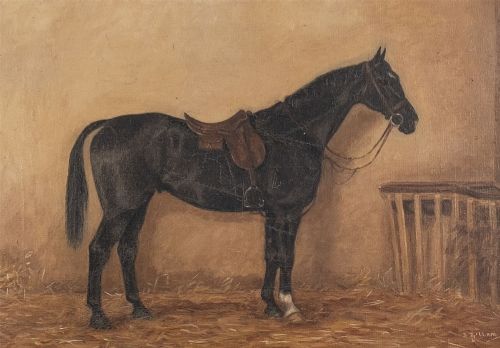
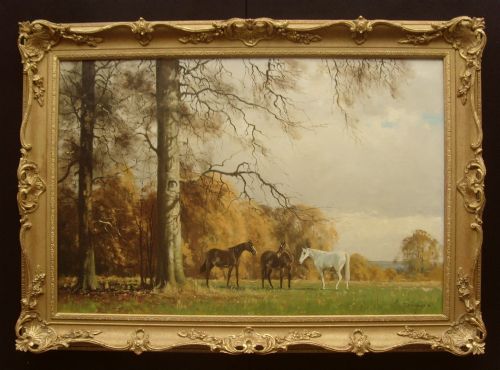
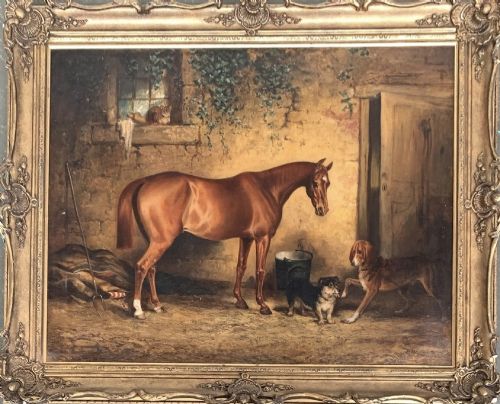
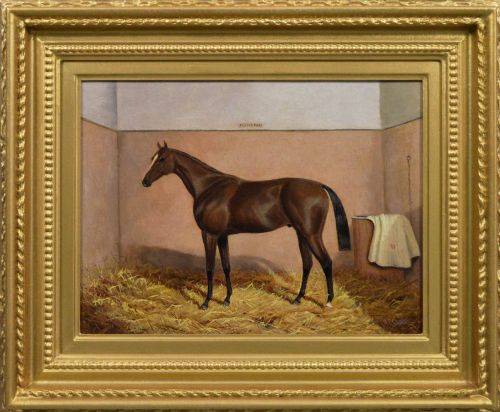
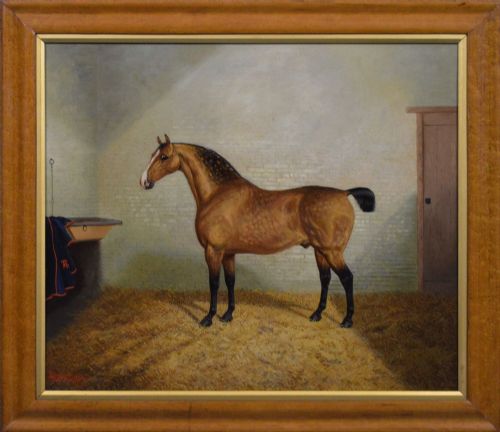
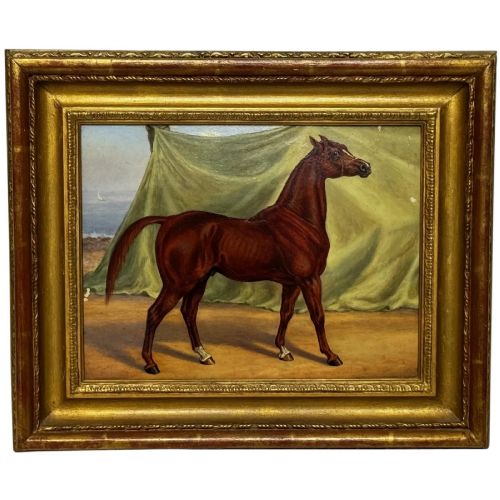
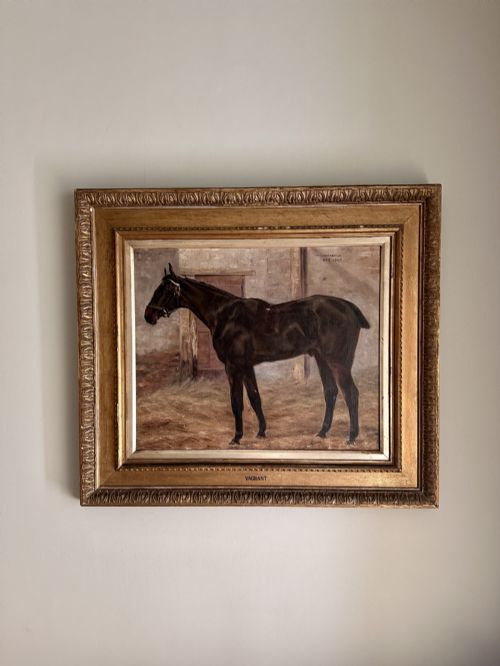
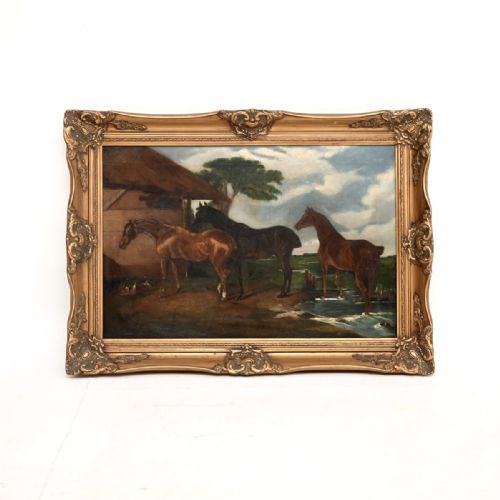
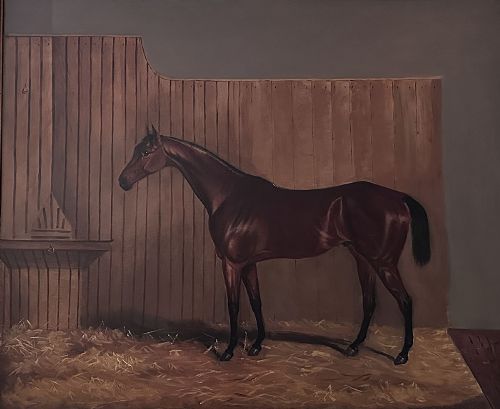
These equine oil artwork pieces capture horses through the nineteenth and twentieth centuries in stableyards, landscapes and racing portraits.
Equine Oil Artwork
An equine oil artwork represents horses through painted canvas or panel, frequently recorded within nineteenth century British and Victorian contexts. Buyers encounter individual portraits of hunters, racehorses and working animals in pastoral landscapes or stable interiors.
The selection ranges from Georgian and Victorian sporting art to early twentieth century pieces. Subjects include named thoroughbreds with jockeys, farmyard scenes with horses and carts, and studies of mares and foals.
Traditional English school and regional continental paintings appear alongside named animal artists. Most examples concentrate on realistic depictions of horses, capturing their conformation and character through oil paint.
Materials and Construction
Artists painted these works predominantly using oil paint on stretched canvas or wood panels. Supporting structures often involve timber stretchers and occasionally pine panels for earlier eighteenth century examples.
Framing frequently incorporates carved gesso and giltwood frames that complement the painted surfaces. Gold leaf accents highlight period frames, while the oil mediums retain depth and subtle colour variation over centuries.
Equine Oil Artwork Retail Price Guide 2026
Typical asking prices for equine oil artwork among the pieces listed under this phrase on Sellingantiques today, from the lower quarter to the upper quarter. They describe what is for sale here now, not the wider market.
The documented materials span oil paint, canvas, gesso, gold leaf, and pine panels.
Distinctions in Quality
Quality rests upon the anatomical accuracy of the horse, the handling of light within the landscape or stable, and the documented authorship of the artist. Master painters render muscle structure, coat sheen and equine expression with precise observation.
Provenance and historical context elevate certain works, particularly when the canvas identifies a celebrated racehorse, owner or registered estate. The skill of the brushwork in rendering texture and atmosphere distinguishes accomplished academic art from utilitarian studio output.
Charles Bilger Spalding·Henry Barraud·Walter Robin Jennings·Edmund Bristow·Albert Clark·Fred Fitzpatrick·John Alfred Wheeler·John Ferneley Senior·William Williams·George E Sharpe·John Frederick Herring·Benjamin Cam Norton·Clifton Tomson·Alfred Moginie Bryant·Arthur Winter Shaw·Abraham Cooper RA·George Goodwin Kilburne
The Equine Oil Artwork Glossary
- Canvas
- A heavy woven fabric stretched across a wooden frame to serve as a support for oil paint. It provides a durable surface that responds well to traditional layering techniques.
- Giltwood
- Wood carved and coated with a thin layer of gold leaf or metallic powder. This material is standard for ornate nineteenth century picture frames.
- Gesso
- A plaster mixture applied to wood panels or frames to prepare a smooth surface for painting or gilding. It creates a solid base that accepts gold leaf effectively.
- Panel
- A flat piece of wood used as a rigid painting support instead of canvas. Pine panels appear frequently in eighteenth century works.
- Sporting Art
- A genre of painting dedicated to equestrian subjects, hunting, racing and country life. It records animals, handlers and sporting events with documentary detail.
Equine Oil Artwork: Frequently Asked Questions
How do I date an equine oil painting?
Examine the canvas preparation, stretcher construction and framing style for period indicators. Clothing styles of handlers or documented racing events inscribed on the canvas also provide precise chronological markers.
Signatures, dates inscribed on the reverse, and artist biographies help narrow the period. Stylistic shifts between Georgian formality and Victorian naturalism further clarify the decade of creation.
Where should I hang an oil painting?
Position paintings away from direct sunlight and damp environments to protect the oil pigments and canvas integrity. Stable indoor temperatures prevent the wood panels and gesso frames from cracking.
Allow adequate wall space for the substantial giltwood frames typical of nineteenth century works. Adequate indirect lighting enhances the fine brushwork and colour depth of the animal subjects.
How do I identify the horse in a portrait?
Check the stretcher bars, canvas margins, or frame plaques for handwritten inscriptions naming the horse, owner, or trainer. Historical racing records and documented stud books often match named thoroughbreds to specific artists.
Distinctive markings, coat colours such as chestnut or buckskin, and associated jockeys in specific racing silks offer vital clues. Commissioned portraits usually recorded champion animals with pride of place.
What is the difference between a study and a finished portrait?
A study typically captures rapid observations of a horse in motion or a loose colour sketch of a stable scene. These works emphasise immediate gesture over detailed background polish.
Finished portraits present a formal composition with carefully rendered anatomical detail, polished backgrounds, and often detailed tack or landscape elements. Both forms reflect the working method of equine artists.