


Equestrian Silver Novelty
Equestrian silver novelty items bring together animal subjects and functional desk wares or accessories from the Victorian period onwards.
Equestrian Silver Novelty
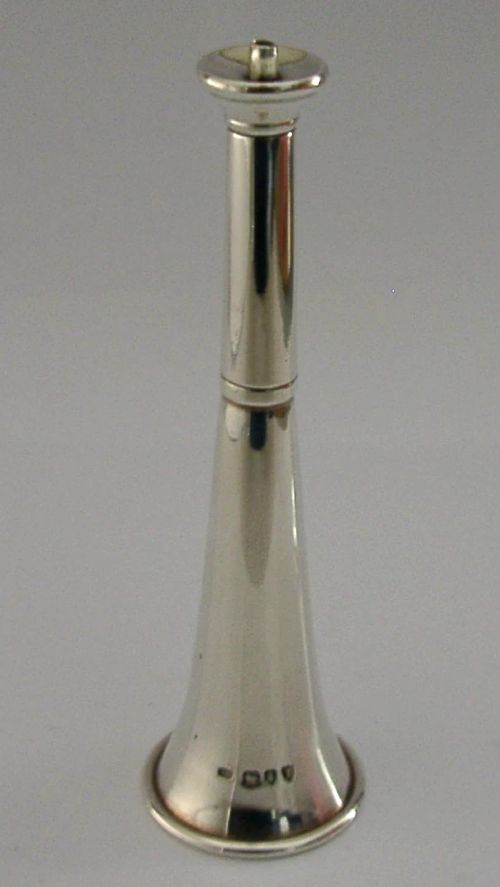
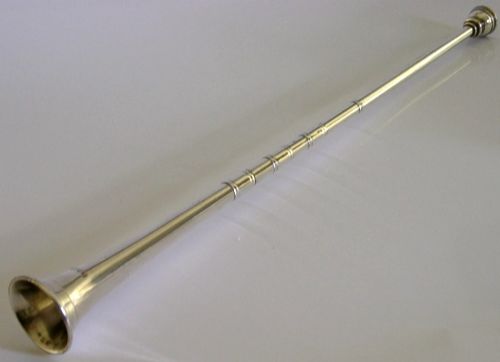
An equestrian silver novelty takes the form of riding gear, horses, or hunting equipment fashioned into practical items like vesta cases, pin cushions, and desk tidies. When you search for equestrian silver novelty, you encounter items shaped as jockey caps, stirrups, hunting horns, horseshoes, and horse hoofs.
The pieces on this page span from the nineteenth century through the Edwardian era into the mid-twentieth century, with Victorian examples appearing frequently. Functional forms dominate the selection, including inkwells, table lighters, caddy spoons, and walking cane handles.
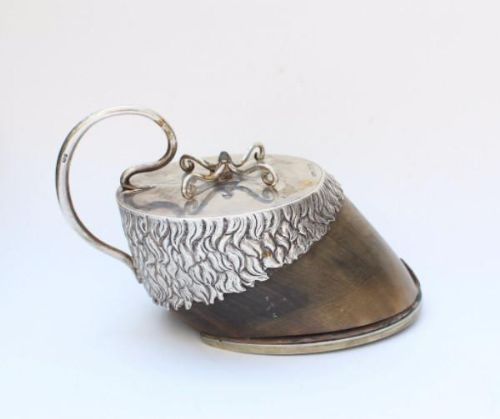
Victorian and Edwardian silversmiths produced many of these novelty items to appeal to a society immersed in hunting and horse riding. Practical objects were transformed with literal interpretations of riding equipment, combining silver work with taxidermy elements like actual horse hoofs.
Materials and construction methods
Sterling silver and silver plate form the primary metal components of these pieces, often combined with organic materials such as horse hoof, horn, tortoiseshell, and wood. Silversmiths utilised casting, stamping, and engraving to shape sheet metal into accurate representations of riding caps, stirrups, and animal heads.
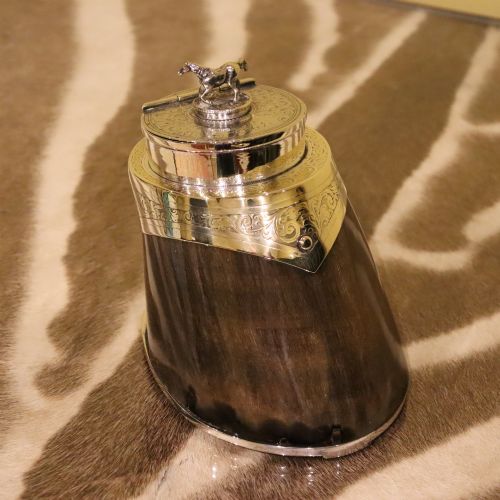
Taxidermy integration distinguishes several pieces, mounting real horse hoofs with silver rims, hinges, and lids to create inkwells, paperweights, and desk tidies. Metal mounts were fitted closely to natural horn and hoof, secured with pins or screws.
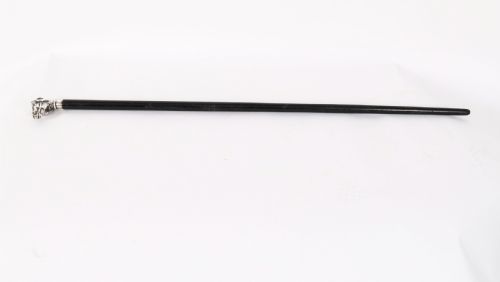
A nineteenth century gentleman could carry a walking stick that concealed a sword blade inside while featuring a silver horse head handle.
Factors determining quality
The distinction between standard items and superior examples lies in the anatomical accuracy of the modelling and the crispness of the chasing. Pieces where the silversmith captured the fine details of a horse's head, the weave of a cap, or the proportions of a stirrup command greater attention.
Condition of the organic materials, such as tortoiseshell or horse hoof, influences the integrity of the piece. Intact hallmarks, maker marks, and the survival of original fitted interiors within inkwells or vesta cases also set finer pieces apart.
Braham·Sampson Mordan·William Neale·Hermes Paris
The Equestrian Silver Novelty Glossary
- Vesta case
- A small pocket container designed to hold matches, frequently shaped in this category as horseshoes or other riding motifs.
- Jockey cap
- A form commonly adopted for silver pin cushions, caddy spoons, and trinket boxes, modelled after racing headwear.
- Stirrup cup
- A traditional drinking vessel given to riders before a hunt, whose shape inspired napkin rings and other domestic silver.
- Vide poche
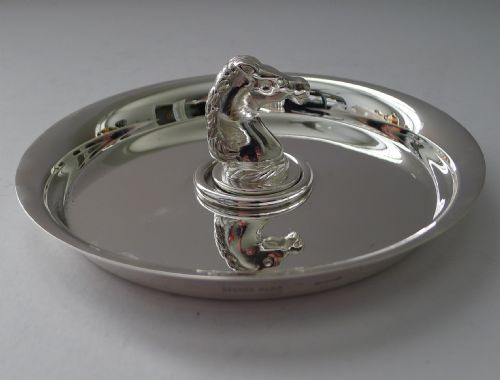
- A small tray or dish placed in an entryway to empty pockets, often appearing here in the form of a horse head.
- Table lighter
- A mechanical device for igniting smoking materials, occasionally cast in the form of hunting horns and animal figures.
Equestrian Silver Novelty: Frequently Asked Questions
What is an equestrian silver novelty?
An equestrian silver novelty is a functional object shaped to represent horses, riding gear, or hunting equipment. These pieces include items like vesta cases, inkwells, and pin cushions.
Silversmiths designed them to serve a practical daily purpose while celebrating horse culture, primarily during the Victorian and Edwardian periods.
How were horse hoofs used in these pieces?
Actual horse hoofs were mounted in sterling silver or silver plate to create desk accessories such as inkwells, paperweights, and desk tidies. Artisans fitted metal rims, hinged lids, and inscriptions to the trimmed hoof.
These taxidermy items reflect a distinct Victorian fascination with blending natural history specimens with functional domestic metalwork.
How do I identify a jockey cap piece?
Jockey cap pieces are usually small silver items modelled with the characteristic peak and button crown of racing headwear. They appear as pin cushions, caddy spoons, and small boxes.
Makers often included realistic stitching details and hallmarks either inside the cap or on the brim.
Are these pieces made of solid silver?
These items are constructed from a mix of sterling silver, silver plate, and mixed metals, often paired with non-metal elements like wood, horn, and tortoiseshell. Hallmarks stamped onto the metal indicate the specific silver standard used.
Some novelty items carry maker marks and date letters, while others are plated or stamped with numbers denoting the metal purity.