



Equestrian Interior Wall Art
These equestrian interior wall art pieces bring character to a room, offering nineteenth-century depictions of horses, hunters, and stable scenes.
Equestrian Interior Wall Art
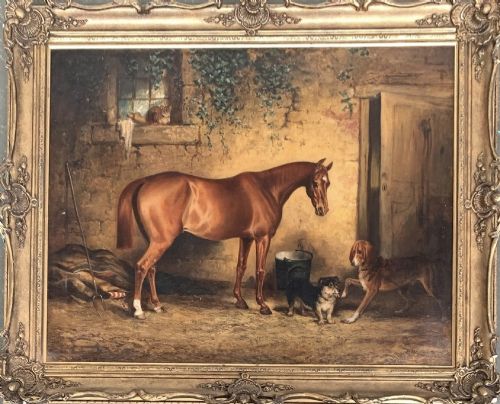
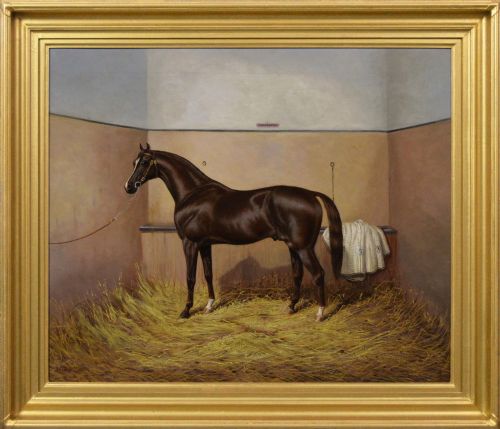
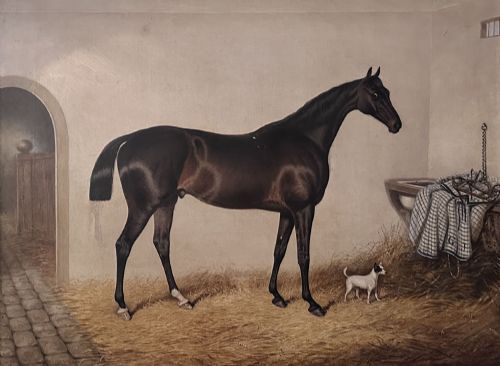
When you search for equestrian interior wall art, you encounter oil paintings depicting horses and stable scenes from the nineteenth century. These works capture bay hunters, racehorses, and working animals alongside grooms and terriers.
The pieces you meet most often on this page belong to the Victorian period, including works attributed to the nineteenth-century British school and Victorian sporting art. They range from formal portraits of individual animals to detailed interior settings.
Subjects often focus on named horses such as Worcester and Balmoral, or feature narrative compositions like hunting scenes. Each work places the animal at the centre of the composition, framed within period wood and gilt surrounds.
How they were made
Makers utilised oil paint applied to canvas or board surfaces to create these equine scenes. The pigments build up tone and texture, particularly in rendering the musculature of the horses and the straw of the stable floors.
Frames incorporate wood and gold leaf, frequently finished in gilt to complement the dark palettes of the oil paintings. These surrounds provide structural support and define the visual boundary of the artwork.
Equestrian Interior Wall Art Retail Price Guide 2026
Typical asking prices for equestrian interior wall art among the pieces listed under this phrase on Sellingantiques today, from the lower quarter to the upper quarter. They describe what is for sale here now, not the wider market.
A small terrier frequently keeps watch near the horse's hooves, reminding viewers who really runs the stable.
What varies in quality
The distinction between standard works and superior examples lies in the precision of the brushwork and the anatomical accuracy of the horse. Master painters capture the sheen of a bay coat and the attentive expression of an animal with greater fidelity.
Provenance and attribution elevate certain pieces, particularly those associated with recorded artists such as Charles Bilger Spalding RA or John Ferneley Jnr. The handling of light within the stable interior also distinguishes the work of a skilled hand.
John Arthur Lomax·Albert Clark·Benjamin Cam Norton·Edwin Frederic Holt·Charles Bilger Spalding·John Ferneley Jnr·William Shayer Snr
The Equestrian Interior Wall Art Glossary
- Oil on Canvas
- Pigment mixed with drying oil applied to stretched fabric. This medium allows for deep layering and rich colour blending.
- Gilt
- A thin layer of gold applied to wood framing. It enhances the visual weight and decorative appeal of the picture surround.
- Stable Interior
- A genre of painting depicting horses inside housing rather than open landscapes. These compositions focus on daily animal management and human interaction.
- Victorian Sporting Art
- Artwork produced during the reign of Queen Victoria that focuses on animals, hunting, and rural pursuits. It documents the animals valued by society at the time.
Equestrian Interior Wall Art: Frequently Asked Questions
What periods do these paintings date from?
The listings span the nineteenth century, with particular concentration in the Victorian era around eighteen-eighty to nineteen hundred.
These dates align with the active periods of the recorded artists and the prevailing styles of British sporting art.
What surfaces were used for these artworks?
Artists used oil paint on canvas or board as the primary medium for these animal portraits.
Pigments were applied to these prepared surfaces to achieve the depth and texture seen in the horse coats.
How were these paintings originally framed?
Original framing typically involved wood finished with gold leaf and gilt details to complement the dark tones of the oil painting.
These surrounds are often contemporary to the artwork and contribute to the period presentation.
Who are the subjects of the portraits?
Subjects include named horses such as the racehorse Worcester and the horse Balmoral, alongside working hunters and terriers.
Some compositions also incorporate grooms and stable hands alongside the animals.