



Equestrian Hunting Crop
These equestrian hunting crop pieces bring traditional field sports history straight into your hallway, study or collection.
Equestrian Hunting Crop
An equestrian hunting crop connects directly to traditional field sports and country house life, appearing across Victorian and Edwardian periods. Collectors find practical whips alongside related equestrian accessories such as boot and whip stands, doorstops and cruet sets.
The pieces on this page span the nineteenth century up to the nineteen-twenties, reflecting both utilitarian yard equipment and decorative domestic items. Makers like Swaine Adeney and Brigg dominate the finest examples of riding crops and whips.
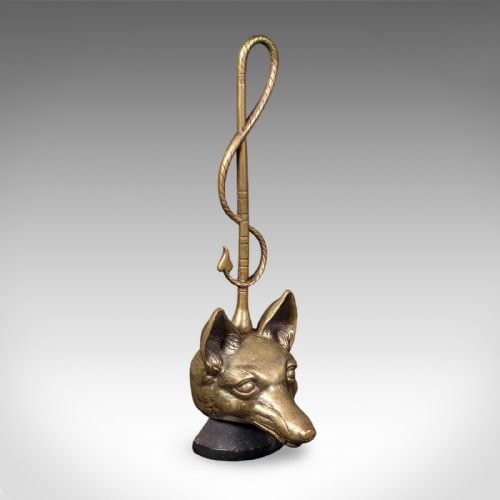
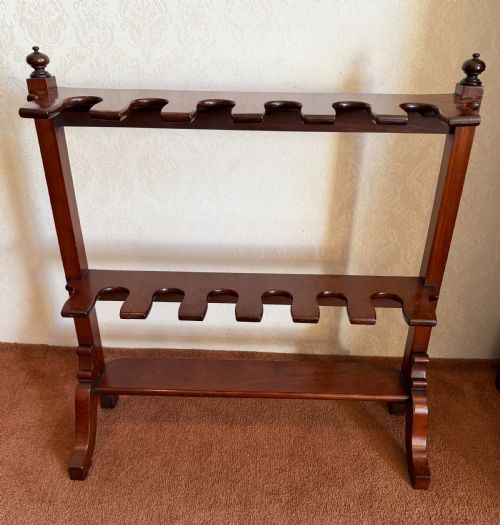
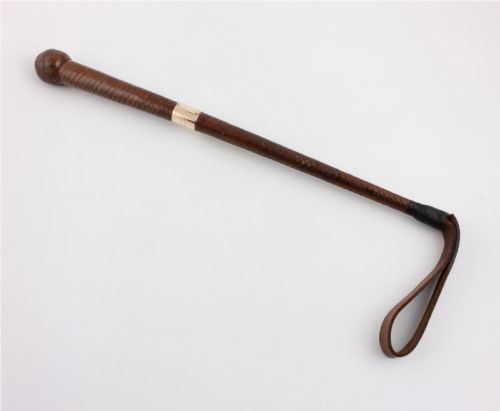
Buyers frequently encounter leather riding crops fitted with silver collars alongside mahogany stands designed for the tack room. Novelty silver-plated pieces and brass doorstops shaped as fox or horse heads further expand the category.
Materials and construction
Metalwork played a crucial structural and decorative role, with silversmiths adding collars to whips and craftsmen casting brass or iron into animal forms for doorstops and hooks. Gold mounts occasionally appear on presentation pieces carrying specific historical inscriptions.
The listings span the Victorian period through to the nineteen-twenties, incorporating silver, leather, brass, mahogany and staghorn.
Judging quality and craftsmanship
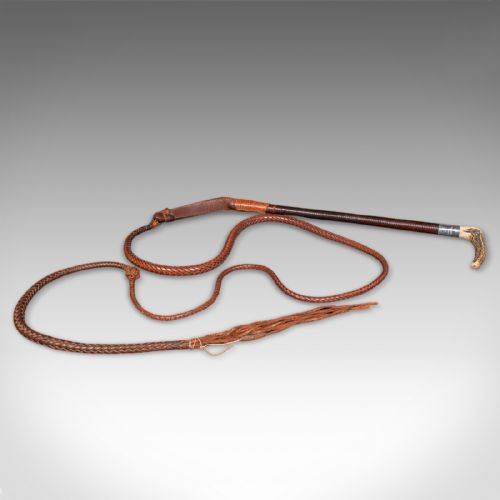
Quality rests in the crispness of the casting on metal mounts and the tightness of the leather braiding along the shaft. Superior items retain their original balance and bear clear maker marks or hallmarks on their silver components.
Provenance elevates certain pieces substantially, particularly when a crop links to a known historical figure or a premier workshop. Finer furniture items display superior timber selection and robust joinery designed for heavy tack room use.
Swaine Adeney·Brigg
The Equestrian Hunting Crop Glossary
- Collar
- A metal band fitted around the upper section of a whip, frequently rendered in hallmarked silver or gold and often engraved with initials or presentation details.
- Tack room
- A dedicated space in a stable where riding gear, saddles and whips are cleaned and stored.
- Staghorn
- The material derived from deer antler, frequently utilised for the curved handles of riding crops.
- Cruet set
- A table set designed to hold condiments, occasionally produced in novelty equestrian forms during the early twentieth century.
Equestrian Hunting Crop: Frequently Asked Questions
How do I date an antique hunting crop?
Examine the metal components for hallmarks that indicate specific assay years and maker marks. Style shifts between the Victorian era and the nineteen-twenties also help narrow down the period.
Materials such as particular grades of leather and the presence of gold or silver mounts provide further clues regarding production dates.
What were whip stands used for?
Whip stands kept riding crops and boots organised and accessible within country house tack rooms or hallways. Their sturdy mahogany or oak construction supported multiple items vertically.
These stands evolved from purely utilitarian stable furniture into decorative hallway accessories in many English country houses.
Are these crops still usable today?
While many historical leather crops retain their structural integrity, modern riders generally prefer contemporary synthetic alternatives. Most collectors preserve these items for display rather than active field use.
Leather requires regular conditioning to prevent drying out and cracking over time.
How should I display equestrian items at home?
Wall-mounted racks or dedicated stands allow whips and crops to be shown safely without placing undue stress on the leather shafts. Pairing them with related brass doorstops or tack room furniture creates a cohesive display.
Keep pieces away from direct sunlight and excessive heat sources to protect the organic materials.