



Antique Equestrian Whip
An antique equestrian whip brings the practical elegance of the hunting field and stable yard directly into a room.
Antique Equestrian Whip
When you search for an antique equestrian whip, you encounter riding crops, hunting whips, and the dedicated stands used to store them. These items span the nineteenth century into the early decades of the twentieth century, reflecting a period when horses formed part of daily travel and sport.
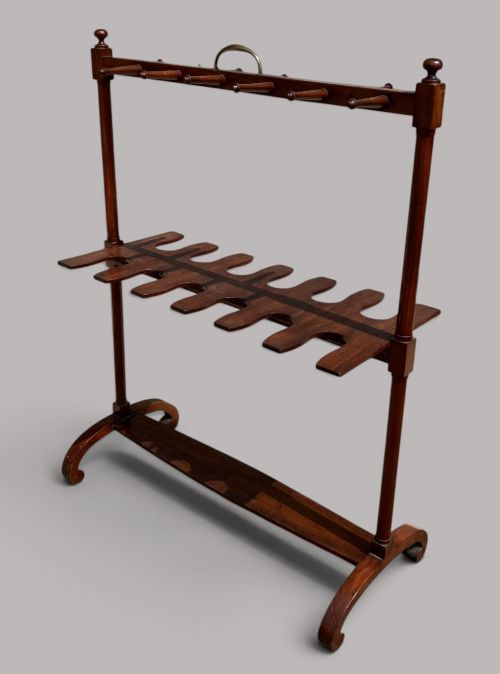
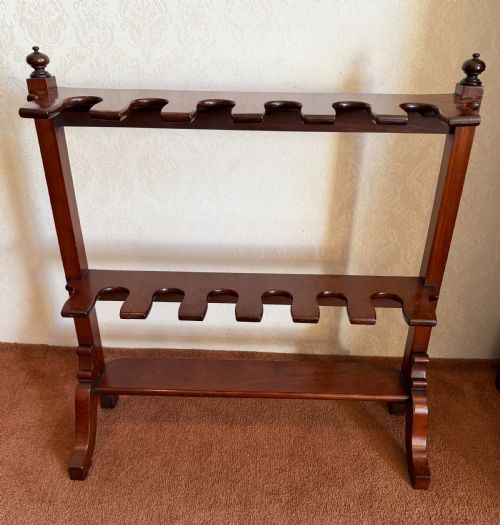
The hunting whip is the most common form met on this page, often fitted with a silver collar and braided leather. Alongside the crops and whips themselves, you find sturdy mahogany and oak boot and whip stands designed for country houses and tack rooms.
How they were made
Craftsmen built whips using supple English leather braided around a solid core, attaching silver or twelve-carat gold collars to mark prestige and strengthen the handle. Stands and wall hooks combined dense timbers such as mahogany and oak with brass fittings or carved stag horn.
Makers shaped the riding crops and whip racks for rigorous daily use in the field and the stable. Details like horse-head brass hooks show how functional hardware received decorative attention from period metalworkers.
Several pieces carry the quiet weight of the Duke of Portland's estate and Spetchley Park into your hallway.
What varies in quality
Quality rests upon the integrity of the leatherwork and the presence of precious metal mounts. Pieces bearing maker details or specific provenance, such as historic estate connections, stand apart from unsigned workshop items.
The refinement of the timber furniture dictates value among the stands and racks, with well-figured mahogany and clever multi-purpose boot designs representing the higher end of the scale.
Swaine Adeney·Brigg
The Antique Equestrian Whip Glossary
- Riding crop
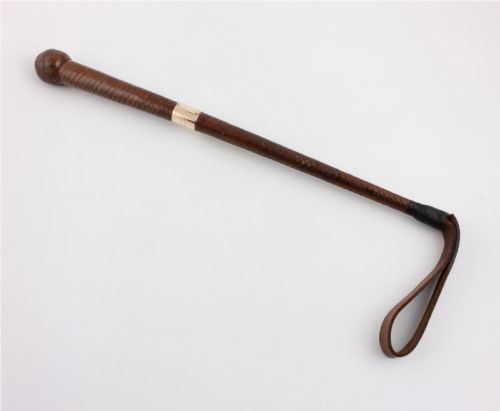
- A short whip used in horse riding, typically fitted with a leather keeper at the end instead of a lash.
- Hunting whip
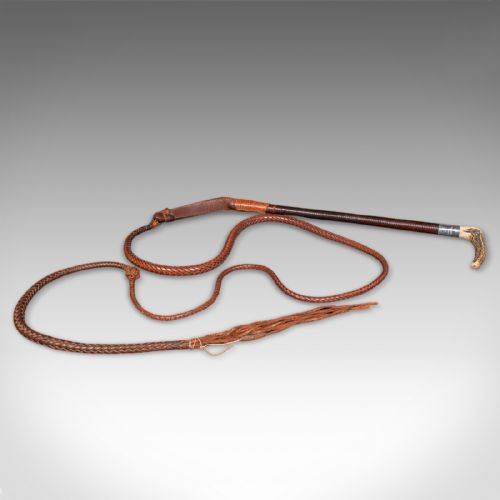
- A sturdy riding whip traditionally used in fox hunting, featuring a substantial handle and a fixed lash.
- Tack room
- The utility space in a stable where saddles, bridles, and riding equipment are cleaned and stored.
- Staghorn
- The material taken from deer antlers, frequently utilised for the handles of riding crops and decorative wall hooks.
Antique Equestrian Whip: Frequently Asked Questions
How were hunting whips used?
A hunting whip served riders to manage hounds and direct horses across varied terrain during field sports. The long lash assisted in controlling hounds rather than striking the mount.
Over time, these whips became markers of equestrian status, displayed in halls or kept ready in the stable.
Where should I place a whip stand?
An antique boot and whip stand suits a hallway or boot room, echoing its original country house placement. The sturdy mahogany and oak construction anchors traditional interior schemes.
Ensure the timber remains away from direct heat sources to preserve the polish and prevent the wood from drying.
How do I date an equestrian whip?
Dating relies heavily on hallmarks found on silver collars and the specific style of the leather braiding. Maker marks and engraved inscriptions often point to a precise decade within the nineteenth or early twentieth century.
Materials like twelve-carat gold and specific staghorn formations also help narrow down the period of production.
What is a tack room stand?
A tack room stand is a piece of furniture built to hold riding boots, crops, and whips neatly in a stable. These stands feature dedicated slots for footwear alongside upright rests for long riding equipment.
Today, collectors appreciate them for their utilitarian design and rich mahogany or oak patination.