


Equestrian Horse Portrait
An equestrian horse portrait captures the strength and character of individual animals, ranging from celebrated racehorses to beloved hunters rendered in oil, pastel, or watercolour.
Equestrian Horse Portrait
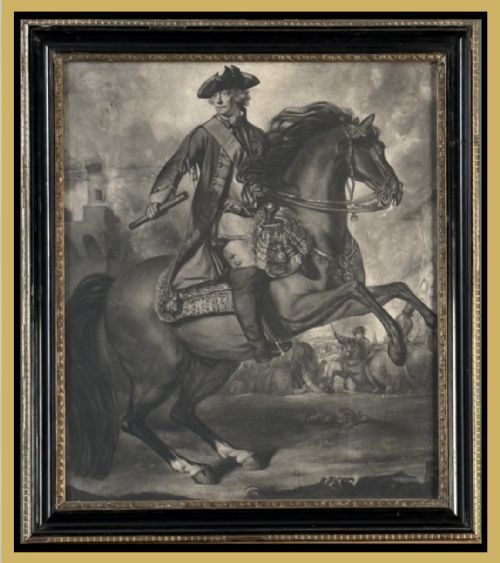
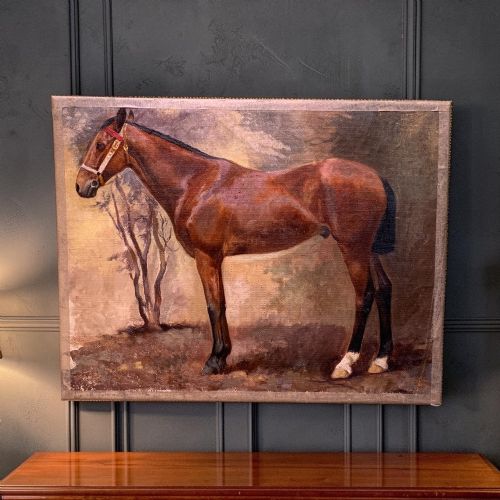
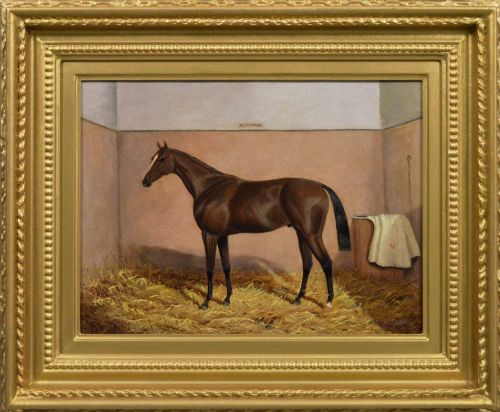
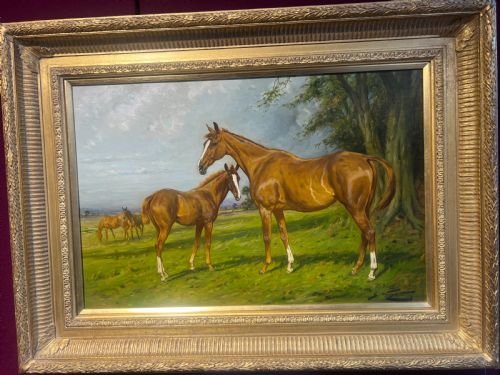
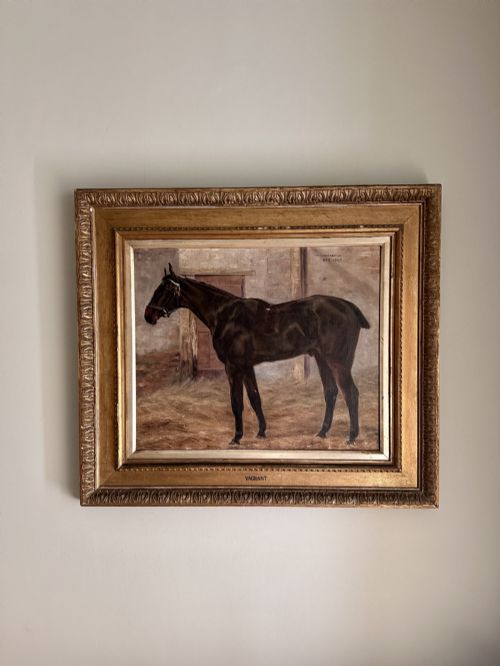
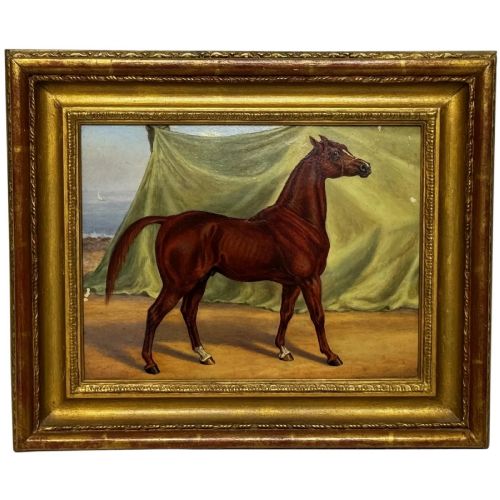
An equestrian horse portrait focuses on the individual animal, depicting named racehorses, hunters, and stable companions rather than generic livestock. These works record the physical attributes and lineage of specific horses through the observation of artists working across the eighteenth, nineteenth, and twentieth centuries.
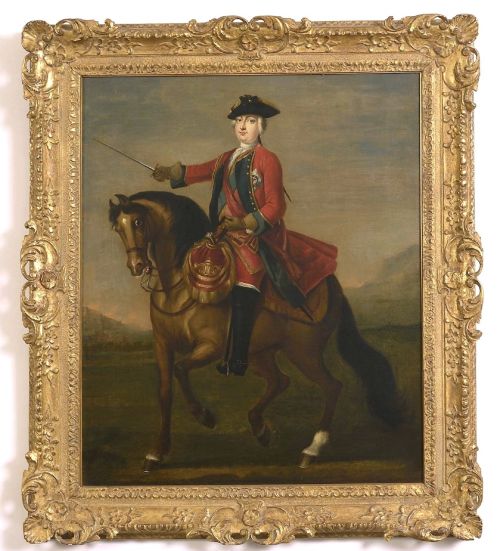
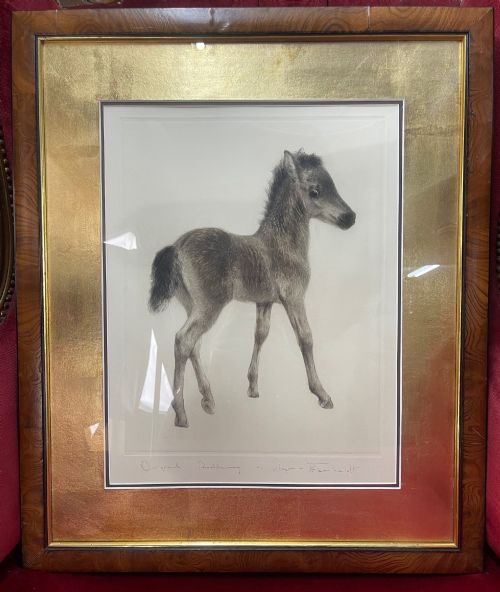
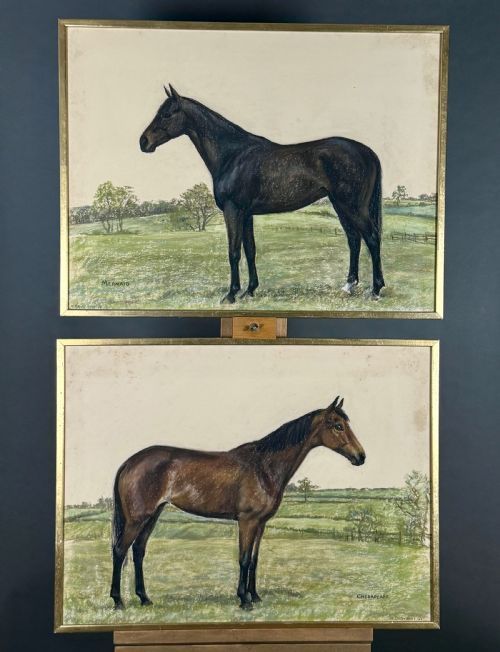
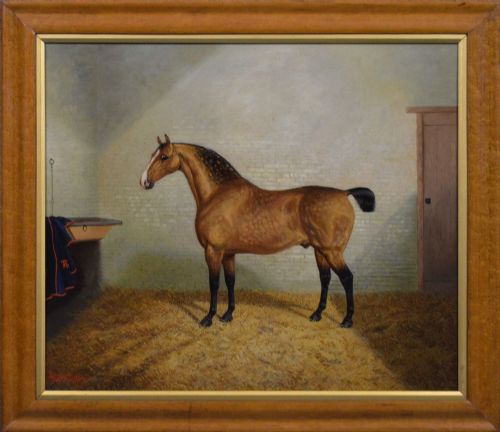
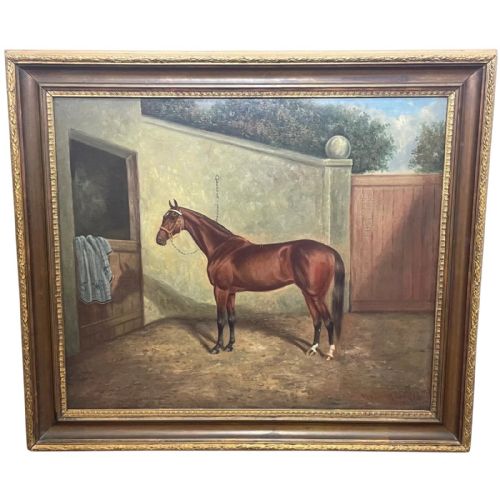
The material record on this page centres primarily on oil paintings on canvas or panel, alongside watercolours, pastel studies, and drypoint prints. Many examples retain their original giltwood frames, which place the animal centrally within landscape or stable settings.
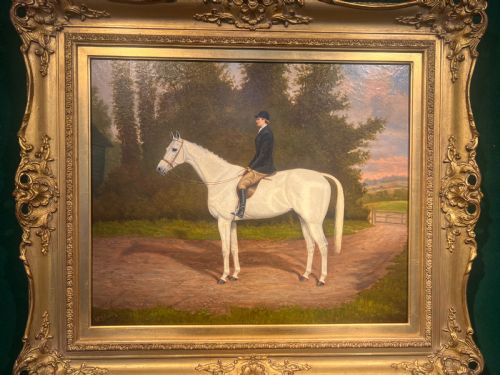
Victorian sporting art forms a substantial portion of the selection, reflecting a period when equine portraiture flourished alongside horse racing and hunting culture. Pieces range from detailed studies by regional painters to grand compositions documenting notable race winners.
Materials and Techniques
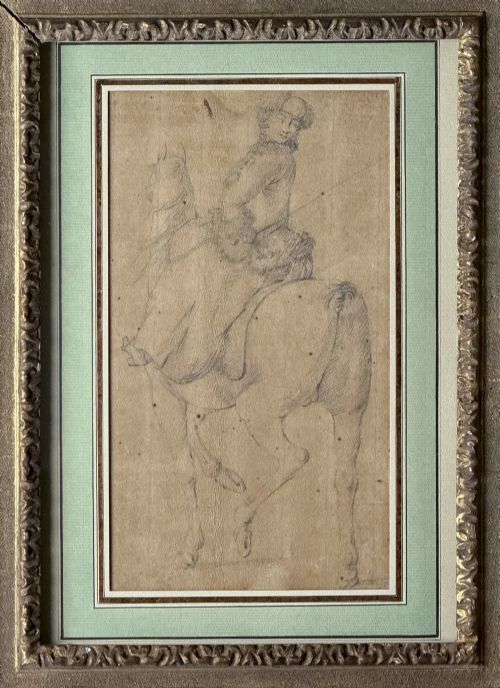
Artists relied primarily on oil paint applied to stretched canvas or wooden panels, building up layers to render the musculature, coat sheen, and facial expressions of the subjects. Draughtsmen also utilised pastel and charcoal on paper to capture softer textures in studies of foals and mares.
Framing forms an integral part of the physical object, with gilt and giltwood mouldings designed to complement the palette of the painting. These frames frequently bear the marks of period craftsmanship, aligning with the Victorian and Georgian eras of the artworks within.
Several equine subjects retain proud nineteenth-century names like Spion Kop and Ferniehurst Frivolous, immortalised in oil by their devoted patrons.
Factors of Distinction
Quality in an equestrian horse portrait rests upon the artist's anatomical accuracy in rendering the skeletal structure and movement of the animal. Superior works convey the tension of sinew and the alertness of the eye, whereas lesser pieces rely on rigid, formulaic outlines.
The handling of light across the coat and the integration of the horse into its surrounding landscape distinguish ambitious compositions from utilitarian stable records. Works by documented painters command attention through confident brushwork that brings individual personality to the subject.
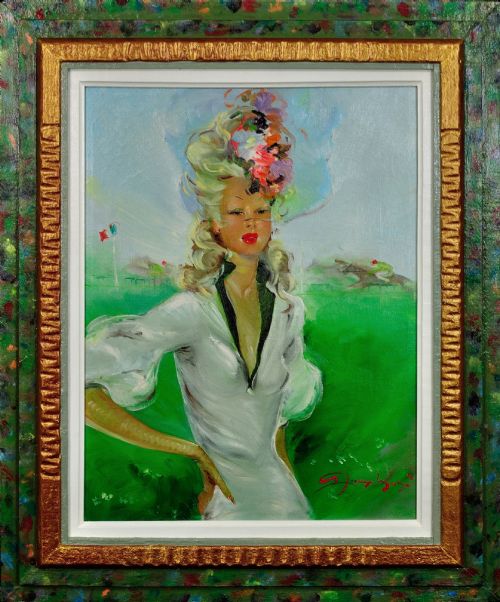
Henry Barraud·Edward Fisher·Joshua Reynolds·John Wootton·Thomas Hudson·Kurt Meyer-Eberhardt·Albert Clark·Jean-Gabriel Domergue·Fred Fitzpatrick·Ernest Payne·Edward Priestley·John Alfred Wheeler·Thomas Walker Bretland·John Ferneley Senior·Karl Georg Arsenius
The Equestrian Horse Portrait Glossary
- Mezzotint
- A printmaking process of the intaglio family where the artist works from dark to light by roughening the copper plate. This technique allows for rich tonal gradations well suited to reproducing painted portraits.
- Drypoint
- A printmaking technique in which an image is scratched directly into a metal plate with a sharp needle. The resulting burr holds ink to produce velvety lines characteristic of fine graphic work.
- Giltwood
- Wood that has been coated with a thin layer of gold leaf or powder. It provides a reflective, ornate border common in period picture frames.
- Bay
- A horse coat colour characterised by a reddish-brown body with black points on the mane, tail, and lower legs. It appears frequently in nineteenth-century sporting art.
- Provenance
- The documented history of ownership of an artwork. It establishes authenticity and traces the path of the piece from its creation to the present day.
Equestrian Horse Portrait: Frequently Asked Questions
What is an equestrian horse portrait?
An equestrian horse portrait is a fine art piece dedicated to depicting a specific horse, often noting the animal's name, lineage, or notable racing achievements in the title.
These artworks serve as historical documents of famous bloodlines and beloved mounts, executed by artists who specialised in equine anatomy and sporting culture.
How can I date an antique horse painting?
Dating relies on stylistic clues, framing techniques, signatures, and canvas stamps, alongside historical records of the horse or owner named on the stretcher or frame.
Victorian and Georgian works often display distinct conventions in background landscapes, rider attire, and typography used for inscriptions.
Where were these paintings displayed originally?
These portraits hung primarily in country houses, estate stables, and the offices of prominent racing figures to commemorate victories and prized possessions.
Today, they transition easily into domestic interiors, functioning as focal points in studies, hallways, and living spaces.
What mediums are common in equine art?
Oil on canvas remains the dominant medium, offering depth of colour and durability over centuries of display.
Works on paper, including pastels, watercolours, and drypoint prints, appear alongside panel paintings to document studies and finished compositions.