


Equestrian Carriage Oil Painting
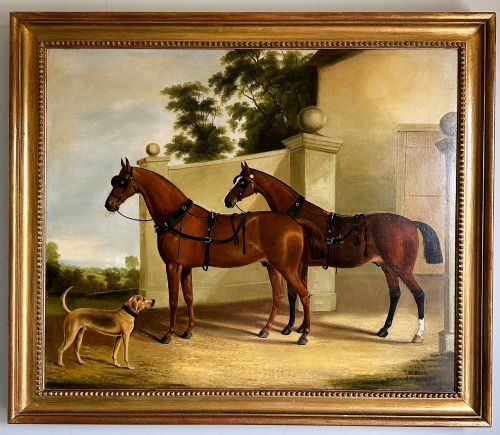
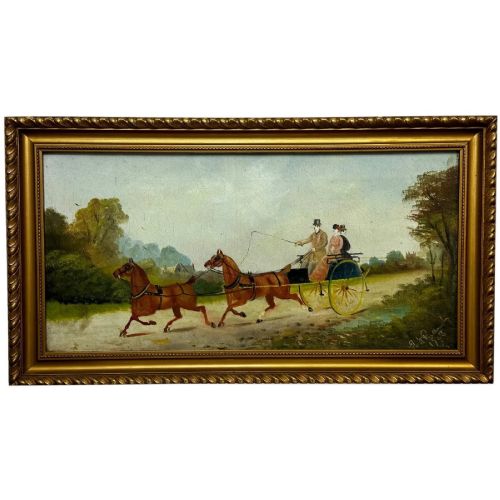
An equestrian carriage oil painting captures the motion of coaches, horses and hunting scenes across canvas.
Equestrian Carriage Oil Painting
An equestrian carriage oil painting depicts coaching scenes, mail coaches, stagecoaches and royal carriage parties across the eighteenth, nineteenth and twentieth centuries. These works record historic transport, winter snowstorms and hunting expeditions through traditional British sporting art and Victorian styles.
Buyers on this page most frequently encounter nineteenth-century canvases framed in giltwood, alongside earlier eighteenth-century works and mid-twentieth-century examples. The subjects range from lone mail coaches in snow drifts to detailed coaching parties passing ornamental lakes.
The assortment draws on periods including the Georgian and Regency eras, the Victorian epoch, and Edwardian sporting art. Each piece utilises oil paint on canvas or board to document horses, carriages and riders in motion.
Materials and construction
These works utilise oil paint applied to canvas or wood panel supports, capturing fine details of horses, harness and carriage woodwork. Artists built up layers of pigment to render winter snow, dramatic skies and the polished surfaces of coaches.
Many of these paintings retain their period giltwood or wood frames, which complement the traditional subjects. The physical construction combines standard artist stretched canvas with substantial decorative framing typical of British sporting art.
Watch for the solitary coachman wading through a snowdrift to seek assistance while horses steam in the freezing air.
Assessing quality and execution
Quality in these works rests upon the precision of the draughtsmanship in rendering horses, carriage mechanics and human figures in motion. Stronger examples demonstrate accurate anatomy, balanced composition and convincing atmospheric effects such as snowstorms or evening light.
The handling of the oil medium distinguishes finer canvases, where brushwork defines the texture of horse coats, swirling snow and fabric. Additionally, the presence of a period giltwood frame in good condition contributes to the integrity of the piece.
George Wright·Philip Henry Rideout·Samuel Henry Alken·John Charles Maggs·John Richard Worsdale·Allan Gwynne-Jones·Martin Pierre Denis·James Pollard
The Equestrian Carriage Oil Painting Glossary
- Oil on canvas
- Pigment bound in a drying oil, usually linseed, applied to a stretched woven fabric support. This traditional medium allows for rich colour blending and durability.
- Giltwood
- Wood, typically carved timber, that has been coated with thin gold leaf or gilt powder. It is commonly found on traditional frames enclosing nineteenth-century sporting art.
- Traditional British Sporting Art
- A genre of painting focused on horses, hunting, coaching scenes and hounds. It flourished in Britain through the eighteenth and nineteenth centuries.
- Mail Coach
- A horse-drawn carriage used to transport mail and passengers along fixed routes. These vehicles are a frequent subject in nineteenth-century coaching paintings.
Equestrian Carriage Oil Painting: Frequently Asked Questions
What periods do these paintings cover?
The selection spans from the eighteenth century through the nineteenth century and into the mid-twentieth century. Works originate from Georgian, Regency, Victorian and Edwardian eras.
Specific dates on this page include pieces from the seventeen-hundreds up to nineteen-forty.
What subjects appear in these works?
Common subjects include stagecoaches, mail carriages, royal coach parties and fox hunting scenes. Artists frequently depicted horses navigating winter snowstorms or travelling standard routes.
Several paintings show specific historical coaching scenes involving hounds, coachmen and passengers.
What materials are used?
The primary materials are oil paint applied to canvas, wood panels or board. Supporting elements commonly include giltwood and wooden frames.
The medium of oil allows for detailed depiction of horses, winter landscapes and carriage structures.
How do I identify a Victorian coaching painting?
Victorian coaching works often display characteristic nineteenth-century styles focusing on mail coaches, snow scenes and detailed horse anatomy. Signatures or attributions to painters from that era help confirm the period.
The presence of period giltwood frames and traditional British sporting themes also points to nineteenth-century execution.