


Green Equestrian Oil Painting
A green equestrian oil painting captures horses, hounds and riders in rich verdant landscapes across centuries of sporting history.
Green Equestrian Oil Painting
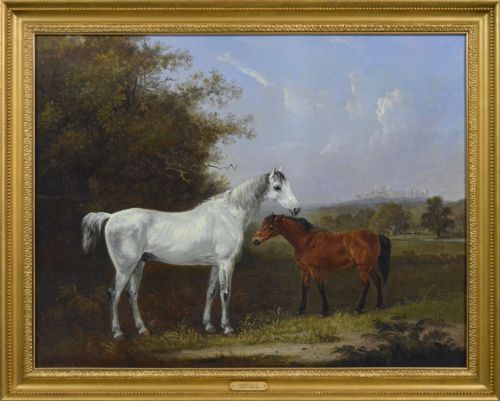
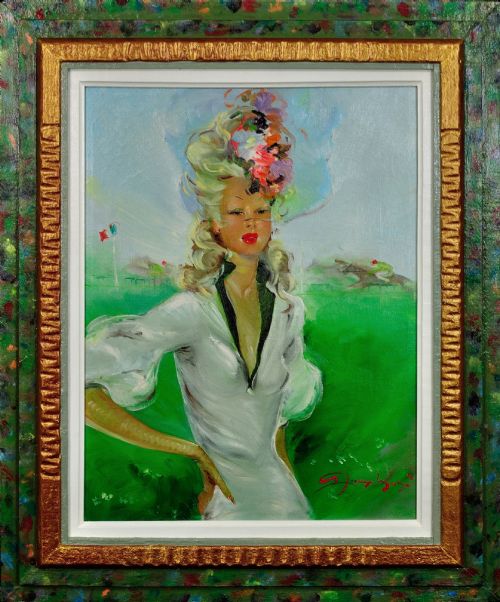
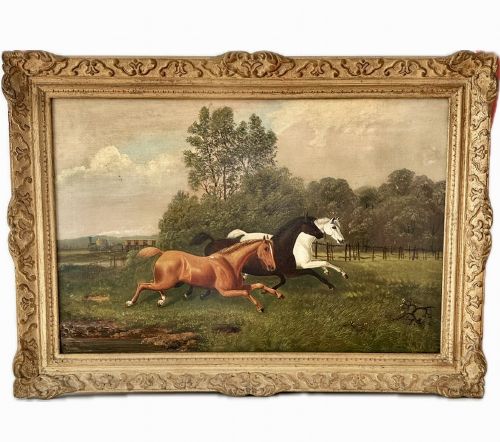
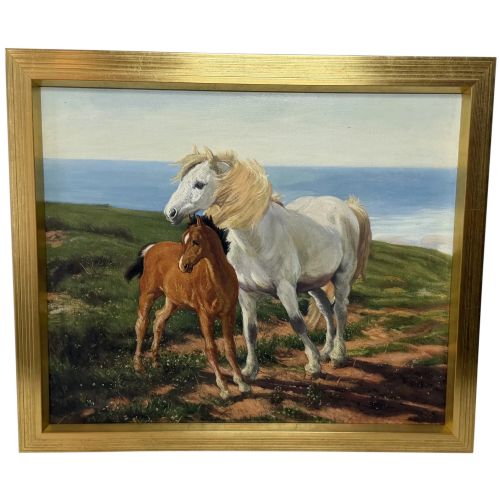
A green equestrian oil painting focuses on horses, racing, hunting and rural coaching scenes set against dominant tones of grass, foliage and pasture. These works span from the Georgian and Victorian eras through to mid-century British and French modernism. Buyers encounter everything from detailed portraits of individual racehorses to sweeping hunt meets and pastoral carriage journeys.
The prevalent examples on this page balance animal anatomy with atmospheric landscape backgrounds dominated by natural greens and earthy tones. Painters record the movement of hounds over hedges, ponies in stableyards, and riders beside riverside estates. This genre merges portraiture of prized animals with the topography of rural fields and parklands.
Materials and construction
Artists built these works using oil paint applied to stretched canvas or wooden board, frequently framed in giltwood. Pigments layered over preparatory grounds allowed painters to build deep, nuanced shades of green for pastures and foliage. The interaction of oil paint with woven canvas texture created the rich surfaces visible in these historical works.
The framing often matches the period of the painting, utilising carved and gilded wood that complements the pigments within the composition. Canvases are secured to wooden stretchers, whilst some later examples utilise rigid board supports. This combination of stable supports and durable oil media ensured the survival of fine brushwork across generations.
The listings feature oil paintings spanning from the eighteenth century through to the 1960s, executed on canvas and wood.
Assessing quality and execution
Quality rests upon the artist's command of equine anatomy and the believable integration of the horse within its landscape. Superior works display accurate musculature, alert posture and fluid movement, whereas lesser examples stiffen the animal and flatten the surrounding fields. The rendering of light across coat and grass separates accomplished handwork from formulaic studio production.
The depth of the palette and the preservation of the original paint surface influence the standing of a piece. Fine glazing techniques create luminous greens in the grass and atmospheric distance in the sky, while secondary elements like hounds and grooms receive attentive detail rather than hasty brushwork.
Edward Priestley·George Wright·Gabriel Dauchot·Philip Henry Rideout·Clifton Tomson·Michael Lyne·Robert Cleminson·George Turner·Allan Gwynne-Jones
The Green Equestrian Oil Painting Glossary
- Canvas
- A heavy woven fabric stretched across a wooden frame to serve as a support for oil painting. It provides the textural foundation for many historical sporting works.
- Giltwood
- Wood carved and covered with a thin layer of gold leaf, commonly utilised for period picture frames. This finish adds warm reflectivity around the dark greens and earth tones of the artwork.
- Equestrian art
- Depictions of horses combined with human riders, stable hands, or sporting pursuits. This genre forms the core subject matter of the works listed here.
- Oil paint
- A slow-drying medium composed of pigments suspended in a drying oil, typically linseed oil. It allows artists to blend tones smoothly and achieve rich depth in landscape foliage.
Green Equestrian Oil Painting: Frequently Asked Questions
What is a green equestrian oil painting?
A green equestrian oil painting is a historical artwork depicting horses, riders, or hunting scenes where verdant fields and foliage dominate the composition.
These pieces record sporting traditions and rural landscapes from the eighteenth century to the mid-twentieth century.
How were these paintings displayed?
Owners traditionally hung these works in country houses, libraries, and estate reception rooms to celebrate rural pursuits and prized animals.
They were housed in decorative giltwood frames designed to complement the rich greens and browns of the domestic interior.
How do I date a sporting oil painting?
Dating relies on examining the canvas preparation, stretcher construction, artist signatures, and the specific style of human and equine clothing.
Changes in painting technique and framing styles across the Georgian, Victorian, and mid-century periods also provide clear chronological markers.
How do I care for an antique oil painting?
Care requires maintaining stable indoor humidity and avoiding direct sunlight to protect the oil pigments and canvas support.
Cleaning should be left to professional conservators to prevent damage to the delicate glazes used in the foliage.