

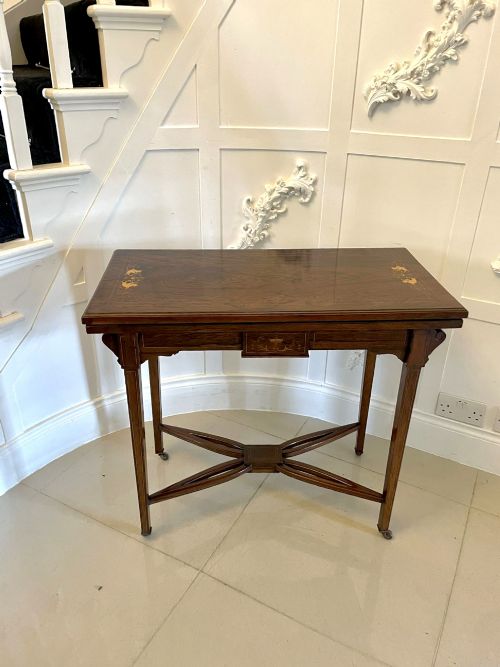
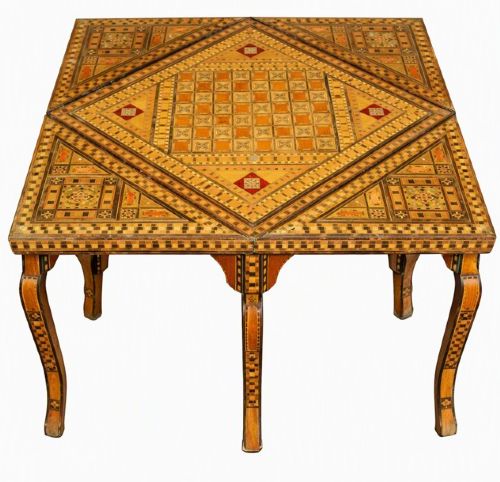
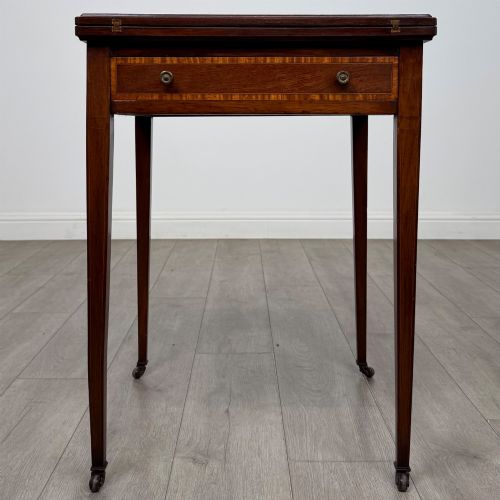

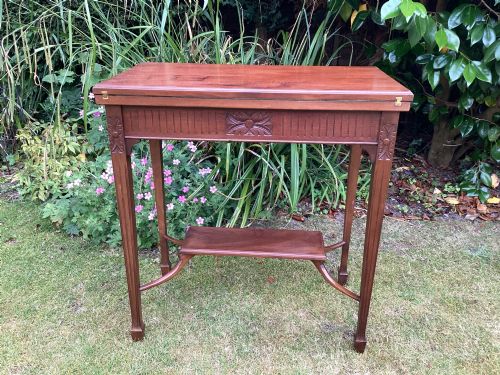
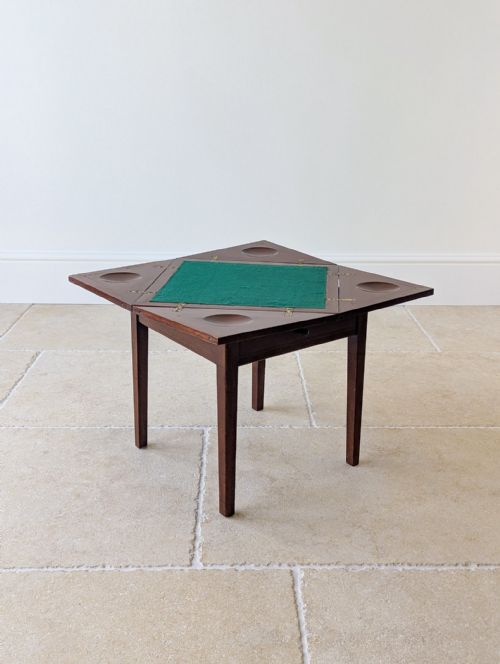


Envelope Top Card Table
An envelope top card table is a clever folding games table with rotating triangular flaps that open like an envelope, offering both a compact console surface and a baize-lined playing area.
Envelope Top Card Table
When you search for an envelope top card table, you find ingenious folding furniture designed to save space while providing a dedicated surface for cards and games. These pieces typically feature a square top with four pivoting flaps that fold inward to protect the interior playing surface.
The versions you are most likely to meet on this page hail from the Victorian and Edwardian eras, alongside pieces attributed to the Regency period and the early twentieth century. They appear in forms such as card tables, games tables, and combined card and games tables.
How they were made
Cabinet makers constructed these tables using solid foundational timbers like mahogany and walnut, frequently applying fine veneers of rosewood and satinwood to the primary surfaces. Contrasting details often involve delicate stringing and marquetry inlay executed in boxwood.
The distinctive folding mechanism relies on clever pivoting brass hinges that allow each of the four triangular flaps to swing open smoothly in sequence. The interior playing surface is typically lined with a durable baize cloth to provide a tactile playing area for cards.
Envelope Top Card Table Retail Price Guide 2026
Typical asking prices for envelope top card table among the pieces listed under this phrase on Sellingantiques today, from the lower quarter to the upper quarter. They describe what is for sale here now, not the wider market.
Some tables hide tiny wells designed exclusively for keeping track of your winnings, proving that nineteenth-century parlour disputes over counters needed physical architecture.
What varies in quality
The distinction between standard examples and superior specimens rests upon the choice of timber and the precision of the cabinet work. Finely figured burr walnut, dense mahogany, and intricate contrasting satinwood inlay elevate a piece significantly above plain constructions.
The smoothness of the swivelling and folding mechanism dictates the tier of craftsmanship involved. High-quality tables exhibit tight joints, robust brass components that operate without catching, and well-fitted gaming wells.
The Envelope Top Card Table Glossary
- Envelope top
- A square table top composed of four triangular flaps that fold inward and outward over a central surface. This clever design conceals the playing area when closed.
- Baize
- A coarse woollen material resembling felt, traditionally used to line the playing surfaces of card and games tables. It provides a soft, non-slip texture for handling cards.
- Marquetry
- Decorative patterns formed by inserting pieces of contrasting wood veneer into a solid background. This technique creates elaborate floral or geometric ornamentation on the table top.
- Gaming wells
- Small recessed compartments built into the corners of the table surface. Players used these to hold counters, chips, or coins during card games.
- Satinwood
- A durable, yellowish-blonde timber with a lustrous sheen, often utilised for contrasting crossbanding and inlay work on dark woods like rosewood and mahogany.
Envelope Top Card Table: Frequently Asked Questions
What is an envelope top card table?
An envelope top card table is a multi-functional piece of furniture featuring four triangular flaps that fold over a baize-lined surface. When closed, it functions as a compact side or console table.
Opening the table involves rotating the top, which automatically causes the four flaps to unfold outward to reveal the full playing square.
How were these tables used historically?
These tables served primarily as parlour furniture for hosting card games and social evenings in the home. During the day, they stood against a wall as decorative console or side tables.
When guests arrived for entertainment, the top was unfolded and turned to provide a stable, baize-covered playing arena complete with wells for counters.
How do I tell Edwardian pieces from Victorian ones?
Victorian examples tend to feature heavier mahogany or rosewood constructions with bolder marquetry and distinct console forms. They often date from the mid to late nineteenth century.
Edwardian tables, commonly found from the early twentieth century, frequently display lighter satinwood inlay, delicate proportions, and refined Edwardian aesthetic influences.
How do I live with an envelope table?
Living with these tables involves treating the polished wooden surfaces and baize linings with care, using coasters and avoiding direct sunlight. Their compact folded footprint makes them versatile as hall tables or corner display pieces.
The folding mechanism should be operated gently, allowing the pivoting brass components to move naturally without forced pressure.