
Entryway Seating Chairs
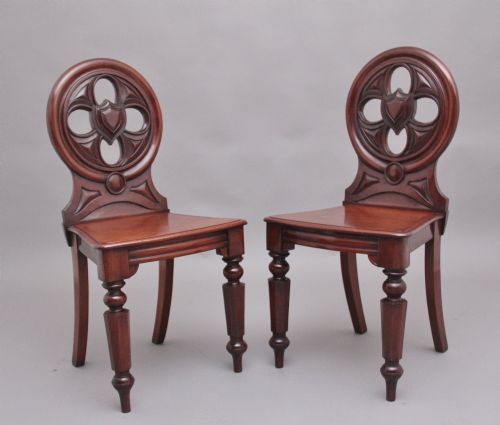
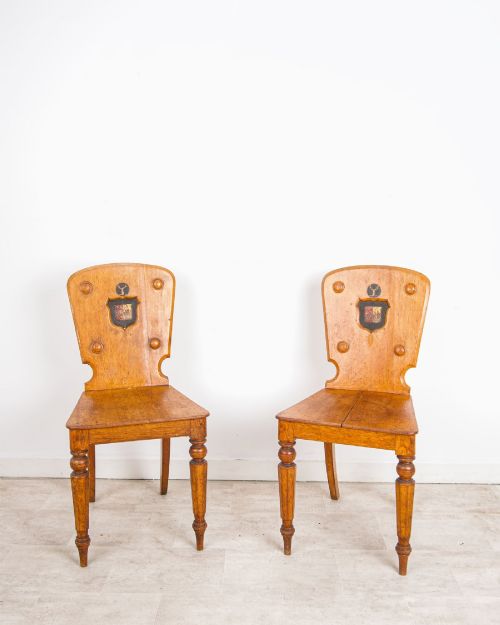
Entryway seating chairs are solid wood hall chairs and benches designed for passage spaces, offering upright seating rooted in historical periods like the Georgian and Victorian eras.
Entryway Seating Chairs
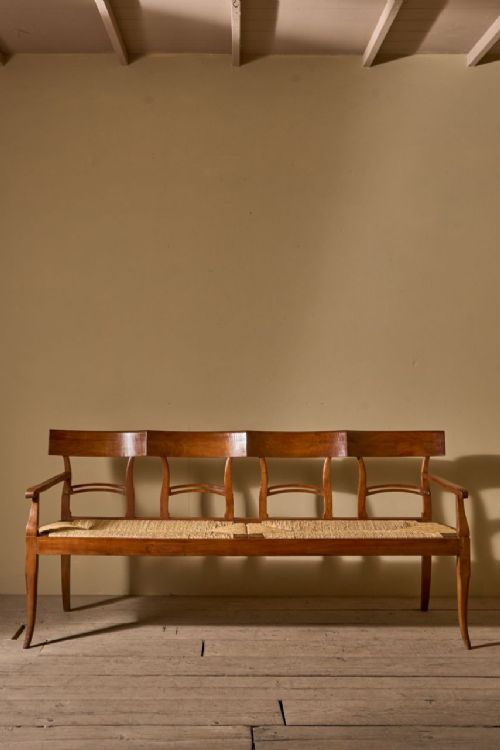
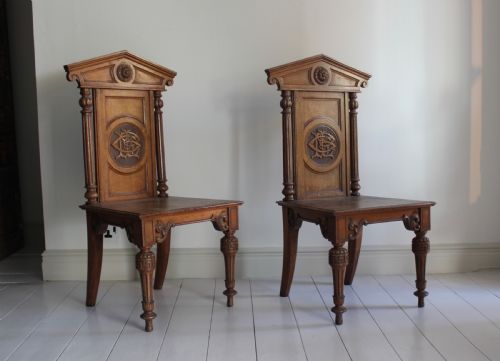
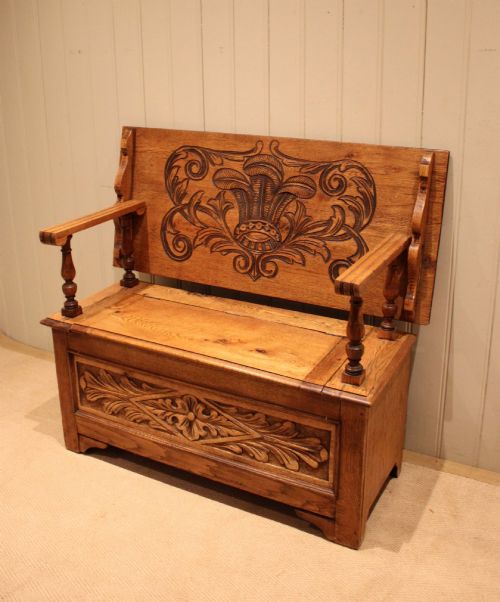
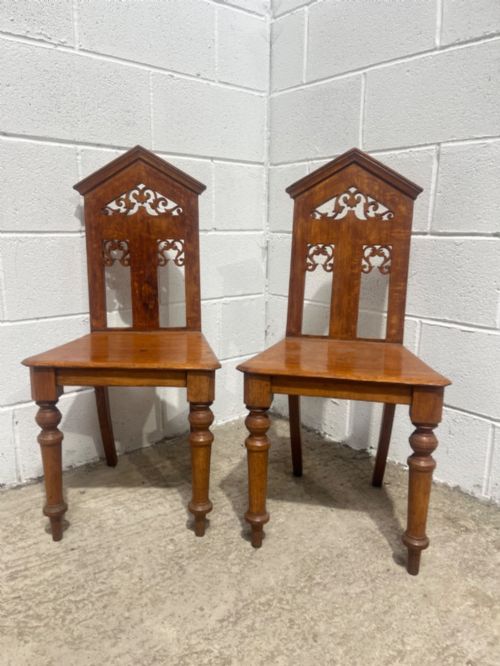
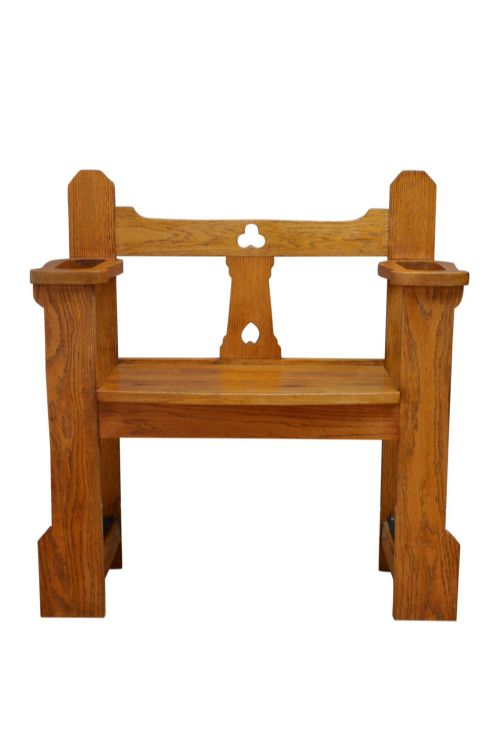
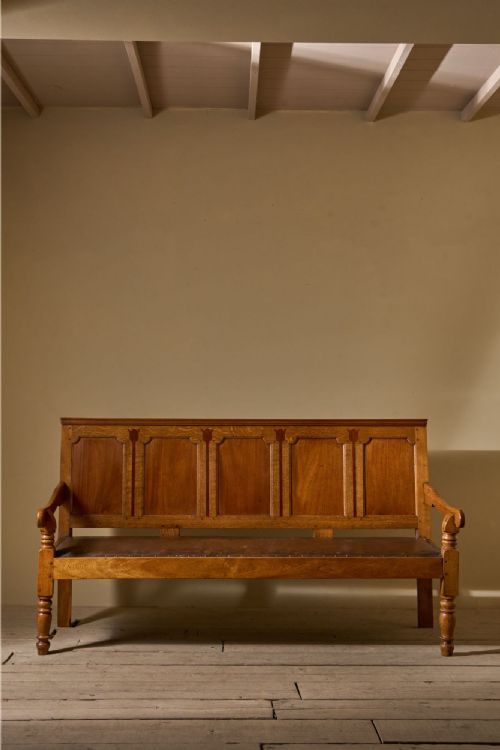
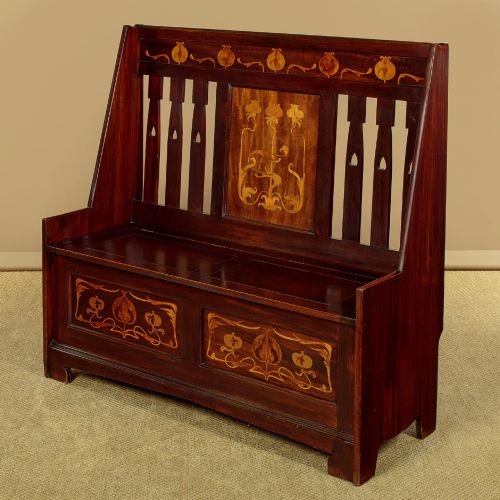
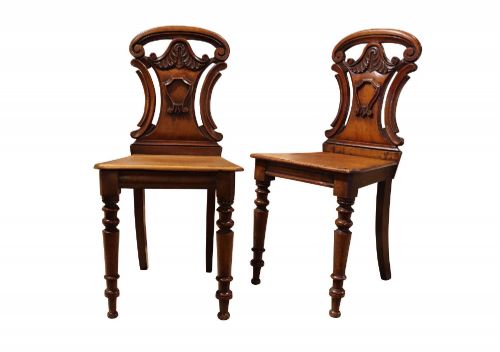
Entryway seating chairs span forms such as traditional hall chairs, box settles, church pews, and benches built for transitional hallway spaces. These pieces emerge predominantly from the nineteenth and eighteenth centuries, with Victorian and Regency designs appearing frequently across the selection.
How they were made
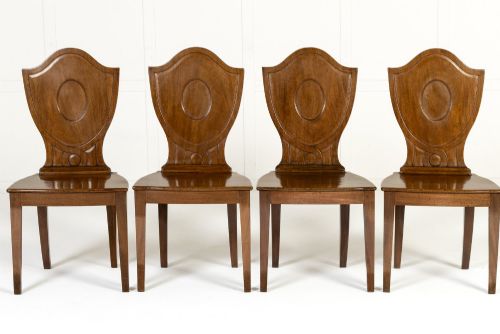
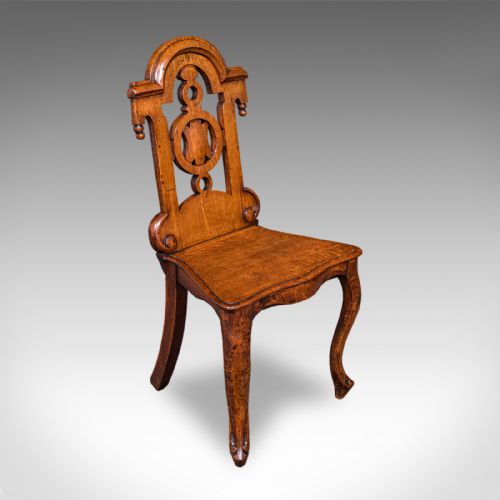
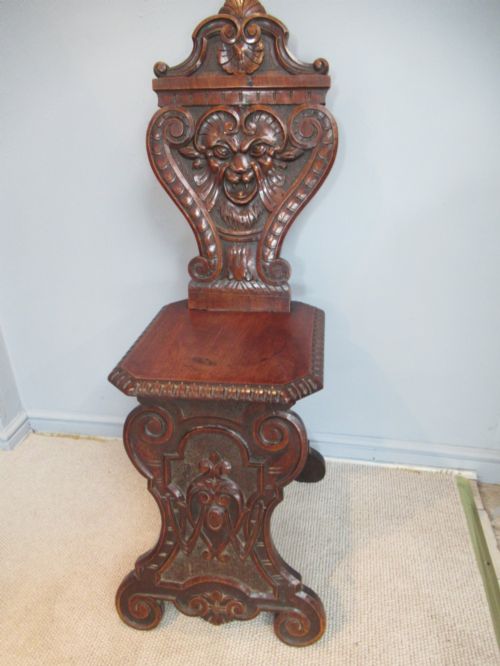
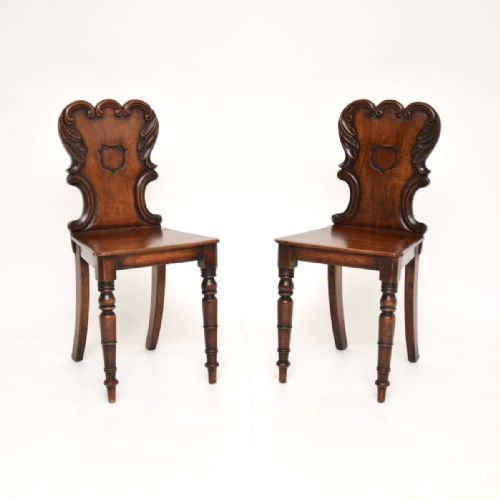
Cabinetmakers constructed these seating forms using dense timbers like mahogany, oak, walnut, and cherrywood, supplemented by pine and rush seating elements. Joinery relied on solid wood construction, often incorporating turned barley twist supports, carved shield backs, and integrated storage boxes.
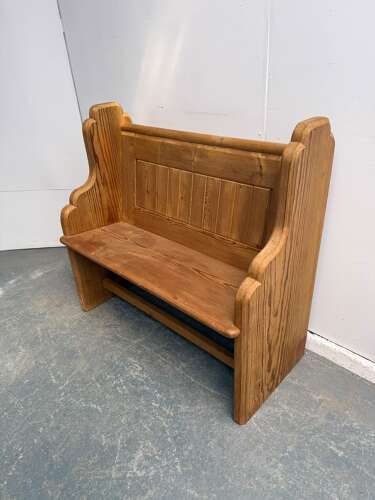
Surface finishes range from waxed treatments on pine church pews to polished mahogany on Regency reception chairs. Brass details occasionally appear as structural or decorative accents on specific forms.
A waxed Victorian church pew brings quiet Sunday solemnity directly to a modern front hallway.
What varies in quality
Quality rests upon the crispness of carved heraldic details, pelta backs, and tulip decorations executed in the timber. Sharply defined woodwork on mahogany or oak frames distinguishes finer items from simpler utilitarian benches.
The integrity of the timber stock and the balanced proportions of narrow hall seats or armorial country house chairs determine the visual strength of the piece within an entryway.
James Shoolbred & Co.·Gillows
The Entryway Seating Chairs Glossary
- Hall chair
- A rigid wooden seat traditionally placed in a grand hallway or entrance lobby, rarely padded because users sat only briefly.
- Shield back
- A chair back shaped like a heraldic shield, often carved with crests or armorial bearings.
- Sgabello
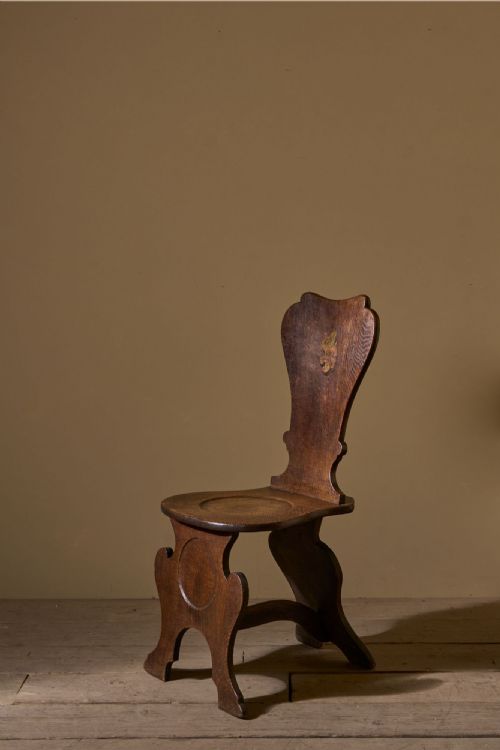
- An early Renaissance-style chair form featuring a solid back and trestle supports, utilised in narrow hall spaces.
- Settle
- A wooden bench with high backs and solid sides, frequently incorporating storage space beneath the seat.
- Pelta back
- A chair back design inspired by the crescent-shaped ancient Greek shield.
Entryway Seating Chairs: Frequently Asked Questions
What is an entryway seating chair?
An entryway seating chair is a rigid wooden seat designed for a hallway or reception space. These pieces provide upright seating without upholstered padding, reflecting their historical use in transit areas.
Most examples date from the Georgian, Regency, and Victorian periods, utilising durable woods like mahogany and oak to withstand heavy daily traffic.
How were hall chairs used?
Hall chairs served as brief resting spots for visitors waiting to be announced in a household. They also functioned as decorative statements displaying a family's crest or armorial bearings in the entrance.
Because guests rarely sat for long periods, the design prioritized rigid posture and sculptural woodcarving over plush comfort.
What woods are common?
Mahogany and oak dominate the selection, providing the dense structural strength required for hallway furniture. Walnut, cherrywood, and pine also appear across various regional pieces and country house benches.
Finishes typically involve natural waxing or polishing to highlight the grain of the solid timber.
How to identify a Regency hall chair?
Regency hall chairs often display classical architectural influences, featuring carved shield backs, armorial motifs, and dark mahogany timber. They date roughly from the early nineteenth century and lean toward formal symmetry.
Maker attributions to workshops like Gillows sometimes accompany these balanced, substantial reception seats.
Are these chairs comfortable?
These seats are unpadded and upright, built for brief waiting rather than lounging. Their solid wood or rush seats support proper posture rather than relaxed sitting.
Living with them involves appreciating their sculptural silhouettes and historical craftsmanship within a narrow hallway.