


Entryway Hat Rack
An entryway hat rack brings both order and character to a home, offering a dedicated spot for daily outerwear.
Entryway Hat Rack
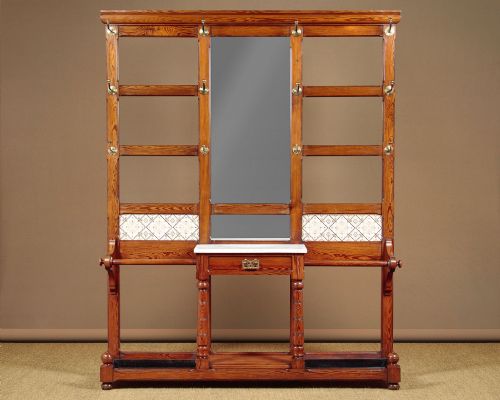
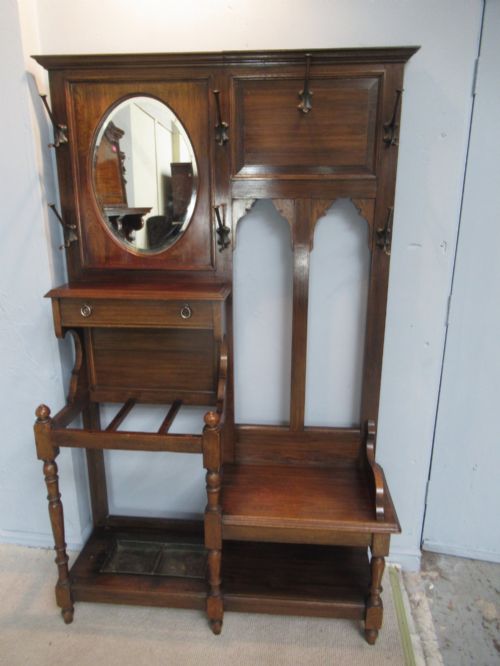
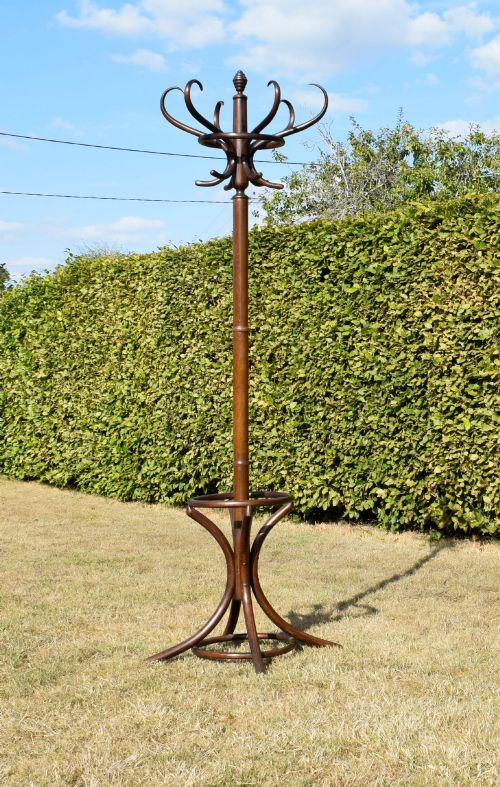
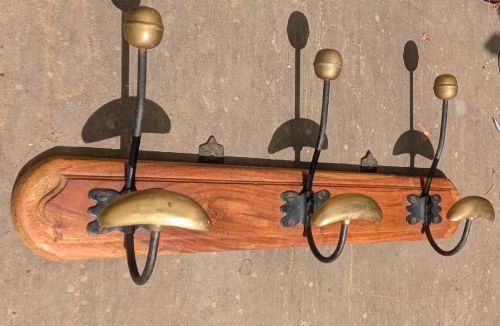
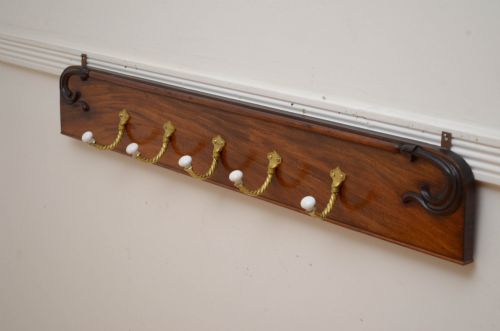
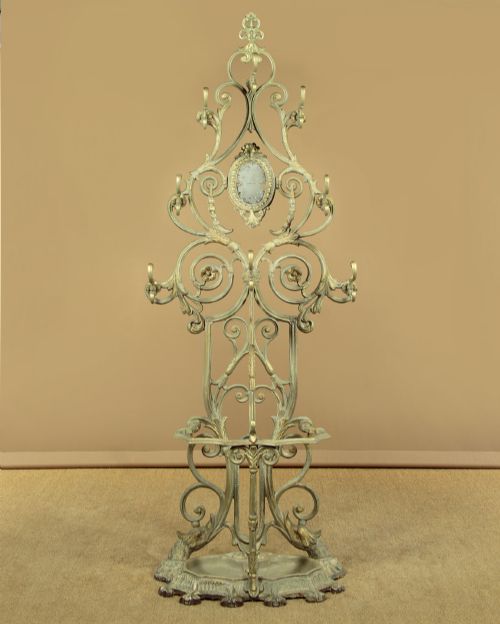
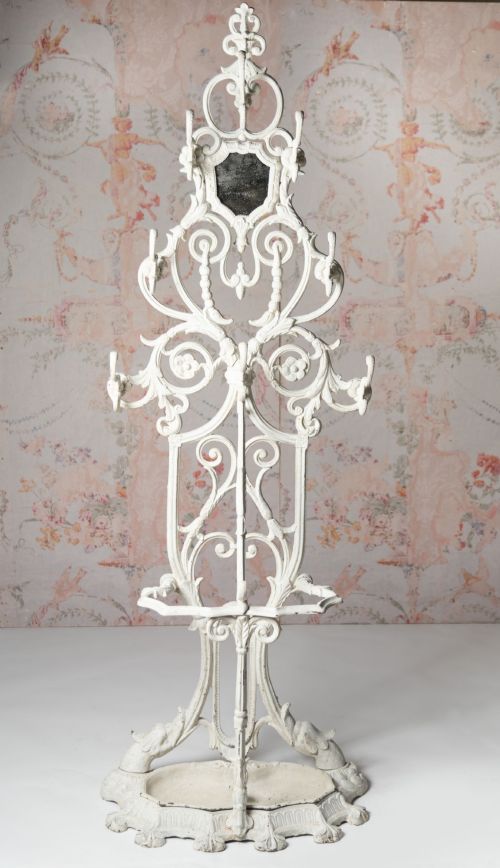
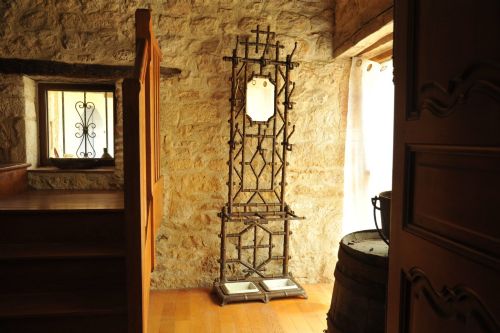
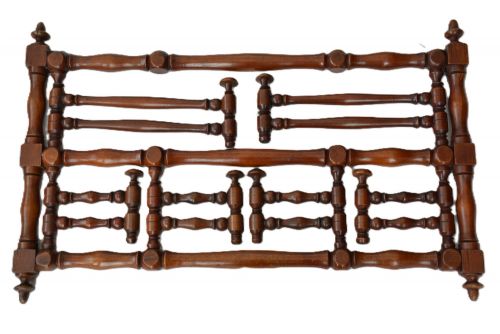
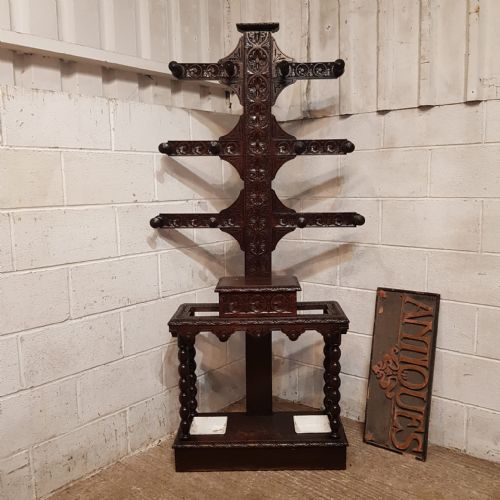
When you search for an entryway hat rack, you encounter practical furniture designed for domestic hallways from the Victorian period through to the Art Deco era. The selection spans substantial freestanding hallstands, wall-mounted wooden rails, and slender bentwood designs.
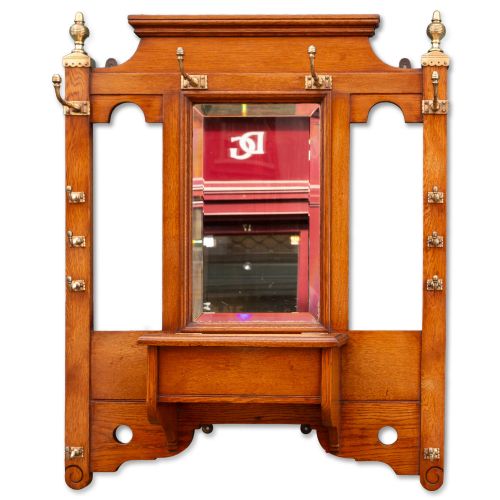
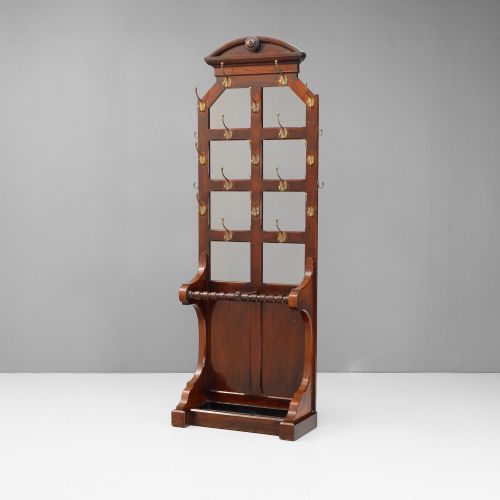
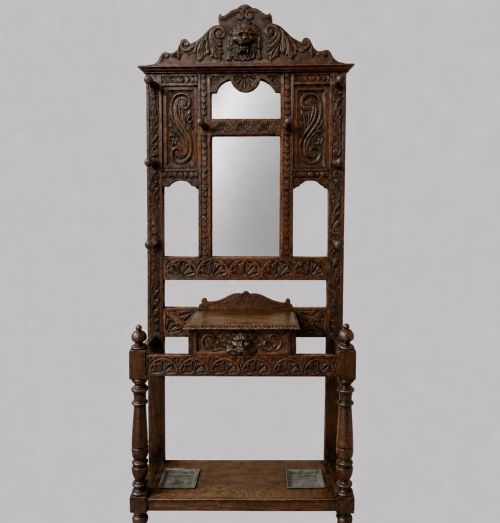
You are most likely to meet oak and mahogany hallstands featuring integrated mirrors, umbrella wells, and brass or ceramic hooks. These pieces combine multiple functions into a single hallway furnishing.
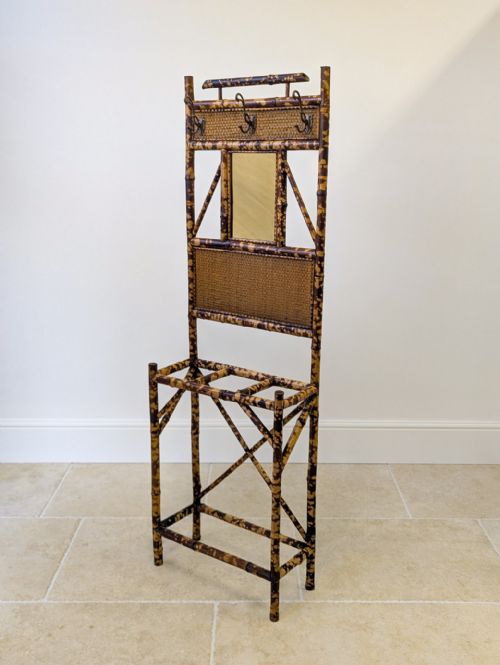
The materials and styles range from carved pine and walnut pieces of the nineteenth century to lighter wrought iron and bentwood creations from the early twentieth century. Each form reflects the changing architectural needs of domestic entrances over several decades.
Materials and construction methods
Wood selection defines the construction of these items, with solid oak, mahogany, walnut, and pine forming the primary structures. Joinery techniques range from traditional mortise and tenon joints in heavy nineteenth-century examples to steam-bending methods used for flexible beech in bentwood items.
Metal components play an essential structural and decorative role, incorporating cast iron frames, brass hooks, and wrought iron frameworks. Many examples also integrate ceramic elements and mirrored glass plates secured into carved wooden backplates.
Listings feature items spanning the Victorian era, Edwardian period, and Art Deco times, constructed from oak, mahogany, walnut, and cast iron.
Distinctions in standard and execution
The quality of an entryway hat rack depends on the depth and crispness of its hand-carved ornamentation, such as the detail found in Green Man or Black Forest motifs. Substantial timber thickness and robust internal framing separate superior furniture from lighter commercial production.
Hardware integrity also marks the standard of the piece, visible in heavy brass or iron hooks securely fixed to the backboard rather than flimsy replacements. The quality of the central mirror bevelling and the stability of the umbrella well lining indicate the original maker's investment in materials.
Falkirk Foundry·Fischel
The Entryway Hat Rack Glossary
- Hallstand
- A large freestanding hall furniture piece combining a mirror, hat hooks, and umbrella stands. These items anchor the entrance space of period homes.
- Bentwood
- Wood softened by steam and bent into curved structural shapes. This technique creates lightweight yet resilient coat and hat stands.
- Faux bamboo
- Wood carved or turned to imitate natural bamboo stalks. This decorative finish appears frequently on late nineteenth-century hall furniture.
- Aesthetic Movement
- A late Victorian design style focusing on visual beauty over narrative meaning. Pieces from this movement often utilise ebonised finishes and natural motifs.
- Ceramic hooks
- Coat and hat pegs inset with porcelain or ceramic centres. They protect delicate garments from direct metal abrasion.
Entryway Hat Rack: Frequently Asked Questions
How do I choose the right size?
Consider the available wall space and floor clearance in your hallway before selecting either a wall-mounted rack or a freestanding hallstand.
Freestanding pieces require adequate depth for umbrella wells and protruding coat hooks, whereas wall-mounted rails fit narrow corridors effectively.
Where were these traditionally placed?
These pieces stood immediately inside the front entrance of Victorian and Edwardian homes to manage outdoor garments upon arrival.
They served visiting guests and family members alike, keeping hats, coats, and walking sticks organised away from the main living areas.
How do I care for the wood?
Maintain the finish by dusting regularly with a soft cloth and applying appropriate beeswax periodically to nourish the timber.
Avoid placing wooden furniture near direct heat sources or damp exterior walls to prevent warping and protect the original polish.
Are the mirrors original?
Many pieces retain their original silvered glass mirror plates, which often display subtle foxing or light ageing marks.
Original mirrors are secured with traditional wooden backing strips and retain their original bevelled edges where appropriate for the period.
How do I date an entryway hat rack?
Examine the construction methods, screw types, wood species, and stylistic markers such as Arts and Crafts carving or Art Deco lines.
Comparative analysis of the hardware, hooks, and mirror style helps align the piece with specific periods like the Victorian era or 1900s.