



Entryway Coat Rack Mirror
An entryway coat rack mirror greets visitors with utility and presence, combining timber, glass and metal to anchor a hallway.
Entryway Coat Rack Mirror
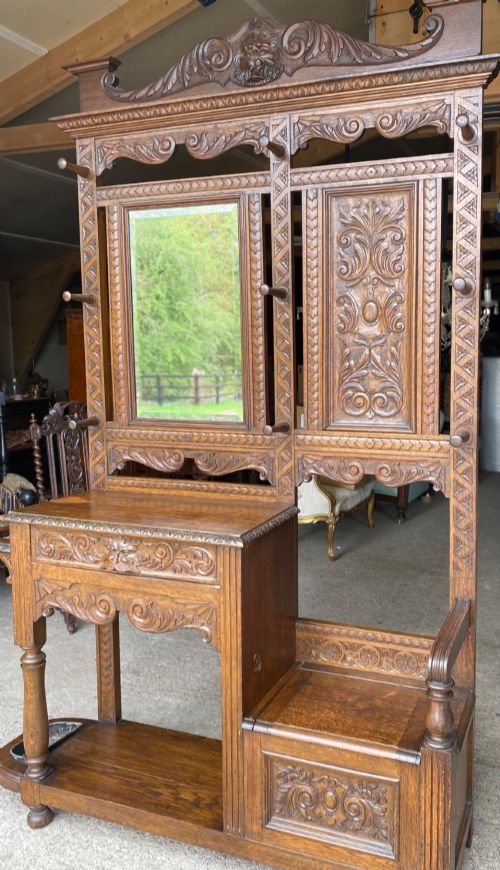
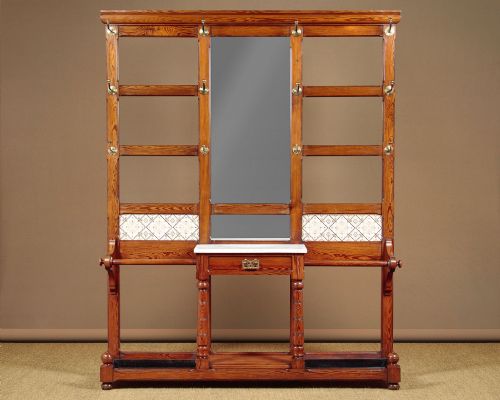
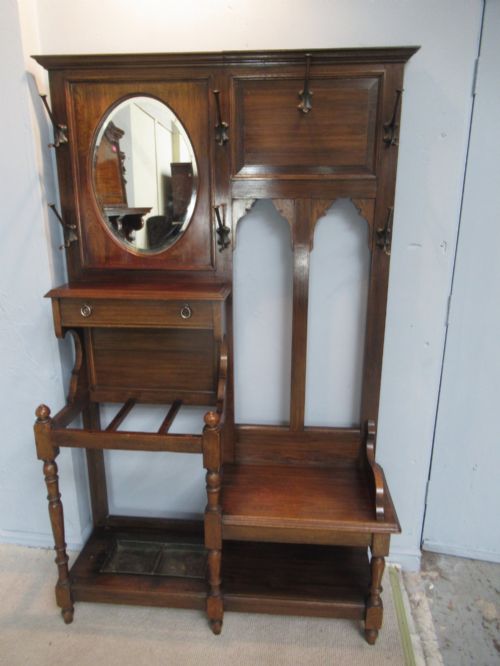
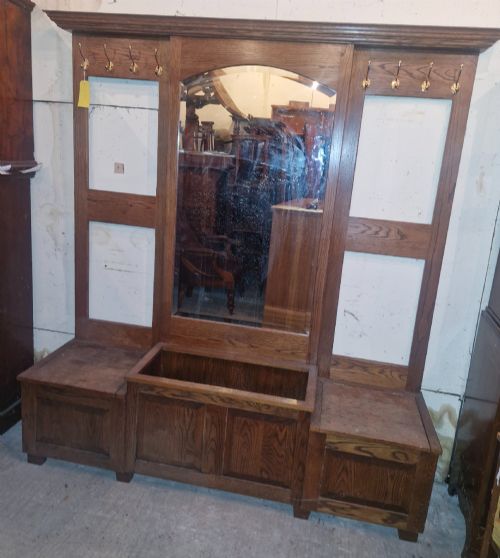
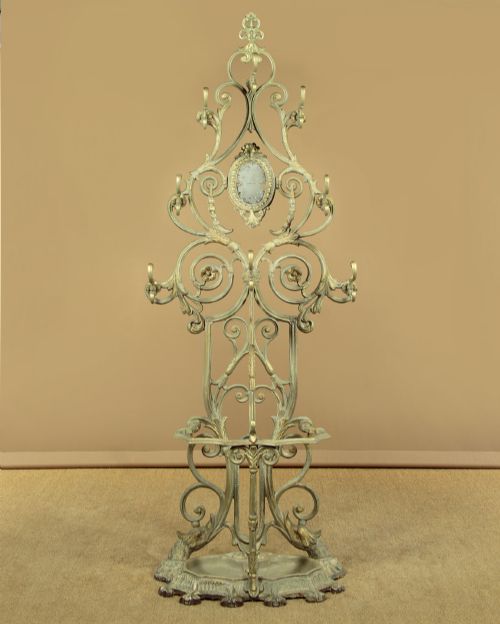
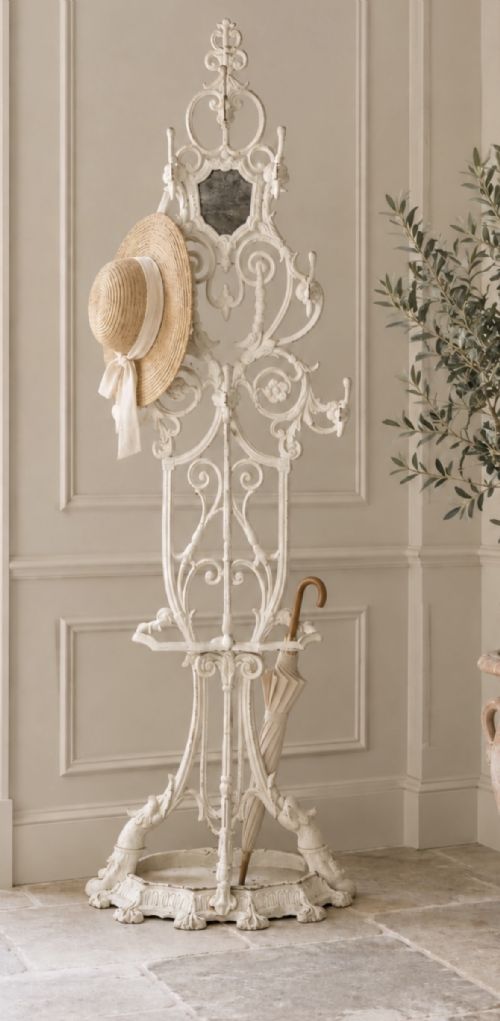
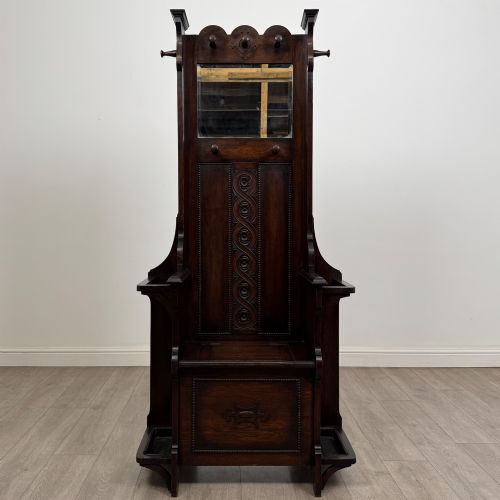
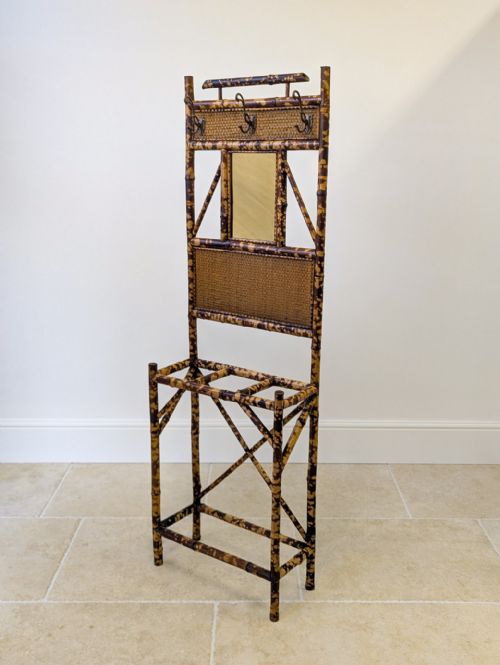
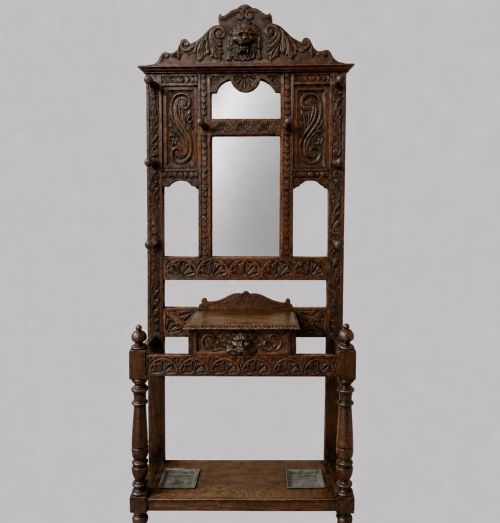
The versions most commonly found here belong to the Victorian and Edwardian periods, alongside Arts & Crafts, Art Nouveau and French Art Deco designs. Floor-standing hall stands dominate the selection, bringing integrated seats, marble surfaces and drip pans alongside the central mirror plate.
How they were made
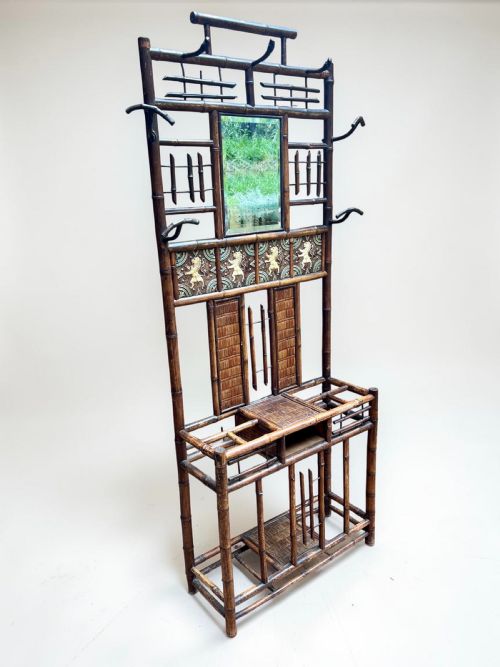
Carpenters and cabinetmakers utilised solid timbers such as oak, mahogany, walnut and pine, often enriching the framework with deep hand-carving, applied mouldings and turned spindles. Metal elements appeared in cast iron, brass and wrought iron, providing robust hooks, umbrella rings and decorative faux bamboo framing.
Mirror glass was bevelled and set securely into wooden or metal frames, while specialist additions included inset marble slabs for wet umbrellas and cast-iron drip trays at the base. Bentwood techniques also emerged, utilising steamed beech to create fluid, lightweight structural forms.
Listings feature oak, mahogany, walnut, pine, brass, cast iron and mirror glass across Victorian, Edwardian and Art Deco periods.
What varies in quality
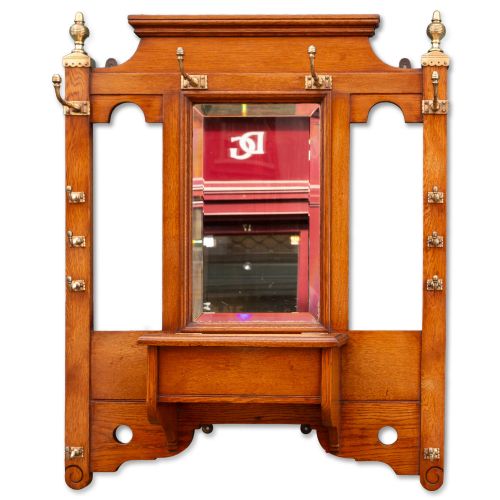
Quality rests upon the ambition of the timber selection, the crispness of the carving and the integrity of the structural joinery. Pieces fashioned from golden or figured oak and rich mahogany with substantial proportions display superior craftsmanship compared to simpler utility items.
The integration of materials dictates distinction, such as the inclusion of heavy cast brass hardware, intact bevelled mirror glass and original marble inserts. Well-preserved drip pans and solid floor anchoring indicate a higher tier of original manufacture.
Gillows·Fischel
The Entryway Coat Rack Mirror Glossary
- Hall stand
- A multi-functional hallway furniture piece incorporating a mirror, coat hooks, hat shelf and frequently a umbrella stand or seat. These items organise entrance spaces while displaying decorative woodwork.
- Faux bamboo
- Wood or metal carved and painted to imitate natural bamboo stalks. This decorative technique appears frequently on Victorian and Edwardian hall stands influenced by Japanese design trends.
- Bentwood
- Wood softened by steam and bent into curved structural shapes. This method created lightweight yet resilient frames for coat racks and stands around the turn of the twentieth century.
- Aesthetic Movement
- A late nineteenth-century design style emphasising visual beauty over narrative meaning. Pieces from this movement often utilise bamboo and ebonised wood.
- Bevelled mirror
- Plate glass with an angled, polished edge around the perimeter. This treatment adds depth and reflects light more effectively in narrow hallways.
Entryway Coat Rack Mirror: Frequently Asked Questions
What is an entryway coat rack mirror?
An entryway coat rack mirror is a combined furniture piece designed for hallways, featuring a looking glass alongside hooks for hats and coats.
Many examples also incorporate umbrella holders, small seats and marble surfaces for daily convenience.
How were hall stands used?
These pieces served as the central station for outdoor wear when entering or leaving a home, keeping garments and umbrellas organised.
Visitors used the mirror to check their appearance while residents stored walking sticks and heavy coats within easy reach.
How do I identify Victorian pieces?
Victorian hall stands typically feature dark timbers like oak and mahogany, deep carving, and substantial mirror plates.
Stylistic cues include Aesthetic Movement bamboo framing or ornate brass hardware characteristic of the nineteenth century.
Are wall mounted racks period pieces?
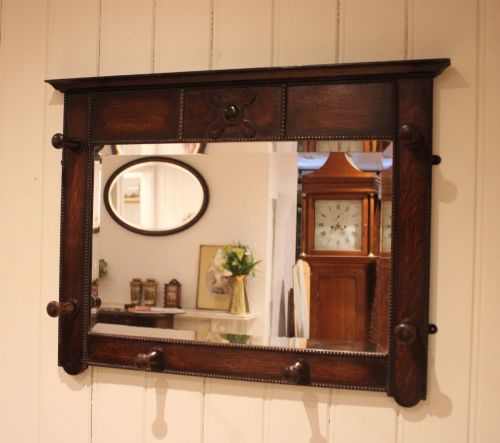
Wall-mounted coat racks with mirrors date across the late nineteenth and early twentieth centuries, spanning Victorian, Edwardian and Art Deco designs.
They offer the same reflective and hanging utility as floor-standing models while occupying a smaller footprint.